












THC Drinks in 2026: Flavors, Brands, and Market Developments This Year
Posted by Enjoy Hemp Editor Team on Jul 27th 2026
Last Updated: July 2026
By Sarah Mitchell, Wellness Industry Specialist
The THC beverage category has expanded rapidly through the first half of 2026, with major retail partnerships, new brand launches, and evolving product formulations reshaping the market. According to Precedence Research, the global cannabis beverages market reached $3.57 billion in 2025 and is projected to continue growing at 15% compound annual growth rate through the mid-2030s.
This analysis examines the key developments in THC beverages during 2026, including retail expansion, new product formats, ingredient trends, and market dynamics. Understanding these changes helps consumers and industry observers track how this beverage category is evolving.
What Market Changes Have Occurred in THC Drinks This Year?
The THC beverage market in 2026 is defined by mainstream retail expansion, multi-cannabinoid formulations, and functional ingredient integration. Major national retailers now stock hemp-derived THC drinks, sparkling water dominates product formats, and brands are developing products with specific cannabinoid combinations and added functional ingredients.
Several data points illustrate the current state of the market:
- Sparkling water and sodas represent 55% of cannabis beverage sales, according to Precedence Research
- North America accounts for 92.42% of global cannabis beverage market revenue, per Fortune Business Insights
- Non-alcoholic cannabis beverages are projected to comprise 53.43% of the global market in 2026
- Online platforms represent the fastest-growing distribution channel at 13.8% CAGR
Which Major Retailers Now Carry THC Beverages?
The most significant 2026 development involves major national retailers entering the THC beverage category. This mainstream retail expansion represents a structural shift in how consumers can access these products.
Target's THC Beverage Rollout
Target has executed the most comprehensive mainstream retail entry into THC beverages:
October 2025: Pilot program launched at 10 Minnesota stores with 12 brands including Cann, Wynk, Wyld, Trail Magic, Hi Seltzer, Señorita, and others.
April 2026: Expansion to all 72 Target stores in Minnesota, giving Target more lower-potency hemp edible licenses than any other company in the state, according to Marijuana Moment.
May 2026: Further expansion to over 300 stores across Florida, Texas, and Illinois, targeting the 2nd, 3rd, and 6th most populous U.S. states.
Target's products contain 5mg THC per serving and are sold exclusively in liquor store sections to customers aged 21 and older. A NuggMD survey found that 50.5% of cannabis users said they are now more likely to shop at Target following this product expansion.
Other Major Retail Entries
Sprouts Farmers Market: Began selling hemp-THC drinks in approximately 115 stores across Texas and Florida in January 2026. Brands available include Cann, Delta, High Pour, Magic Cactus, Nectar, and Wynk.
Circle K: Announced plans to roll out hemp-derived THC beverages in up to 3,000 stores nationwide during 2026. The convenience chain partnered with Horticulture Co. to launch beverages containing 10mg THC per can, initially in the Carolinas and Florida.
Total Wine & More: Preceded the major chain announcements by adding hemp beverage sections, positioning THC drinks alongside wine, beer, and spirits.
Retail Distribution Impact
This retail expansion changes the accessibility landscape for THC beverages:
| Retailer | Store Count | States | THC Limit |
|---|---|---|---|
| Target | 300+ | MN, FL, TX, IL | 5mg/serving |
| Sprouts | 115+ | TX, FL | Varies |
| Circle K | 3,000 planned | NC, SC, FL (initial) | 10mg/can |
| Total Wine | Varies | Multiple | Varies |
What New THC Beverage Brands Launched in 2026?
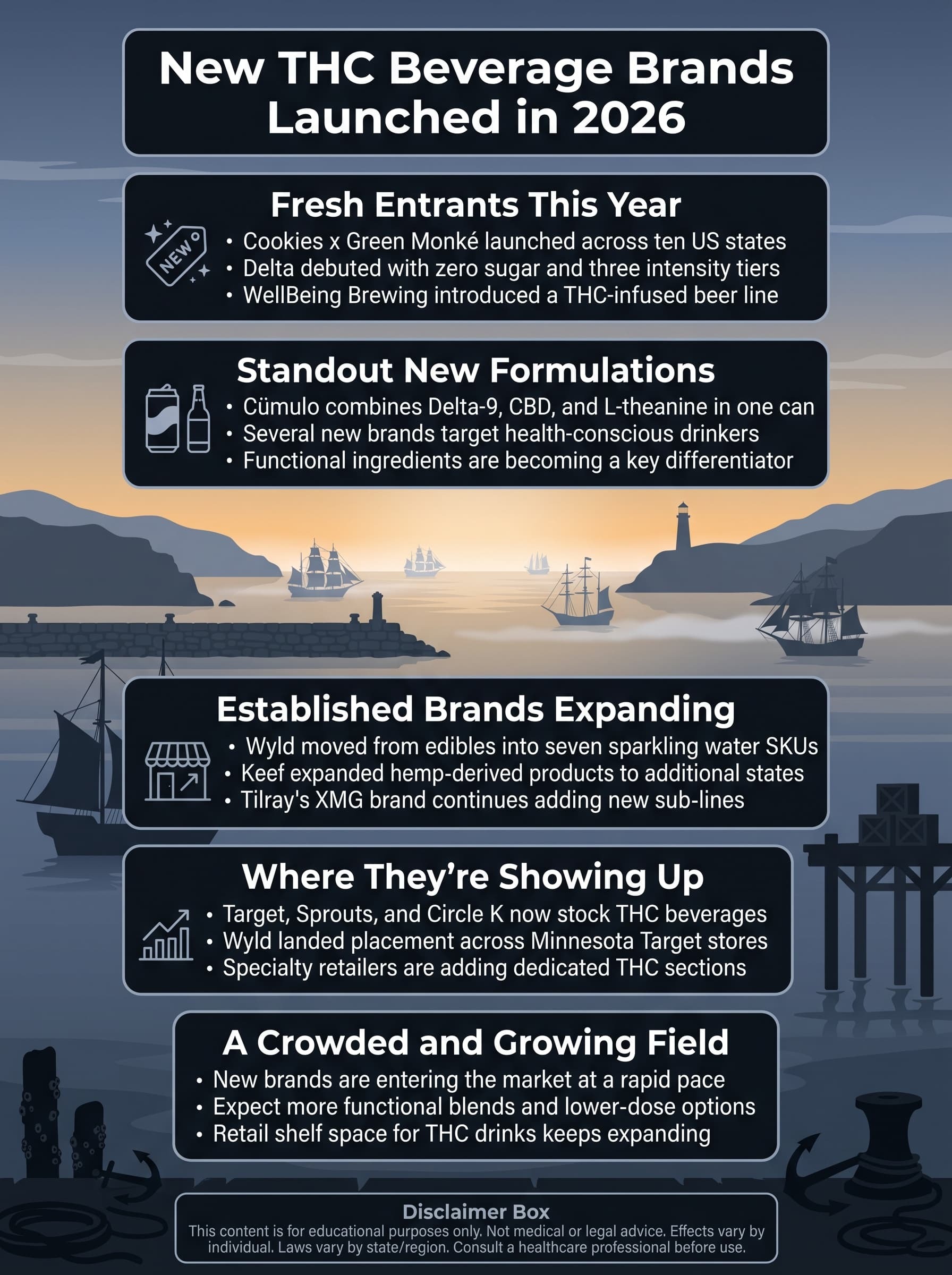
Several new brands entered the THC beverage market this year, while established brands expanded their product lines. The competitive landscape continues to diversify with brands targeting specific consumer segments and occasions.
Notable 2026 Brand Launches
Cookies x Green Monké: In January 2026, Cookies and Green Monké launched hemp-derived THC-infused drinks across ten U.S. states, combining the Cookies brand recognition with beverage expertise.
Delta: Launched with the tagline "none of the B.S.," Delta contains zero sugar and zero synthetic ingredients. The brand offers three intensity tiers and targets health-conscious consumers, according to Beverage Daily.
WellBeing Brewing Co. Golden Hemp: The non-alcoholic beer company introduced a THC-infused line, combining the beer drinking occasion with cannabinoid content.
Cümulo: From Charlotte-based Resident Culture brewery, this full-spectrum plant-based beverage contains Delta-9, CBD, and L-theanine. The Pink Lemonade variant contains 5mg THC, 10mg CBD, and 200mg L-theanine.
Established Brand Expansions
Existing brands have expanded their product ranges:
Wyld: Expanded from edibles into sparkling waters with seven flavor and formulation combinations. Products pair THC with CBD, CBG, or CBC in named categories (Active, Mood, Bliss, Refresh, Restore, Bright, Chill). Wyld achieved placement in Target's Minnesota and multi-state expansion.
Tilray/XMG: In May 2024, Tilray launched new cannabis-infused beverages through its XMG brand under two sub-brands: XMG Plus and XMG Zero, continuing product development into 2026.
Keef: With over a decade in cannabis beverages, Keef expanded hemp-derived product availability to new states, building on their 70+ SKU portfolio.
What Product Formats Are Gaining Market Share?
Product format preferences continue evolving as consumers and brands explore different delivery methods. The sparkling water format dominates, but other categories are developing.
Sparkling Water and Seltzers
Carbonated formats remain the largest category at 55% of cannabis beverage sales. Characteristics driving adoption include:
- Zero or low calorie content
- Familiar consumption experience
- Precise dosing per can
- Portability and convenience
- Compatibility with social occasions
At Enjoy Hemp, our seltzer lineup reflects these format preferences with multiple formulations. Our Functional Variety Pack allows sampling different cannabinoid combinations including THC+Lion's Mane, THC+CBD, THC+CBG, and THC+CBN.
Spirits and Cocktail Alternatives
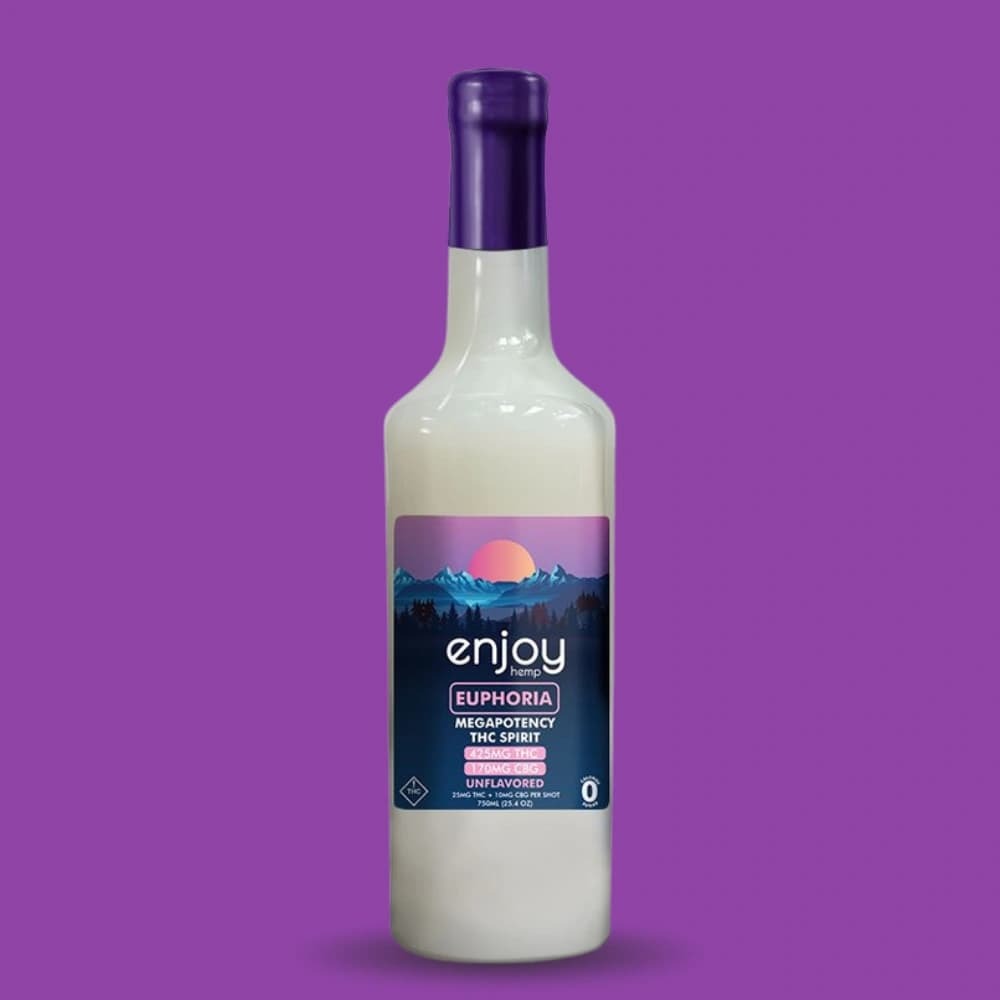
THC spirits designed for mixing or sipping represent a growing segment. These products target consumers seeking cocktail-style experiences without alcohol. Our spirit line includes options like the Unflavored THC+CBG Spirit for cocktail mixing.
Syrups and Concentrates
Higher-concentration formats like THC syrups allow consumers to add cannabinoids to any beverage. Our 420mg Chill Syrup and 800mg Sleep Syrup provide flexibility in consumption method.
Format Market Distribution
According to industry data, product formats break down as follows:
| Format | Market Share | Typical THC Range |
|---|---|---|
| Sparkling Water/Seltzer | 55% | 2.5-10mg |
| Sodas | 15% | 5-10mg |
| Teas/Coffees | 12% | 5-15mg |
| Spirits/Mocktails | 10% | 10-25mg |
| Juices/Other | 8% | Varies |
What Cannabinoid Formulations Are Trending in 2026?
Product formulations have evolved beyond single-cannabinoid products. Multi-cannabinoid combinations and specific ratios now define many product lines.
Multi-Cannabinoid Products
Brands increasingly combine THC with other cannabinoids:
THC + CBD: Balanced ratios (1:1 or 1:2) remain popular. Our Bliss Seltzer contains equal parts THC and CBD (10mg each).
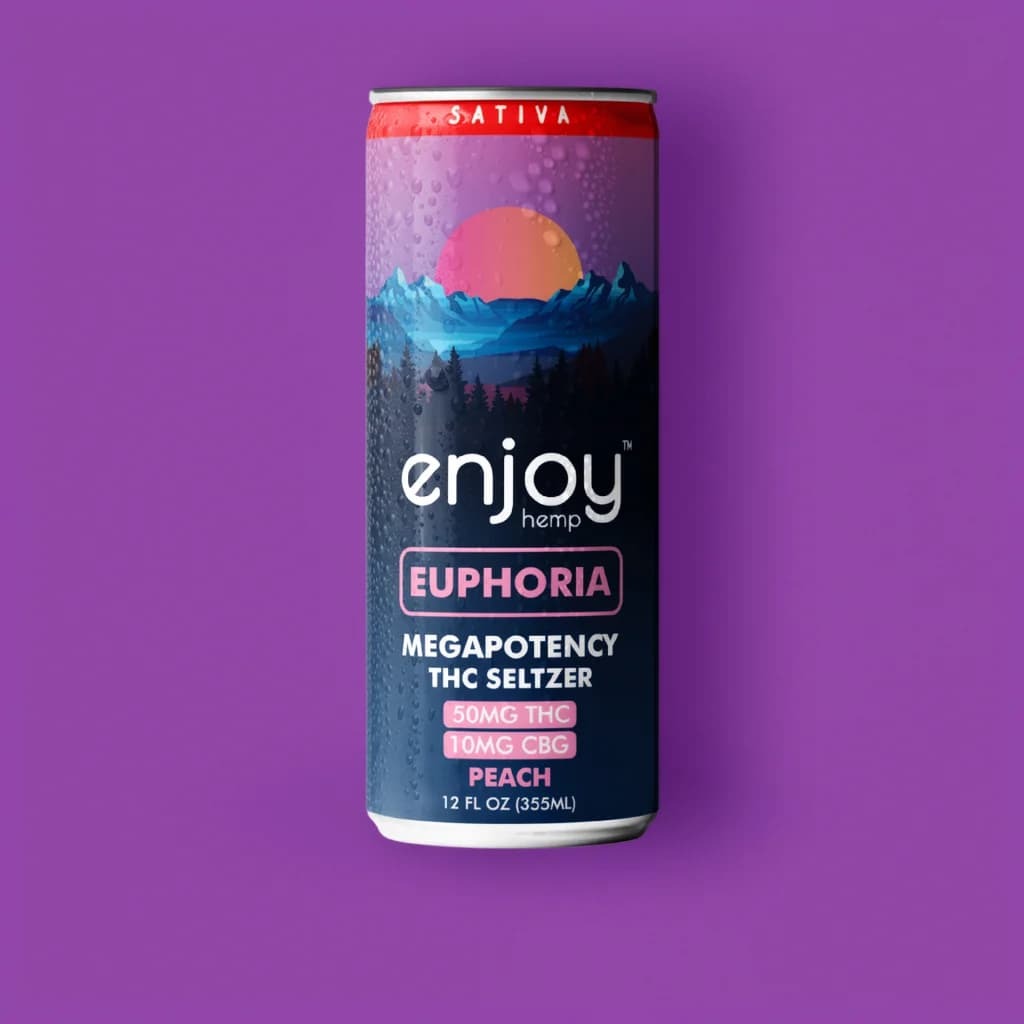
THC + CBG: Cannabigerol appears in products like our Euphoria Seltzer. CBG is a minor cannabinoid found in smaller quantities in the hemp plant.
THC + CBN: Cannabinol combinations appear in products marketed for evening use, such as our Sleep Seltzer.
Full-spectrum formulations: Products containing multiple cannabinoids and terpenes from whole-plant extraction, rather than isolated cannabinoids.
Dosing Tier Development
Brands now offer products across multiple concentration levels:
Microdose tier (2-5mg): Products containing 2.5-5mg THC per serving are gaining market share. Industry data suggests 2.5mg microdose formats are outselling 10mg formats in certain retail contexts.
Standard dose tier (5-10mg): The most common concentration range across the category. Our medium-dose products fall in this range.
Higher concentration tier (25-50mg+): Products for experienced consumers, including our 50mg seltzers.
What Functional Ingredients Are Appearing in THC Drinks?
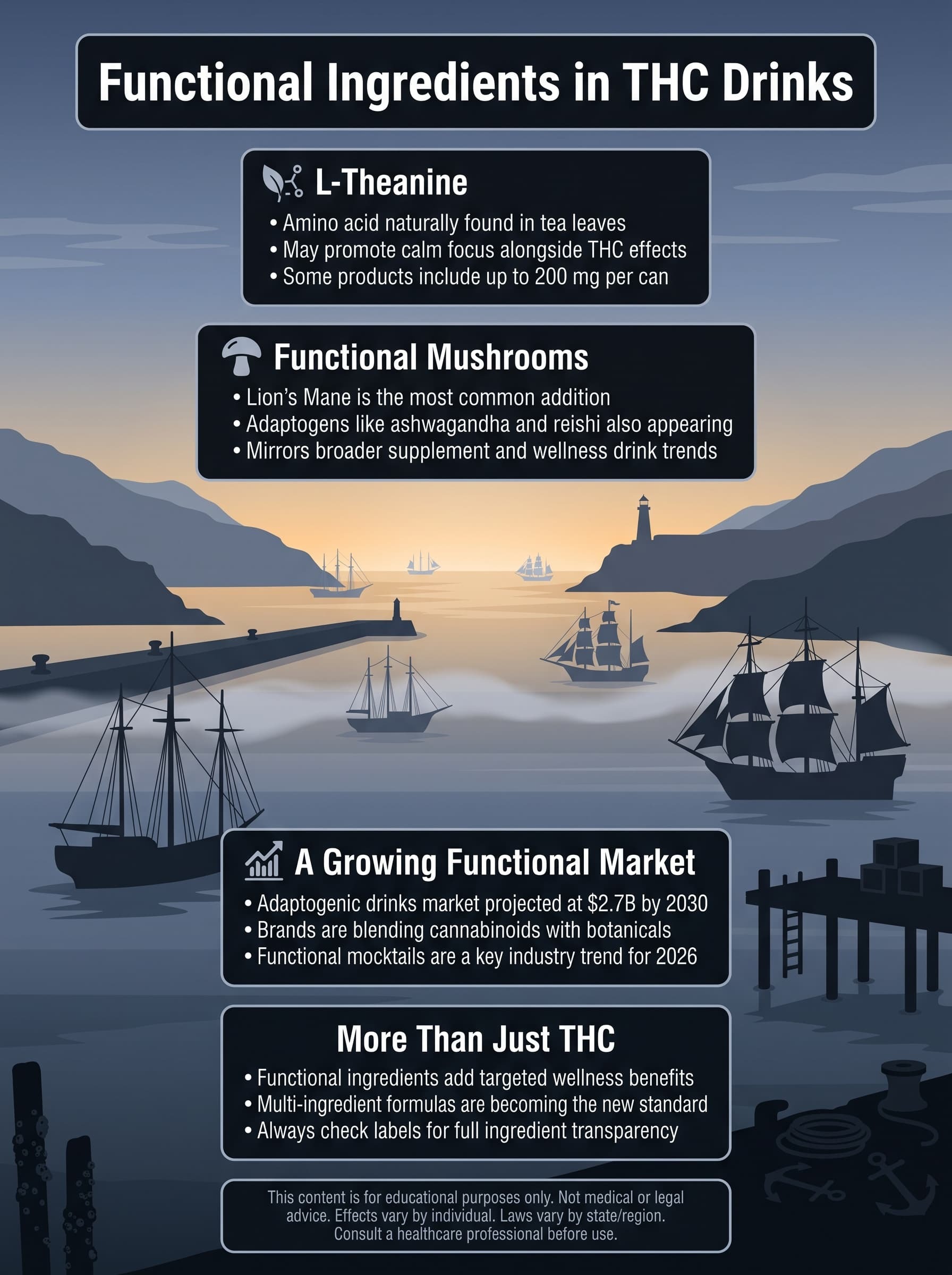
Beyond cannabinoids, brands are incorporating functional ingredients into beverage formulations. This aligns with broader beverage industry trends toward functional and adaptogenic products.
Common Functional Additions
L-Theanine: An amino acid found in tea leaves. Cümulo's sparkling water contains 200mg L-theanine alongside THC and CBD.
Lion's Mane Mushroom: Our Social Seltzer combines THC with Lion's Mane extract. This functional mushroom has gained popularity in the broader supplement market.
Several 2026 drinks, including our Social seltzer, add lion's mane mushroom, and our mushroom guide covers what it is.
Adaptogens: According to Zappi, ingredients like ashwagandha, ginseng, and various mushrooms are appearing in functional beverage formats including cannabis-infused products.
Caffeine: Some products combine THC with caffeine for morning or daytime positioning. Our Energy Seltzer contains 100mg caffeine alongside 10mg THC.
Industry Perspective on Functional Trends
Flavorman's 2026 Beverage Trends report predicts continued growth in functional mocktails with adaptogens, hemp-derived THC beverages, and innovative flavor profiles that replicate the complexity of traditional spirits.
The adaptogenic drinks market reached $1.56 billion in 2023 and is projected to reach $2.70 billion by 2030, indicating strong consumer interest in functional ingredient combinations.
What Flavor Trends Are Emerging?
Flavor development in THC beverages reflects broader beverage industry trends while addressing category-specific needs like masking hemp taste.
Dominant Flavor Categories
Citrus and tropical fruits: Blood orange, peach, mango, passionfruit, and lemon remain among the most common flavor profiles. These fruit flavors effectively complement cannabinoid formulations.
Berry combinations: Strawberry, raspberry, blackberry, and mixed berry profiles appear frequently across brands.
Botanical and cocktail-inspired: Brands like CANN use culinary botanicals including cardamom, rosemary, lavender, and elderflower to create cocktail-adjacent flavor experiences.
Tea and coffee profiles: Iced tea and coffee-flavored products target morning and afternoon consumption occasions.
Flavor Innovation Directions
According to Innova Market Insights, mood plays a central role in influencing flavor cravings for over half of global consumers, and over 40% say flavor influences their mood. This connection between flavor and emotional state is particularly relevant for cannabis beverages.
Sensapure Flavors notes that clean-label demand remains strong in 2026, but consumers expect functional beverages to deliver transparency and taste without sacrificing enjoyment.
What Regulatory Developments Affect the Market?
Federal and state regulations continue shaping the THC beverage landscape. Understanding the regulatory environment helps contextualize market developments.
Federal Considerations
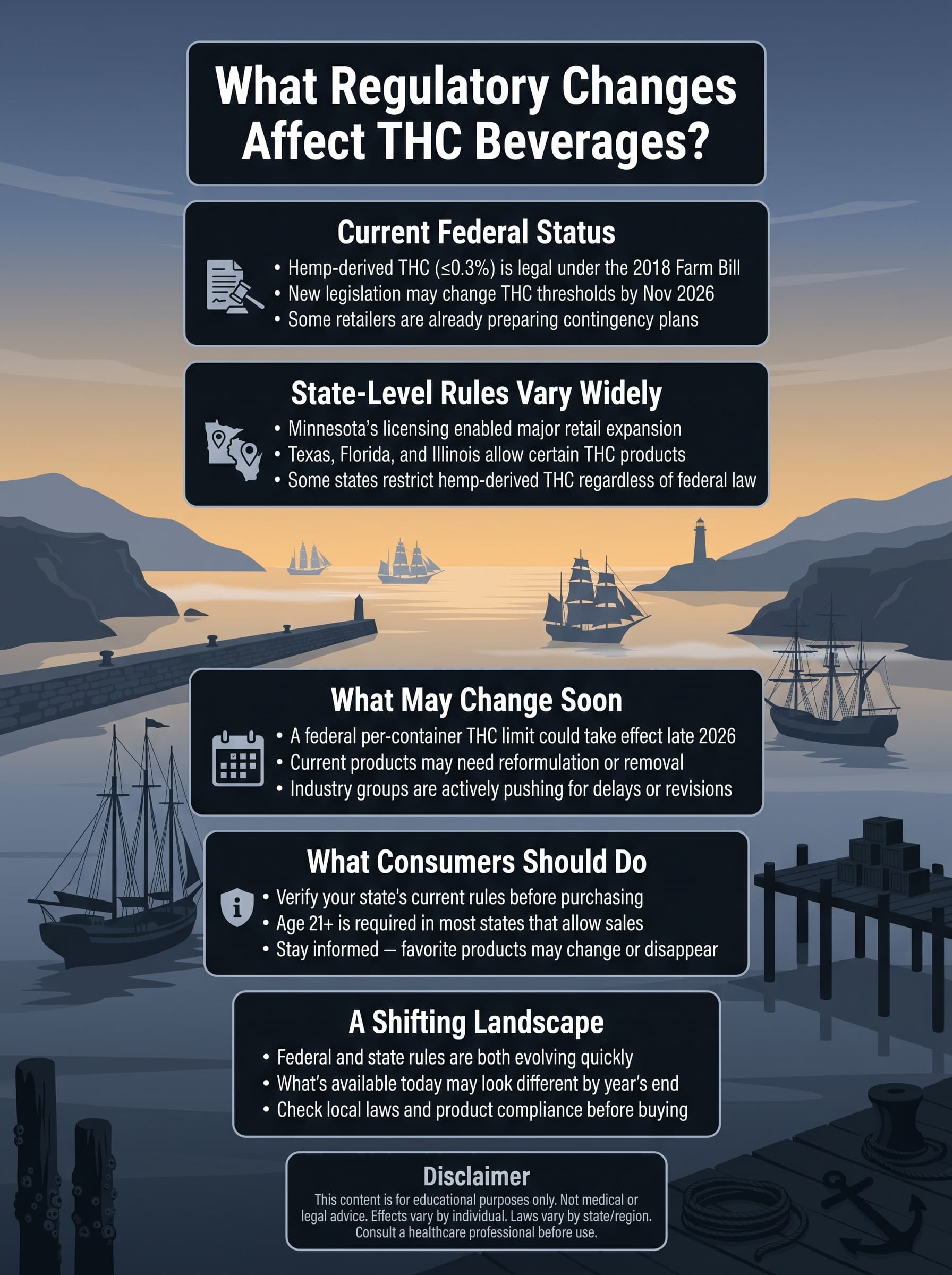
Hemp-derived products containing ≤0.3% Delta-9 THC remain federally legal under the 2018 Farm Bill. However, legislative developments may affect this status:
P.L. 119-37: Congress passed legislation that will change hemp product definitions, with implementation scheduled for November 2026. This legislation establishes new THC thresholds that may affect current products.
Industry response: According to BevNET reporting, some retailers are preparing contingency plans including potential inventory markdowns if regulatory changes proceed as scheduled.
State-Level Variations
States maintain different approaches to hemp-derived THC products:
- Minnesota has comprehensive hemp product licensing that enabled Target's expansion
- Texas, Florida, and Illinois allow certain hemp-derived THC products, enabling major retail entry
- Some states maintain restrictions on hemp-derived THC regardless of federal legality
- Age requirements (typically 21+) apply in most states permitting these products
Consumers should verify current regulations in their specific jurisdiction before purchasing.
How Are Distribution Channels Evolving?
Product accessibility depends on distribution channel development. Several distribution trends characterize the 2026 market.
Online Direct-to-Consumer
Online platforms represent the fastest-growing distribution channel at 13.8% CAGR, according to Precedence Research. E-commerce offers:
- Broader product selection than physical retail
- Subscription and bulk purchasing options
- Age verification at checkout
- Shipping to states where products are legal
At Enjoy Hemp, we ship directly to consumers in states where our products are legal, offering variety packs like the Mood Variety Pack for sampling different formulations.
Mainstream Retail
The Target, Sprouts, and Circle K expansions mark a significant shift toward mainstream retail availability. These channels provide:
- Consumer familiarity and trust
- Impulse purchase opportunities
- Physical product examination before purchase
- Integration with regular shopping trips
Specialty Beverage Retail
Total Wine and similar beverage-focused retailers have positioned THC drinks alongside alcohol alternatives, targeting consumers seeking social beverages with different ingredient profiles.
What Consumer Demographics Are Driving Growth?
Consumer research reveals demographic patterns in THC beverage adoption.
Age Demographics
According to Coherent Market Insights, millennials and Gen Z drive high demand for cannabis beverages. Nearly 4 in 5 Gen Z and Millennials already consume functional beverages, creating familiarity with the format.
Health-Conscious Consumers
THC beverages appeal to health-conscious consumers through:
- Zero or low calorie formulations
- No smoke or vapor inhalation
- Precise, measured dosing
- Alcohol-alternative positioning
- Clean ingredient lists
Alcohol Alternative Seekers
The "sober curious" movement continues influencing beverage choices. Flavorman's 2026 trends report notes that zero-proof products are diversifying, with THC beverages positioned as one alternative within this category.
A Truss Beverage Co. survey found that 35% of respondents preferred consuming cannabis in beverage form rather than smoking, indicating consumer interest in alternative consumption methods.
What Production Technologies Are Advancing?
Technical innovation continues improving THC beverage formulations and performance.
Nano-Emulsification
Nano-emulsion technology breaks cannabinoid particles into very small sizes, creating water-soluble compounds. This technology enables:
- Even cannabinoid distribution throughout beverages
- Improved bioavailability (absorption by the body)
- Consistent dosing across the product
- Reduced hemp taste in finished products
Flavor Masking
Advanced flavor systems address the challenge of hemp taste in beverages. Techniques include using complementary fruit and botanical flavors to create products where cannabinoid content doesn't dominate the taste experience.
Stability Improvements
Formulation advances have improved product shelf stability, allowing longer shelf life and wider distribution without refrigeration requirements.
How Does the THC Drink Market Compare to Other Categories?
Contextualizing THC beverages within the broader market provides perspective on category size and growth.
Within Cannabis Products
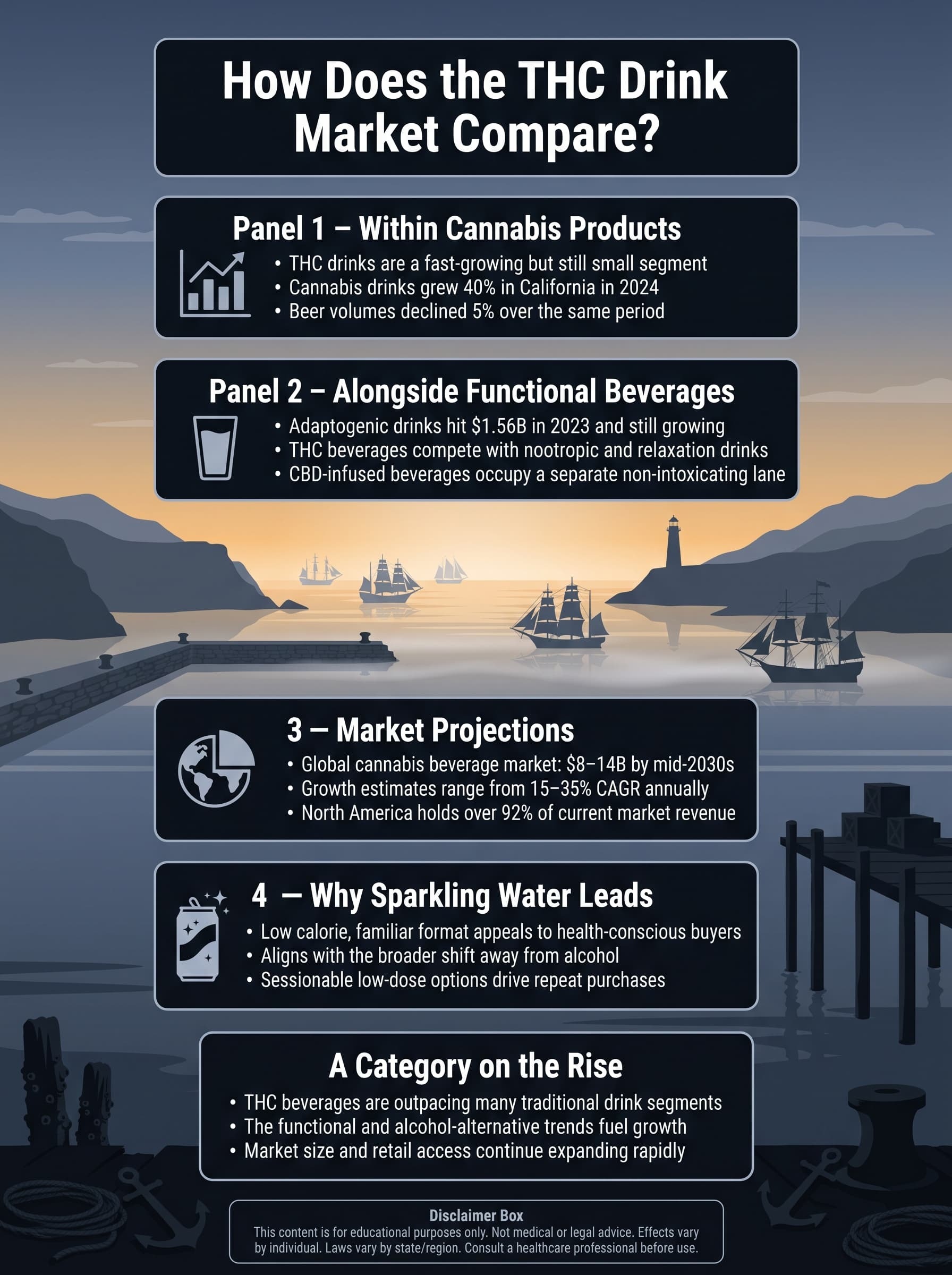
THC beverages represent a growing but still relatively small segment of total cannabis sales. In California, cannabis-infused drinks saw 40% sales growth in 2024, according to Coherent Market Insights, while beer volumes declined 5% in the same period.
Within Functional Beverages
THC beverages operate alongside other functional categories including:
- Adaptogenic drinks ($1.56B market in 2023)
- CBD-infused beverages (non-intoxicating)
- Nootropic and cognitive support drinks
- Relaxation and stress-focused beverages
Market Projections
Market research firms project varied growth scenarios for cannabis beverages:
- $8-14 billion by mid-2030s according to various forecasts
- 15-35% CAGR depending on research methodology and market definition
- Continued North American market dominance (92%+ share)
Frequently Asked Questions About THC Drinks in 2026
What is the biggest change in THC drinks this year?
The most significant 2026 development is mainstream retail expansion, with Target, Sprouts, and Circle K adding THC beverages to hundreds of locations. Target alone expanded to over 300 stores across Minnesota, Florida, Texas, and Illinois after a successful pilot program.
Which THC drink brands are available at Target?
Target's THC beverage selection includes Birdie, Cann, Find Wunder, Gigli, Hi Seltzer, Indeed, Señorita, Stigma, Surly, Trail Magic, Wyld, and Wynk. Selection varies by location and state regulations.
What THC dosages are most popular in 2026?
Lower-dose products (2.5-5mg THC) are gaining market share, with industry data suggesting microdose formats are outselling 10mg formats in certain retail contexts. Standard dosing remains 5-10mg per serving for most products.
What functional ingredients appear in THC drinks?
THC beverages increasingly include functional additions such as L-theanine, Lion's Mane mushroom, adaptogens like ashwagandha, and caffeine. Multi-cannabinoid formulations combining THC with CBD, CBG, or CBN are also common.
Where can I buy THC drinks online?
Many brands ship directly to consumers in states where hemp-derived THC products are legal. Online purchasing offers broader selection, subscription options, and variety packs. Age verification (21+) is required at checkout.
What is nano-emulsification in THC beverages?
Nano-emulsification is a processing technology that breaks cannabinoid particles into very small sizes, making them water-soluble. This allows even distribution throughout beverages, improved bioavailability, and reduced hemp taste.
Are THC drinks legal in all states?
Hemp-derived products containing ≤0.3% Delta-9 THC are federally legal under the 2018 Farm Bill. However, state laws vary significantly. Some states restrict hemp-derived THC products regardless of federal legality. Consumers should verify regulations in their specific jurisdiction.
What is the most common THC drink format?
Sparkling water and seltzers dominate the market, representing 55% of cannabis beverage sales. This format offers zero or low calories, familiar consumption experience, precise dosing, and social occasion compatibility.
How does THC drink pricing compare to other beverages?
THC beverages typically cost $4-8 per can at retail, comparable to premium craft beverages or cocktails. Bulk purchasing, subscriptions, and variety packs can reduce per-unit cost.
What cannabinoid combinations are trending?
Multi-cannabinoid products are increasingly common. Popular combinations include THC+CBD (balanced ratios), THC+CBG, THC+CBN, and full-spectrum formulations containing multiple cannabinoids and terpenes from whole-plant extraction.
Navigating THC Beverage Options in 2026
The THC beverage market continues expanding through mainstream retail partnerships, new brand entries, and product innovation. Understanding these developments helps consumers identify products matching their preferences.
For those exploring the category, starting with lower-dose products (2.5-5mg THC) provides an introduction. Our microdose collection and 5mg seltzers offer entry points for new consumers.
For experienced consumers seeking variety, our Mega Potency Mood Variety Pack provides 50mg options across different cannabinoid combinations.
The full beverage lineup includes seltzers, spirits, and syrups across multiple dosing tiers and cannabinoid formulations.
About the Author
Sarah Mitchell is a wellness industry professional with 15 years of experience in functional supplements and hemp-derived products. She previously led product development at two nationally recognized wellness brands and holds certification as a holistic health practitioner. Sarah advises consumers on quality standards and product selection in the evolving hemp market.
Important Notice: This content provides general information about the THC beverage market in 2026. Product availability, formulations, and regulations may change. Always verify current product specifications and legal status in your jurisdiction before purchasing. Market projections represent third-party estimates and actual results may vary.
All Enjoy Hemp products are derived from hemp containing ≤0.3% Delta-9 THC in compliance with the 2018 Farm Bill. These statements have not been evaluated by the Food and Drug Administration. This product is not intended to diagnose, treat, cure, or prevent any disease. Hemp-derived THC products may appear on drug tests. Consult applicable local and state laws before purchasing or consuming any hemp-derived THC product.