











THCA Explained: Beginner’s Guide to Legality, Testing, and 2026 Farm Bill Update
Posted by Enjoy Hemp Editor Team on Oct 11th 2026
Last Updated: September 2026
By Sarah Mitchell, Wellness Industry Specialist
THCA (tetrahydrocannabinolic acid) is a non-psychoactive cannabinoid found naturally in raw cannabis plants that converts to THC when heated. Under the 2018 Farm Bill, THCA products containing no more than 0.3% Delta-9 THC are federally legal hemp. This changes on November 12, 2026, when new federal law counts THCA toward the THC limit.
If you've seen THCA products in smoke shops, online stores, or even gas stations and wondered what they actually are, you're not alone. The THCA market exploded from essentially nothing in 2021 to over $28 billion in retail sales by 2024, according to industry estimates. That rapid growth happened because of a specific gap in how federal law measures THC content.
This guide explains everything a beginner needs to know: what THCA actually is, why it's been legal, how testing determines legality, what products are available, and what happens when federal law changes this November. After 15 years evaluating hemp and cannabis products, I'll break down the science and legal framework in plain language.
What Is THCA?
THCA is the acidic precursor to THC that exists naturally in living cannabis plants. When a cannabis plant grows, it produces THCA, not THC. The plant stores cannabinoids in their acid forms. THCA only becomes THC through a process called decarboxylation, which happens when you apply heat.
The Chemistry in Simple Terms
Think of THCA as THC with an extra molecular group attached. That extra piece (a carboxyl group, for the chemistry-minded) prevents THCA from fitting into the brain receptors that produce a high. The molecule is too bulky to activate the CB1 receptors responsible for psychoactive effects.
When you heat THCA, that extra molecular group breaks off as carbon dioxide. What remains is Delta-9 THC, the compound responsible for the classic cannabis high. This conversion happens when you:
- Smoke THCA flower
- Vaporize THCA concentrates
- Cook with THCA products
- Leave products in hot environments over time
Raw vs. Heated: Different Compounds
Raw THCA and heated THC are chemically different substances with different properties:
| Property | THCA (Raw) | THC (Heated) |
|---|---|---|
| Psychoactive | No | Yes |
| Legal status (until Nov 2026) | Hemp if ≤0.3% D9 | Controlled substance |
| Found in | Raw plant material | Smoked/vaped material |
| Drug test | May trigger positive | Will trigger positive |
Why Is THCA Federally Legal Right Now?
THCA is federally legal because of how the 2018 Farm Bill defined legal hemp. The law set a single threshold: hemp is cannabis containing no more than 0.3% Delta-9 THC by dry weight. It did not include THCA in that measurement.
The 2018 Farm Bill Framework
When Congress passed the Agriculture Improvement Act of 2018 (commonly called the 2018 Farm Bill), they removed "hemp" from the Controlled Substances Act. The definition they used was specific:
"The term 'hemp' means the plant Cannabis sativa L. and any part of that plant, including the seeds thereof and all derivatives, extracts, cannabinoids, isomers, acids, salts, and salts of isomers, whether growing or not, with a delta-9 tetrahydrocannabinol concentration of not more than 0.3 percent on a dry weight basis."
Note what the definition measures: "delta-9 tetrahydrocannabinol concentration." Not total THC. Not THCA. Just Delta-9 THC specifically.
The Testing Gap
This created what industry observers call the "THCA loophole." A cannabis flower could contain 25% THCA and only 0.2% Delta-9 THC. Under the 2018 law's specific language, that flower is legal hemp because it meets the Delta-9-only threshold.
When you smoke that same flower, the THCA converts to THC, producing psychoactive effects essentially identical to traditional marijuana. The distinction exists only in how the law measures compliance, not in what the consumer experiences.
How Does THCA Testing Work?
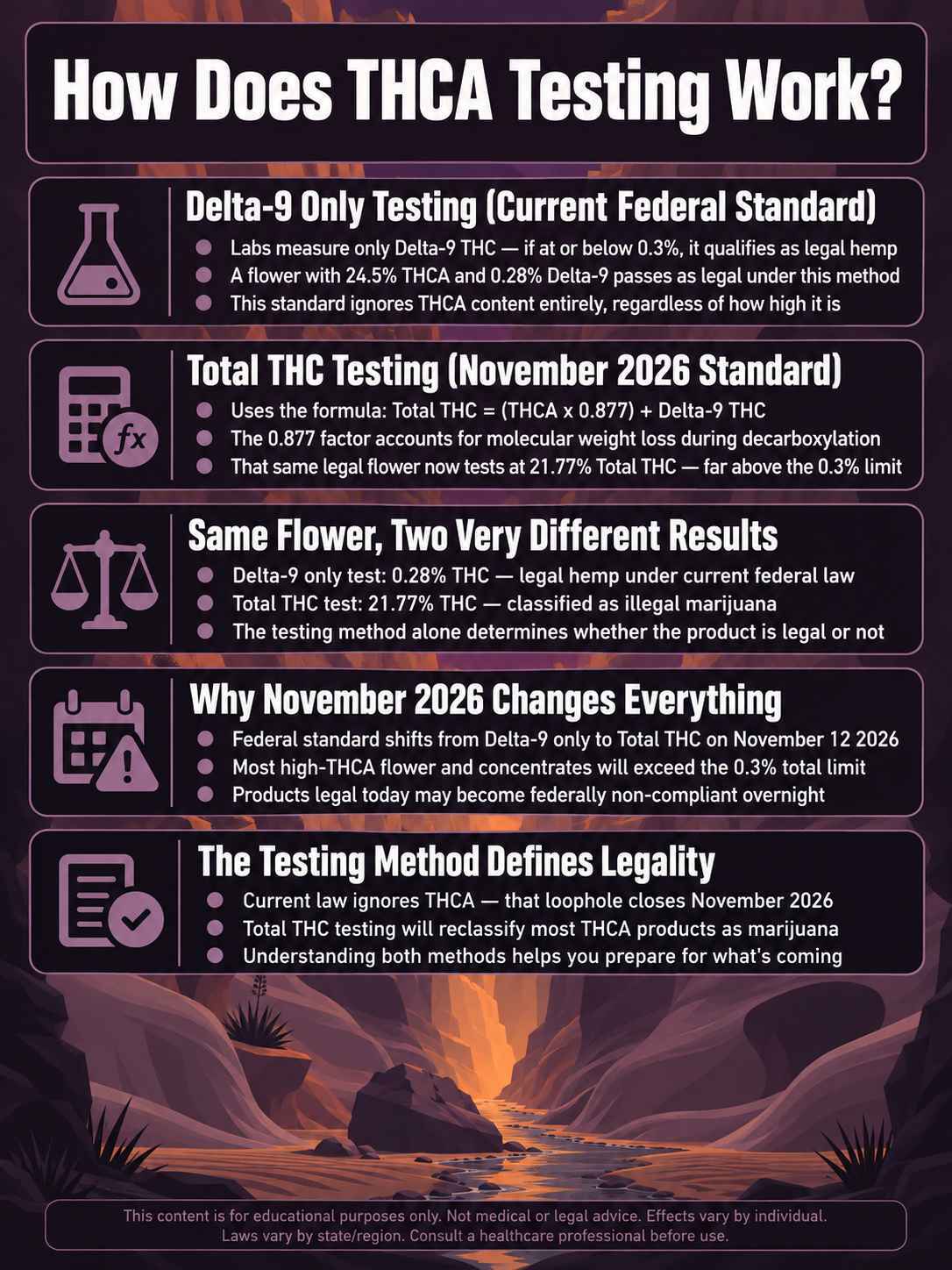
Understanding THCA testing is essential for understanding why products are legal and how that changes in November 2026. Two different testing approaches produce dramatically different results.
Delta-9 Only Testing (Current Federal Standard)
The current federal standard measures only Delta-9 THC content. Labs test raw plant material or finished products and report the Delta-9 THC percentage. If that number is at or below 0.3%, the material qualifies as legal hemp under federal law.
Under this standard, a flower sample might show:
- THCA: 24.5%
- Delta-9 THC: 0.28%
- Result: Legal hemp
Total THC Testing (November 2026 Federal Standard)
Total THC testing calculates what the THC content would be after decarboxylation. It uses a formula that accounts for THCA conversion:
Total THC = (THCA × 0.877) + Delta-9 THC
The 0.877 factor accounts for the molecular weight difference when THCA loses its carboxyl group. Applying this formula to the same flower sample:
- THCA: 24.5% × 0.877 = 21.49%
- Delta-9 THC: 0.28%
- Total THC: 21.77%
- Result: Illegal marijuana (far exceeds 0.3%)
The same flower that's legal hemp under Delta-9-only testing becomes illegal marijuana under total-THC testing. This is why the November 2026 change matters so much.
What Changes on November 12, 2026?
Federal law officially shifts to a total-THC standard on November 12, 2026. This single change effectively ends the legal THCA market as it currently exists.
Section 781 of P.L. 119-37
Congress passed the Continuing Appropriations and Extensions Act (Public Law 119-37) on November 12, 2025. Section 781 redefines hemp using total THC rather than Delta-9 THC alone. The law takes effect exactly one year after passage.
Key changes:
- New hemp definition: "Total tetrahydrocannabinols" calculated using (THCA × 0.877) + Delta-9 THC must not exceed 0.3%
- Per-container limit: Finished consumable products cannot exceed 0.4mg total THC per container
- No grandfather clause: Products purchased before November 12 don't retain legal status
What This Means Practically
After November 12, 2026:
- Most current THCA flower becomes federally illegal
- Interstate shipping of high-THCA products ends
- Products exceeding the new limits cannot be sold legally under federal law
- States may continue allowing products under their own frameworks, but federal commerce restrictions apply
Legislative Efforts
The bipartisan Lawful Hemp Protection Act, announced July 22, 2026, could potentially delay or modify these changes. As of September 2026, it has not passed. Consumers should not assume legislative rescue and should plan based on current law.
What THCA Products Are Available?
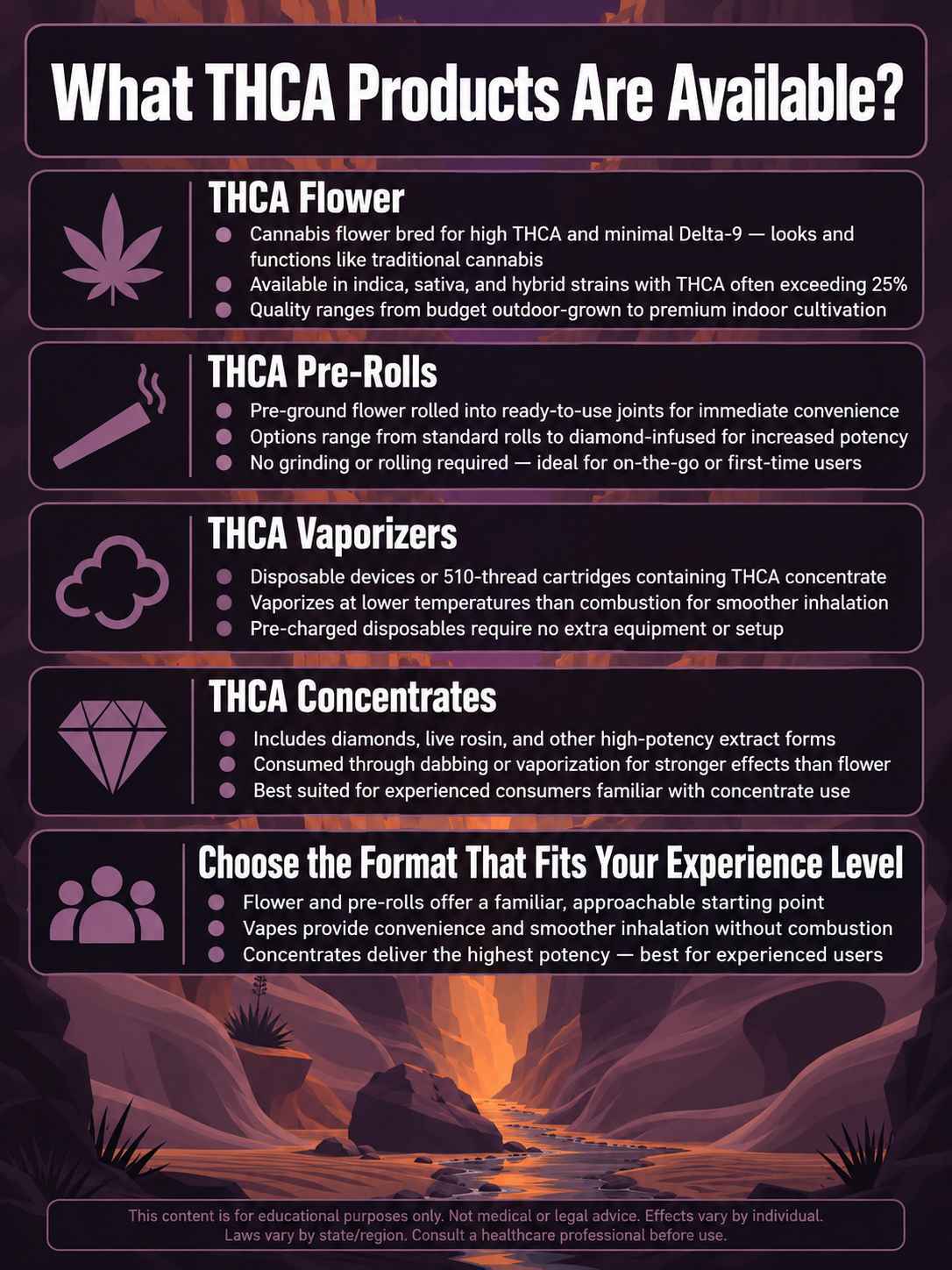
THCA products come in several formats, each with different characteristics for consumption.
THCA Flower
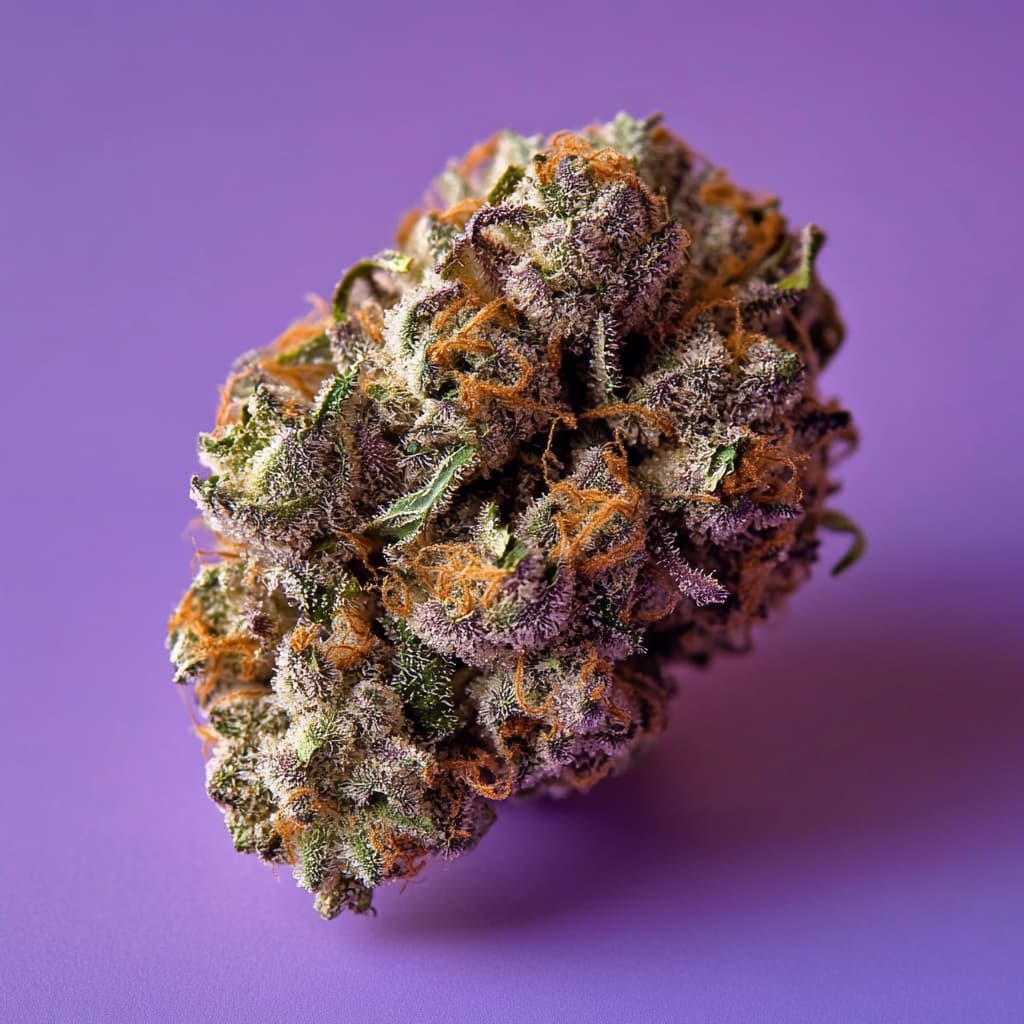
THCA flower is cannabis plant material bred to produce high THCA and minimal Delta-9 THC in its raw form. It looks, smells, and (when smoked) functions like traditional cannabis flower. The only difference is how it's tested for legal compliance.
THCA flower is typically sold by weight (grams or eighths) and comes in various strains with different terpene profiles. Quality ranges from budget outdoor-grown hemp to premium indoor cultivation with THCA percentages exceeding 25%.
Our THCA flower collection includes indica, sativa, and hybrid options like OG Kush, Blue Dream, and Super Silver Haze.
THCA Pre-Rolls
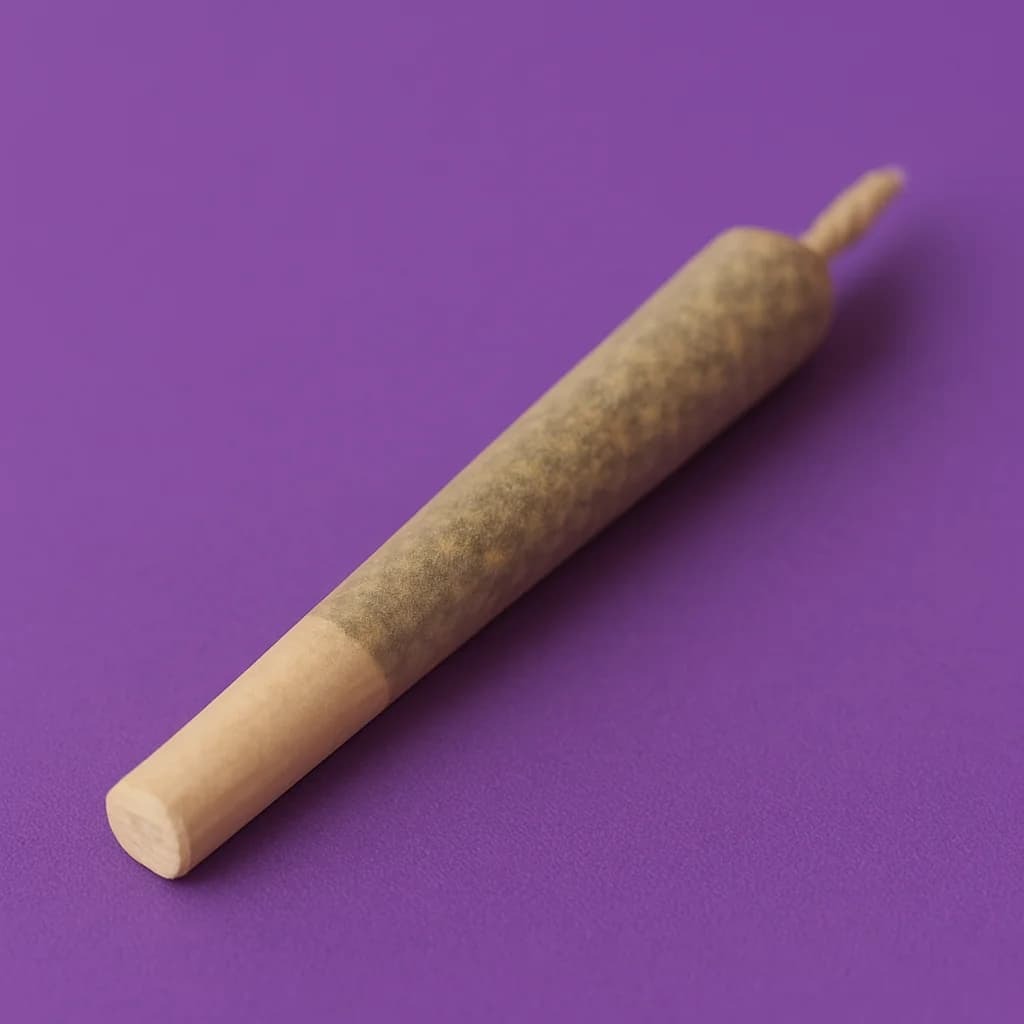
Pre-rolls are THCA flower pre-ground and rolled into joints, ready for immediate use. They offer convenience without requiring the consumer to grind and roll flower themselves.
Pre-rolls range from standard flower rolls to diamond-infused options that add THCA concentrate for increased potency. Our pre-roll collection includes both standard and Mega Potency Double Diamond varieties.
THCA Vaporizers
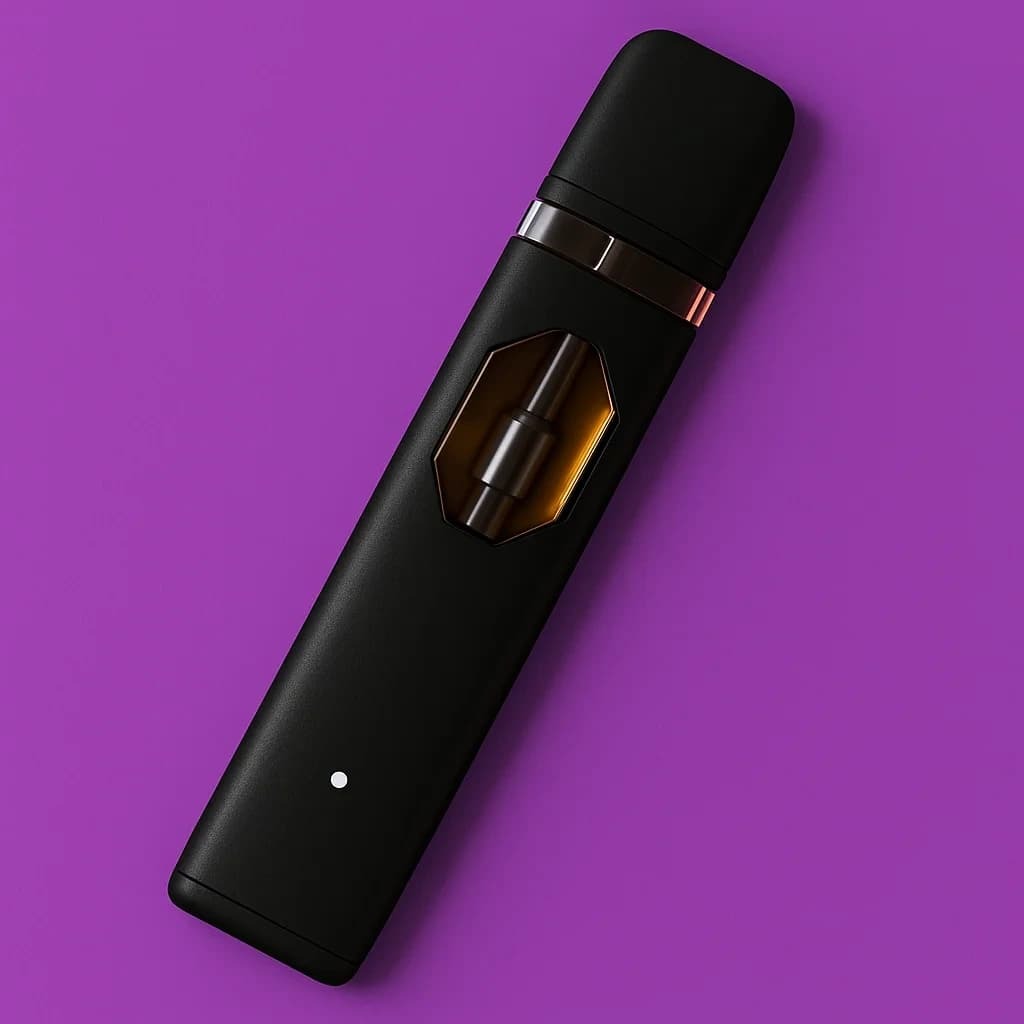
THCA vape products come in disposable devices or cartridges compatible with 510-thread batteries. They contain THCA concentrate that vaporizes at lower temperatures than combustion, producing smoother inhalation.
Our THCA disposable vapes are pre-charged and ready for use without additional equipment.
THCA Concentrates
THCA concentrates include diamonds (crystalline THCA), live rosin, and other extract forms. These products offer higher potency than flower and are typically consumed through dabbing or vaporization.
Our THCA diamond dabs provide concentrated THCA for experienced consumers.
How Is THCA Different From Delta-8 and Delta-9?
THCA, Delta-8 THC, and Delta-9 THC are related but distinct cannabinoids. Understanding the differences helps clarify why each has different legal treatment.
Cannabinoid Comparison
| Cannabinoid | Psychoactive | Natural Source | Federal Status |
|---|---|---|---|
| THCA | No (until heated) | Abundant in cannabis | Hemp (until Nov 2026) |
| Delta-9 THC | Yes | Primary THC form | Hemp if ≤0.3% |
| Delta-8 THC | Yes (milder) | Trace amounts only | Disputed, many state bans |
Key Distinctions
THCA: The acidic precursor found naturally in cannabis. Not psychoactive until heated. Currently legal under federal hemp law when Delta-9 content is under 0.3%.
Delta-9 THC: The primary psychoactive cannabinoid in cannabis. Legal in hemp products only when present at 0.3% or less. The compound measured for federal compliance.
Delta-8 THC: A less potent THC variant that occurs naturally only in trace amounts. Most commercial Delta-8 is synthesized from CBD through chemical conversion. Many states have banned Delta-8 specifically.
For more on Delta-8, see our guide: What Is Delta-8 THC?
Will THCA Show Up on a Drug Test?
Yes, THCA will likely cause a positive result on standard drug tests. This is true even though THCA is currently federally legal as hemp.
How Drug Tests Work
Standard cannabis drug tests look for THC metabolites, specifically a compound called THC-COOH. When your body processes THC, it breaks it down into THC-COOH, which remains detectable in urine for days or weeks depending on usage patterns.
When you consume THCA products by smoking or vaping, the THCA converts to THC through heat. Your body then metabolizes that THC the same way it would metabolize THC from any other source. The test cannot distinguish between THC from legal hemp THCA and THC from illegal marijuana.
Raw THCA Considerations
Even consuming raw THCA (without heating) may trigger positive tests. Some THCA converts to THC naturally over time, and your body may process THCA in ways that produce detectable metabolites. If you face drug testing, assume any THCA product could cause a positive result.
Legal Status Doesn't Matter for Testing
Drug tests don't measure legal status. They measure chemical compounds. Employers, courts, and other entities requiring drug tests typically don't accept "it was legal hemp" as an explanation for a positive result. If you're subject to drug testing, THCA products carry real risk regardless of their federal legal status.
Where Is THCA Legal to Buy?
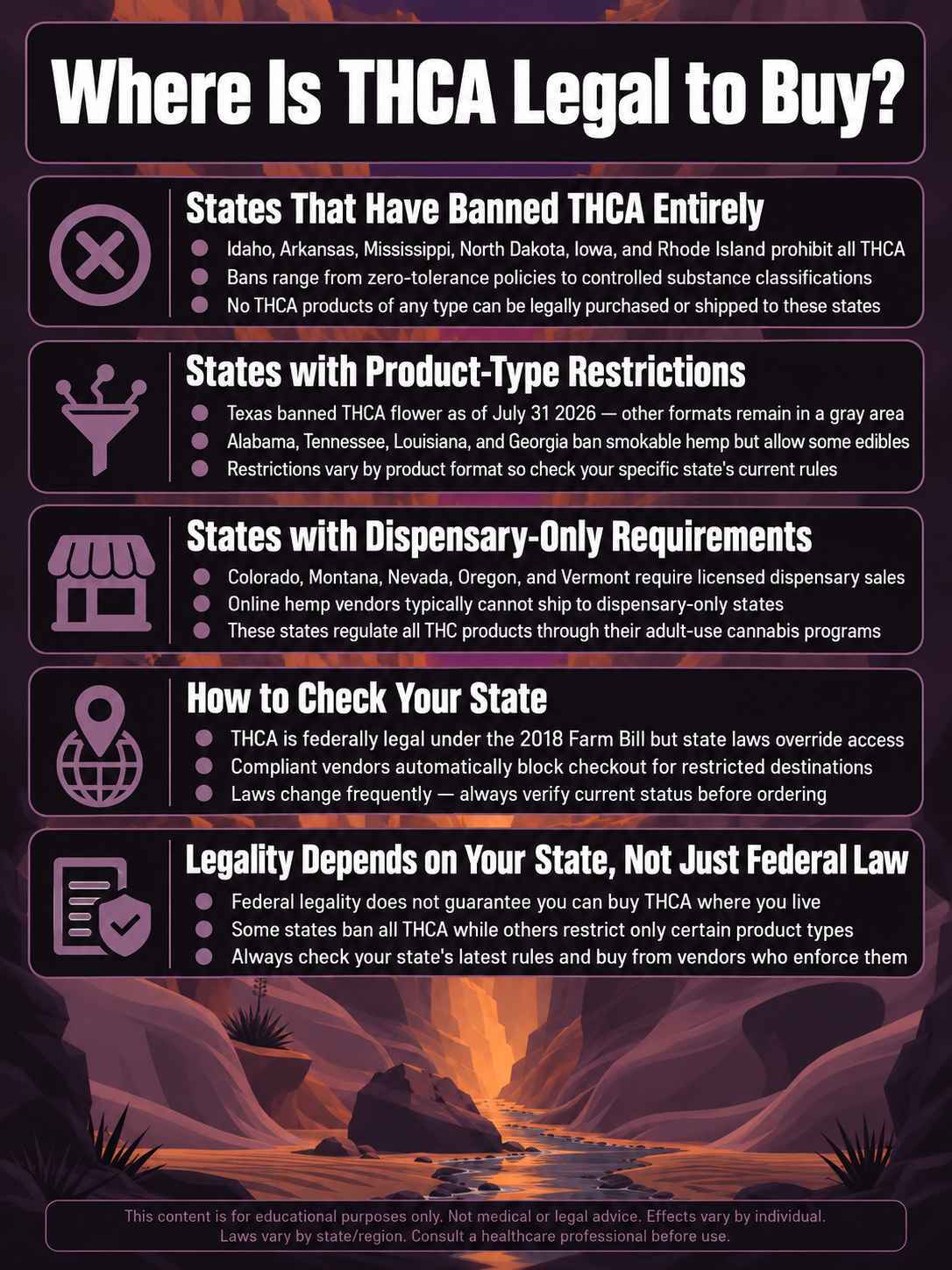
THCA legality varies by state. While federally legal under the current 2018 Farm Bill framework, individual states have enacted their own restrictions.
States That Have Banned THCA
As of September 2026, these states prohibit THCA entirely:
- Idaho (zero-tolerance THC policy)
- Arkansas (Act 629, Schedule VI classification)
- Mississippi (total-THC + attorney general opinion)
- North Dakota (controlled substance law)
- Iowa (controlled substance analog)
- Rhode Island (intoxicating hemp restrictions)
States with Product-Type Restrictions
These states allow some THCA products but ban others:
- Texas: THCA flower banned (July 31, 2026); other products in gray area
- Alabama: Smokable hemp is a felony; capped edibles legal
- Tennessee: Flower banned; licensed retail only
- Louisiana: Smokable banned; permitted edibles with caps
- Georgia: Flower specifically banned; extracts allowed
States with Dispensary-Only Rules
Some legal cannabis states require THC products to go through licensed dispensary channels:
- Colorado
- Montana
- Nevada
- Oregon
- Vermont
For a complete state-by-state breakdown, see our guide: THC Gummies USA: Federal Laws, State Regulations, and Shipping Guide.
How Do You Choose Quality THCA Products?
Not all THCA products are equal. Quality varies significantly across brands, and some products marketed as THCA are mislabeled, contaminated, or even synthetic.
Essential Quality Indicators
Third-party lab testing: Every legitimate THCA product should have a Certificate of Analysis (COA) from an ISO/IEC 17025 accredited laboratory. This document verifies cannabinoid content and tests for contaminants.
Batch-specific documentation: COAs should match the specific batch you're purchasing, not generic company-wide testing.
Complete safety panels: Beyond cannabinoid potency, COAs should show testing for pesticides, heavy metals, microbial contamination, and (for concentrates) residual solvents.
Transparent sourcing: Quality brands disclose where their hemp is grown and how it's cultivated.
Red Flags to Avoid
- No COAs available or "available upon request" only
- Prices dramatically below market rate
- Claims of "legal everywhere" without qualification
- No verifiable business information
- COAs from non-accredited or unfamiliar labs
For detailed guidance on evaluating products, see our guide: How to Find Reputable Websites Selling Lab-Tested THC Products.
What Should Beginners Know Before Trying THCA?
If you're new to cannabis products, THCA flower and concentrates are not beginner-friendly. They produce the same psychoactive experience as traditional cannabis when smoked or vaped.
Start Low, Go Slow
The standard advice for any cannabis product applies: start with a small amount and wait to understand how it affects you before consuming more. THCA flower can vary significantly in potency, and individual responses differ based on tolerance, body weight, metabolism, and other factors.
Inhalation Acts Quickly
Unlike edibles that take 30-90 minutes to produce effects, smoking or vaping THCA flower produces effects within minutes. This makes it easier to gauge your response in real-time but also means effects can intensify quickly if you consume too much.
Consider Alternatives for True Beginners
If you've never consumed cannabis products before, starting with THCA flower may not be ideal. Lower-dose options like microdose gummies (2.5-5mg THC per serving) allow more precise dosing and gentler introduction to cannabinoid effects.
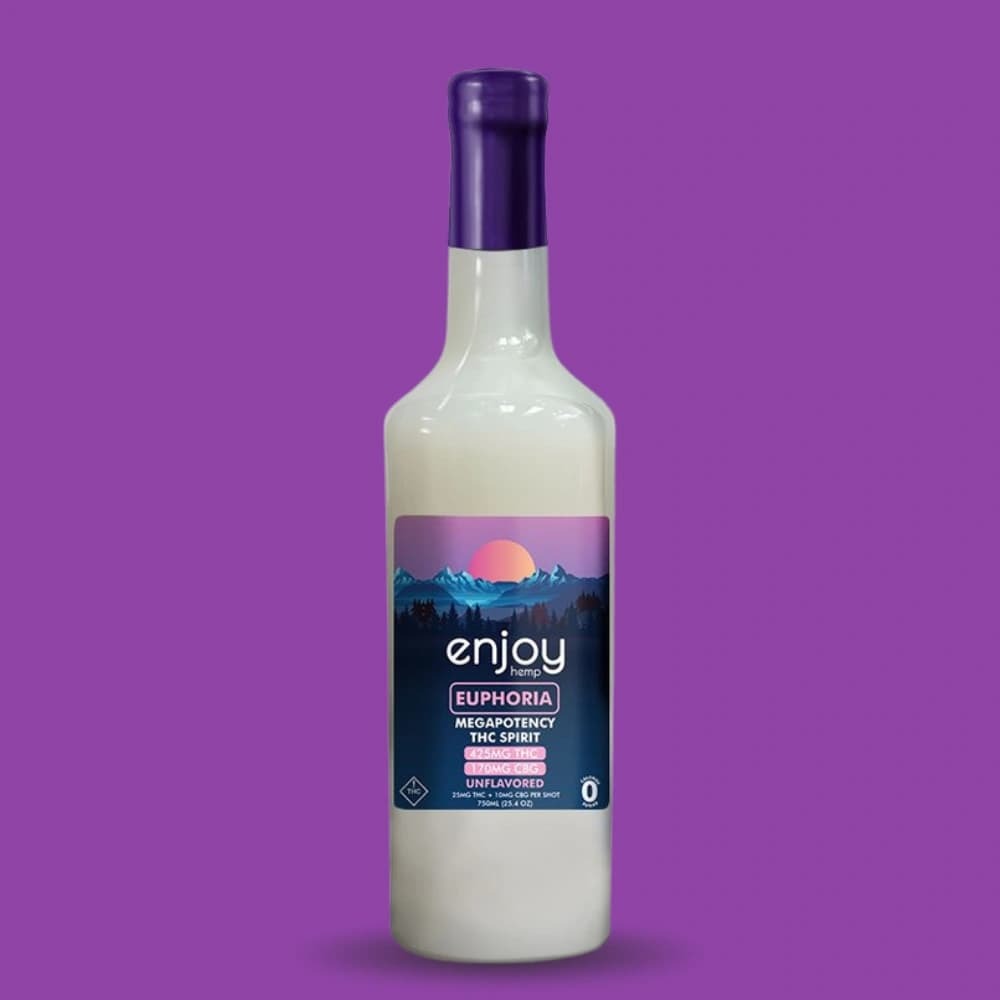
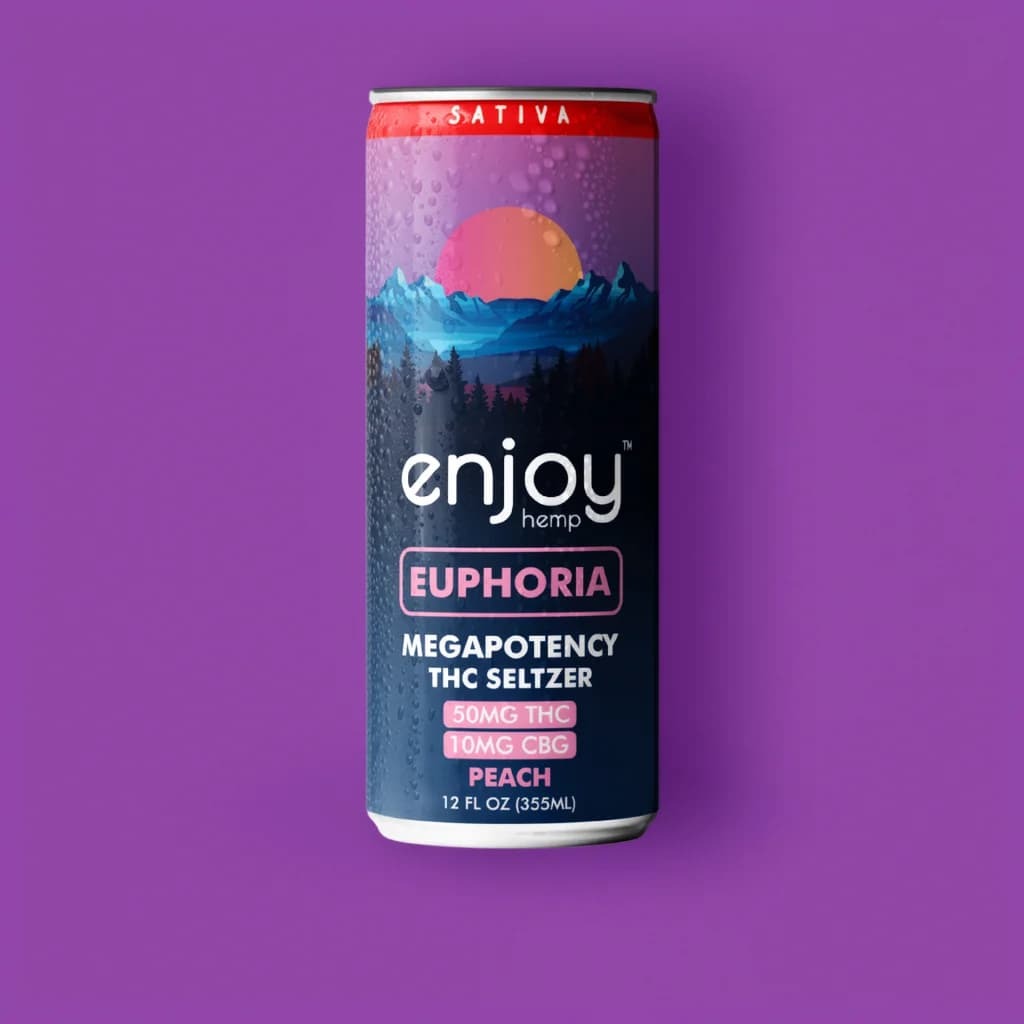
Our THC beverages also offer measured doses starting at 5mg per can, providing controlled introduction without the immediate intensity of inhalation.
What Happens to THCA Products After November 2026?
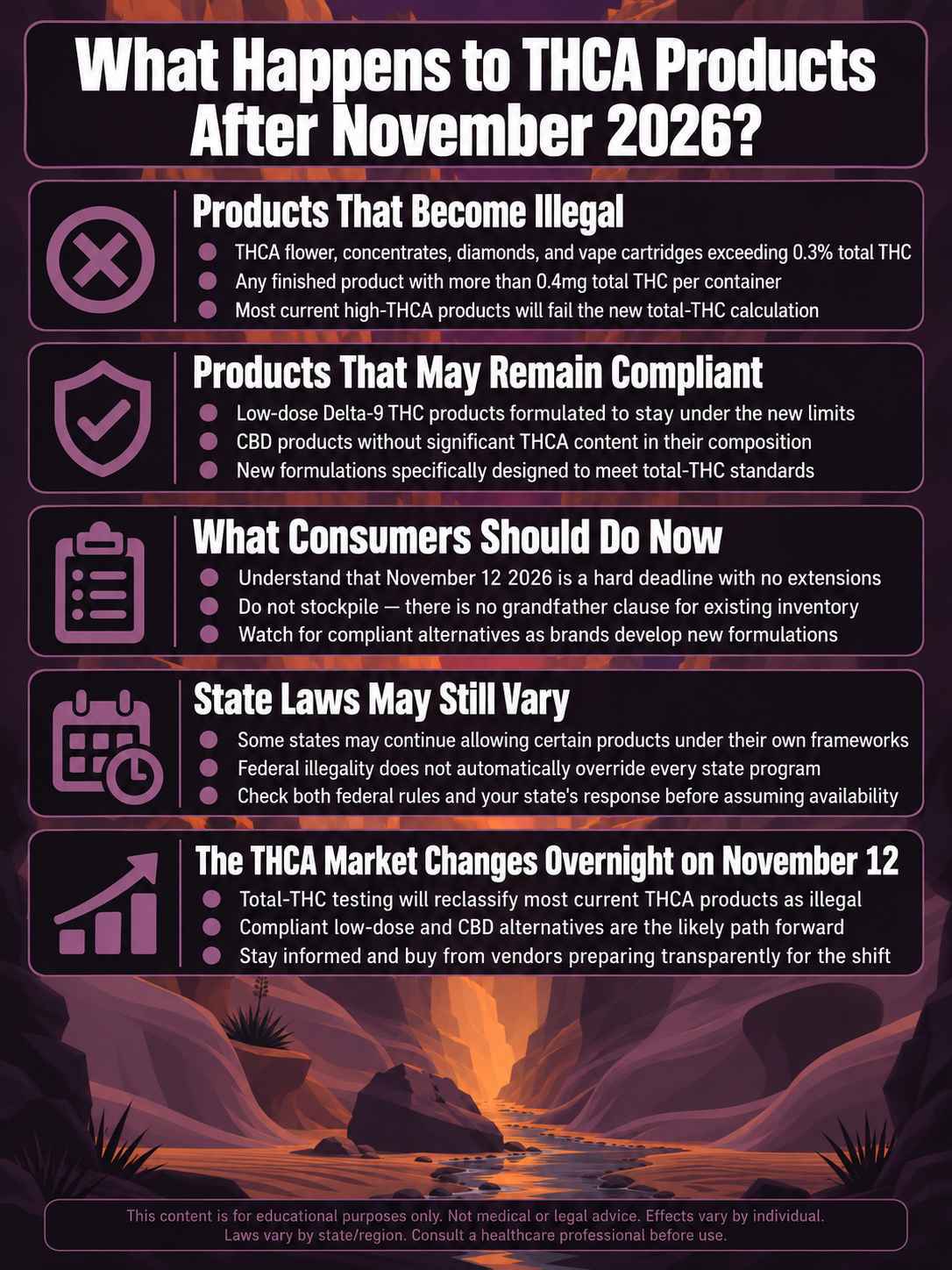
The market will change dramatically after November 12, 2026. Here's what to expect:
Products That Become Illegal
- THCA flower (any percentage that calculates above 0.3% total THC)
- THCA concentrates and diamonds
- THCA vape cartridges
- Any finished product exceeding 0.4mg total THC per container
Products That May Remain Compliant
- Low-dose Delta-9 THC products that stay under the new limits
- CBD products without significant THCA content
- Products specifically formulated for the new total-THC standard
What Consumers Should Do
- Understand the timeline: November 12, 2026 is a hard deadline
- Don't stockpile: There's no grandfather clause for existing inventory
- Watch for compliant alternatives: Brands may develop new formulations
- Check state laws: Some states may continue allowing products under their own frameworks
What THCA Products Does Enjoy Hemp Offer?
We offer a range of THCA products with full third-party testing documentation:
THCA Flower
Our flower collection includes multiple strains across indica, sativa, and hybrid profiles. Options range from standard flower to Mega Potency Platinum varieties.
THCA Pre-Rolls
Our pre-roll collection offers ready-to-use convenience in standard and diamond-infused options.
THCA Vapes
Our disposable vape collection provides convenient, pre-charged devices.
Alternative Formats
For those preferring edibles, our THC gummy collection offers measured doses from microdose (5mg) to high-potency (50mg+) options. Our THC beverages provide liquid alternatives with faster onset than traditional edibles.
Frequently Asked Questions About THCA
What does THCA stand for?
THCA stands for tetrahydrocannabinolic acid. It's the acidic precursor to THC (tetrahydrocannabinol) that exists naturally in raw cannabis plants. The "A" designates its acid form, which includes a carboxyl group that prevents psychoactive effects until removed through heat.
Will THCA get you high?
Raw THCA does not produce psychoactive effects. However, when you smoke, vape, or heat THCA, it converts to THC and produces the same high as traditional cannabis. If you consume THCA through inhalation, expect psychoactive effects.
Is THCA the same as THC?
No, they are chemically distinct compounds. THCA has an extra carboxyl group that THC lacks. This molecular difference means THCA doesn't bind to CB1 receptors in the brain the way THC does. However, THCA readily converts to THC when heated.
Why is THCA legal but THC isn't?
The 2018 Farm Bill defined legal hemp based solely on Delta-9 THC content (0.3% or less). THCA wasn't included in that measurement, so products can contain high THCA while meeting the Delta-9 threshold. This changes November 12, 2026, when THCA counts toward total THC.
Can I buy THCA online legally?
Yes, in states that haven't banned it. THCA products can be shipped to most states under current federal law. Some states have enacted their own restrictions that prohibit THCA sales or shipments. Check your state's specific regulations before ordering.
How do I know if a THCA product is real?
Verify the Certificate of Analysis (COA) from an accredited third-party lab. The COA should show THCA content matching the label claims, Delta-9 THC at or below 0.3%, and passing results for safety tests. Batch numbers should match between the COA and product packaging.
What's the difference between THCA flower and regular weed?
Functionally, very little. THCA flower is cannabis bred to test below the Delta-9 threshold for legal classification as hemp. When smoked, it converts to THC and produces effects like traditional cannabis. The difference is primarily in how it's tested for legal compliance.
How should I store THCA products?
Store THCA flower in airtight containers away from heat, light, and humidity. Heat can cause premature THCA-to-THC conversion and may affect legal compliance testing. Cool, dark, dry conditions preserve both potency and compliance status.
Is THCA safe?
THCA from properly tested, contaminant-free products carries similar safety profiles to traditional cannabis. Risks come from contamination (pesticides, heavy metals, mold), synthetic additives, or mislabeled products. Always verify third-party testing before consuming any THCA product.
What happens if I have THCA after November 2026?
Products exceeding the new total-THC limits become federally illegal on November 12, 2026. There is no grandfather clause. Possession of formerly-legal products could carry federal controlled substance implications. State laws may differ, but federal commerce and shipping restrictions will apply.
Summary: THCA Basics for Beginners
Here's what every beginner needs to know about THCA:
| Topic | Key Point |
|---|---|
| What it is | Acidic precursor to THC in raw cannabis |
| Psychoactive? | No (raw) / Yes (when heated) |
| Current federal status | Legal hemp if ≤0.3% Delta-9 THC |
| November 2026 change | THCA counts toward total THC limit |
| Drug tests | Will likely cause positive result |
| State legality | Varies; 12+ states have restrictions |
| Quality verification | Check third-party COA before buying |
THCA represents a unique moment in cannabis regulation. A gap in how federal law measured THC created a legal market for products that function like traditional cannabis. That gap closes on November 12, 2026.
Browse our full product collection to explore what's available in your state, whether you're interested in THCA flower, THC gummies, or THC beverages.
About the Author
Sarah Mitchell is a wellness industry professional with 15 years of experience in functional supplements and hemp-derived products. She previously led product development at two nationally recognized wellness brands and holds certification as a holistic health practitioner. Sarah advises consumers on quality standards and product selection in the evolving hemp market.
Important Notice: This content provides general information about THCA and is intended for adults 21 and older. THCA converts to THC when heated and will produce psychoactive effects. Hemp-derived THC products will cause positive drug test results. Never drive under THC influence.
All Enjoy Hemp products are derived from hemp containing ≤0.3% Delta-9 THC in compliance with the 2018 Farm Bill. These statements have not been evaluated by the Food and Drug Administration. This product is not intended to diagnose, treat, cure, or prevent any disease. Consult applicable local and state laws before purchasing or consuming any hemp-derived THC product.