









THC Drinks vs Alcohol: Effects, Safety, and Social Alternatives Guide
Posted by Enjoy Hemp Editor Team on Jul 1st 2026
Last Updated: June 2026
By Sarah Mitchell, Wellness Industry Specialist
THC drinks and alcohol produce different effects through entirely different mechanisms. Alcohol depresses your central nervous system and gets metabolized into toxic acetaldehyde, causing hangovers, liver damage, and roughly 178,000 deaths annually in the United States. THC works with your endocannabinoid system without producing toxic byproducts, causes no hangovers, and has never been linked to a fatal overdose. Both substances impair judgment and driving ability, but their health profiles differ dramatically.
I've spent 15 years in the wellness industry watching trends come and go. The shift toward THC beverages isn't a trend. It's a recalibration. According to a CDC analysis, alcohol-related deaths increased 29% between 2016 and 2021. Meanwhile, a 2025 USA Today survey found that nearly half of Americans planned to drink less alcohol that year. People are looking for alternatives, and THC drinks are filling that gap.
This guide compares THC drinks to alcohol across every dimension that matters: how they affect your body, health implications, social use, calories, hangovers, and practical considerations. Whether you're sober-curious, cutting back on drinking, or just exploring options, this information will help you make informed choices.
How Do THC Drinks and Alcohol Affect Your Body Differently?
THC and alcohol work through completely different biological pathways. Alcohol acts as a central nervous system depressant, slowing brain communication by boosting GABA (the "calm down" neurotransmitter) and blocking glutamate (the "get excited" one). THC interacts with your endocannabinoid system, binding to CB1 receptors in your brain to produce its effects. Both are processed by your liver, but what happens there is radically different.
How Alcohol Affects Your Body
When you drink alcohol, your liver breaks it down into acetaldehyde, a toxic compound that damages cells. Acetaldehyde is a known carcinogen and the primary cause of hangovers. Your liver then converts it to acetate, which eventually becomes carbon dioxide and water. This process takes time, and your body can only metabolize about one standard drink per hour.
While alcohol is in your system, it:
- Impairs motor coordination and reaction time
- Reduces inhibitions and judgment
- Causes dehydration by suppressing vasopressin (antidiuretic hormone)
- Disrupts sleep architecture even if it helps you fall asleep
- Irritates the stomach lining
- Increases heart rate and blood pressure
- Depletes B vitamins and other nutrients
Long-term alcohol use damages the liver, increases cancer risk, weakens the immune system, and contributes to heart disease. The National Institute on Alcohol Abuse and Alcoholism reports that alcohol consumption is the third highest preventable cause of cancer in the United States, with about 100,000 cancer cases and 20,000 cancer deaths attributable to alcohol annually.
How THC Affects Your Body
When you consume a THC drink, the cannabinoids interact with your endocannabinoid system, a network that helps regulate mood, appetite, pain, and sleep. THC binds primarily to CB1 receptors in the brain, producing euphoria, relaxation, and altered perception.
Most THC beverages use nano-emulsification technology, breaking THC into tiny water-soluble particles that absorb faster than traditional edibles. According to Harvard Health, some people feel effects from cannabis drinks within 15-20 minutes, much faster than traditional edibles (which take 30-90 minutes).
While THC is in your system, it:
- Produces euphoria and relaxation
- Alters time perception
- May reduce anxiety in some people (increase it in others)
- Can impair short-term memory and coordination
- Often increases appetite
- Does not produce toxic metabolites
- Does not cause dehydration
THC is not without risks. Some people experience anxiety, paranoia, or increased heart rate. Regular heavy use can lead to cannabis use disorder in some individuals. But the acute physical harm profile is dramatically different from alcohol.
Direct Comparison
| Factor | THC Drinks | Alcohol |
|---|---|---|
| Primary mechanism | Endocannabinoid system (CB1 receptors) | CNS depressant (GABA/glutamate) |
| Toxic metabolites | None | Acetaldehyde (carcinogen) |
| Onset time | 15-30 minutes (nano-emulsified) | 15-45 minutes |
| Duration | 2-4 hours | 1-3 hours per drink |
| Dehydration | No | Yes |
| Hangover | No (some report mild grogginess) | Yes (common) |
| Lethal overdose risk | No documented cases | Yes (alcohol poisoning) |
What Are the Health Differences Between THC Drinks and Alcohol?
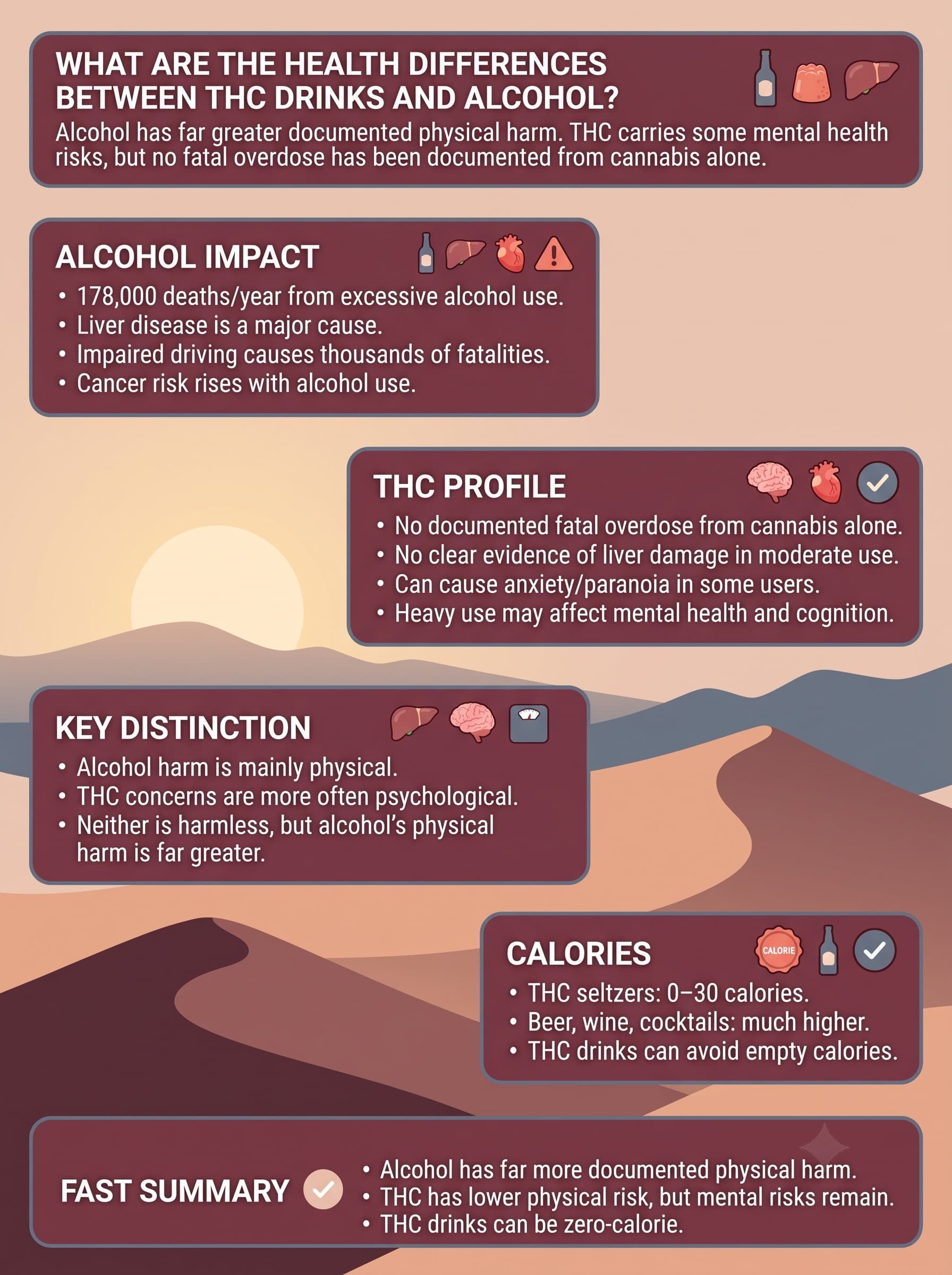
The health profiles of THC drinks and alcohol are starkly different. Alcohol causes approximately 178,000 deaths annually in the United States, damages the liver, increases cancer risk, and creates physical dependency. THC has never been linked to a fatal overdose, shows no clear evidence of liver damage in moderate use, and while it carries some mental health risks, its physical harm profile is dramatically lower.
Alcohol's Health Impact
The CDC's data on alcohol is sobering. According to their Morbidity and Mortality Weekly Report, deaths from excessive alcohol use increased significantly from 2016 to 2021:
- 178,000 deaths annually from excessive alcohol use
- Alcoholic liver disease is the leading cause, with over 18,000 deaths per year
- 12,429 alcohol-impaired driving fatalities in 2023 (30% of all driving fatalities)
- 29% increase in alcohol-related deaths from 2016 to 2021
- 44.5% of liver disease deaths (43,000 in 2023) involved alcohol
The World Health Organization classifies alcohol as a Group 1 carcinogen. Even moderate drinking has been linked to increased cancer risk, and recent research has debunked the idea that moderate drinking offers health benefits.
THC's Health Profile
Cannabis research is still catching up to alcohol research, but what we know paints a different picture:
- No documented fatal overdoses from cannabis alone
- No evidence of liver damage in healthy adults with moderate use
- Not classified as a carcinogen (though smoking cannabis carries respiratory risks)
- No physical withdrawal syndrome comparable to alcohol
That said, THC isn't risk-free:
- Mental health considerations: Can trigger anxiety or paranoia in some users, and regular heavy use is associated with increased risk of certain psychiatric conditions
- Cannabis use disorder: About 9% of users develop problematic use patterns
- Cardiovascular effects: Temporary increases in heart rate
- Cognitive effects: Heavy use, especially in adolescents, may affect brain development
The key distinction: alcohol's harm is primarily physical (liver, heart, cancer risk), while cannabis's concerns are more often psychological. Neither is harmless, but the scale of documented physical harm from alcohol is orders of magnitude higher.
Calories and Weight
For health-conscious consumers, calories matter:
| Beverage | Calories |
|---|---|
| THC seltzer (typical) | 0-30 calories |
| Light beer (12 oz) | 100-110 calories |
| Regular beer (12 oz) | 150-200 calories |
| Glass of wine (5 oz) | 120-150 calories |
| Margarita | 250-400 calories |
| Piña colada | 400-650 calories |
A night of drinking can easily add 500-1,000 empty calories. A night of THC seltzers? Often zero. Our THC seltzers are zero-calorie, zero-sugar, and zero-carb.
Do THC Drinks Cause Hangovers?
THC drinks do not cause hangovers in the traditional sense. There's no headache, nausea, or dehydration the next morning because THC doesn't produce the toxic byproducts that cause alcohol hangovers. Some people report mild grogginess after higher doses, but it's nothing like the debilitating experience of an alcohol hangover. Most users wake up feeling refreshed and clear.
Why Alcohol Causes Hangovers
Alcohol hangovers result from multiple factors:
- Acetaldehyde toxicity: The primary metabolite of alcohol damages cells
- Dehydration: Alcohol suppresses the hormone that helps your kidneys retain water
- Electrolyte imbalance: Loss of sodium, potassium, and magnesium
- Inflammation: Alcohol triggers inflammatory responses throughout the body
- Sleep disruption: Alcohol prevents restorative deep sleep
- Stomach irritation: Direct irritation of the stomach lining
The more you drink, the worse the hangover. And hangovers get worse with age as your liver becomes less efficient at processing alcohol.
Why THC Doesn't Cause Hangovers
THC doesn't produce toxic metabolites. It doesn't dehydrate you. It doesn't inflame your gut. The compound is processed by your liver but broken down into non-toxic byproducts that don't cause cellular damage.
Some people report a "weed hangover" after very high doses, which may include:
- Mild grogginess or brain fog
- Slight fatigue
- Dry mouth (easily remedied by hydration)
These effects are typically mild compared to alcohol hangovers and resolve quickly. Many people find they wake up feeling better after THC than after alcohol, especially with sleep-supporting formulas like our THC+CBN Sleep Seltzer.
How Do THC Drinks Compare for Social Situations?
THC drinks work well in social situations where alcohol has traditionally dominated. They provide a similar ritual (holding a drink, sipping something, feeling a buzz) without the escalating impairment, aggression, or next-day regret that alcohol can cause. Many people find THC produces a more present, connected social experience without the lowered inhibitions that lead to embarrassing behavior.
Social Advantages of THC Drinks
No escalating impairment: With alcohol, each drink adds to impairment. Two drinks feel twice as strong as one. With THC drinks, you can find your dose and maintain that level without spiraling into heavier intoxication.
No aggression or emotional volatility: Alcohol is associated with increased aggression and emotional instability. THC tends toward relaxation and connection.
No hangover regret: What you do tonight doesn't wreck tomorrow. This changes the calculation around social drinking.
The ritual remains: You still have something in your hand. You're still participating in the social activity of drinking. The difference is what's in the glass.
Conversation quality: Many people report that THC enhances conversation, making them more engaged listeners and more creative contributors.
Considerations for Social Use
Know your dose: Unlike alcohol, where impairment builds predictably, THC effects can sneak up on new users. Start with 2.5-5mg in social settings until you know your response.
Timing matters: THC drinks kick in faster than edibles (15-30 minutes vs 60-90 minutes) but still slower than alcohol shots. Plan accordingly.
Mixing is risky: Don't combine THC drinks with alcohol. The combination intensifies both substances unpredictably.
Not everyone's comfortable: THC is still federally complicated, and some social circles may not be familiar with it. Know your audience.
Products for Social Settings
For social use, I recommend lower-dose, faster-acting options:
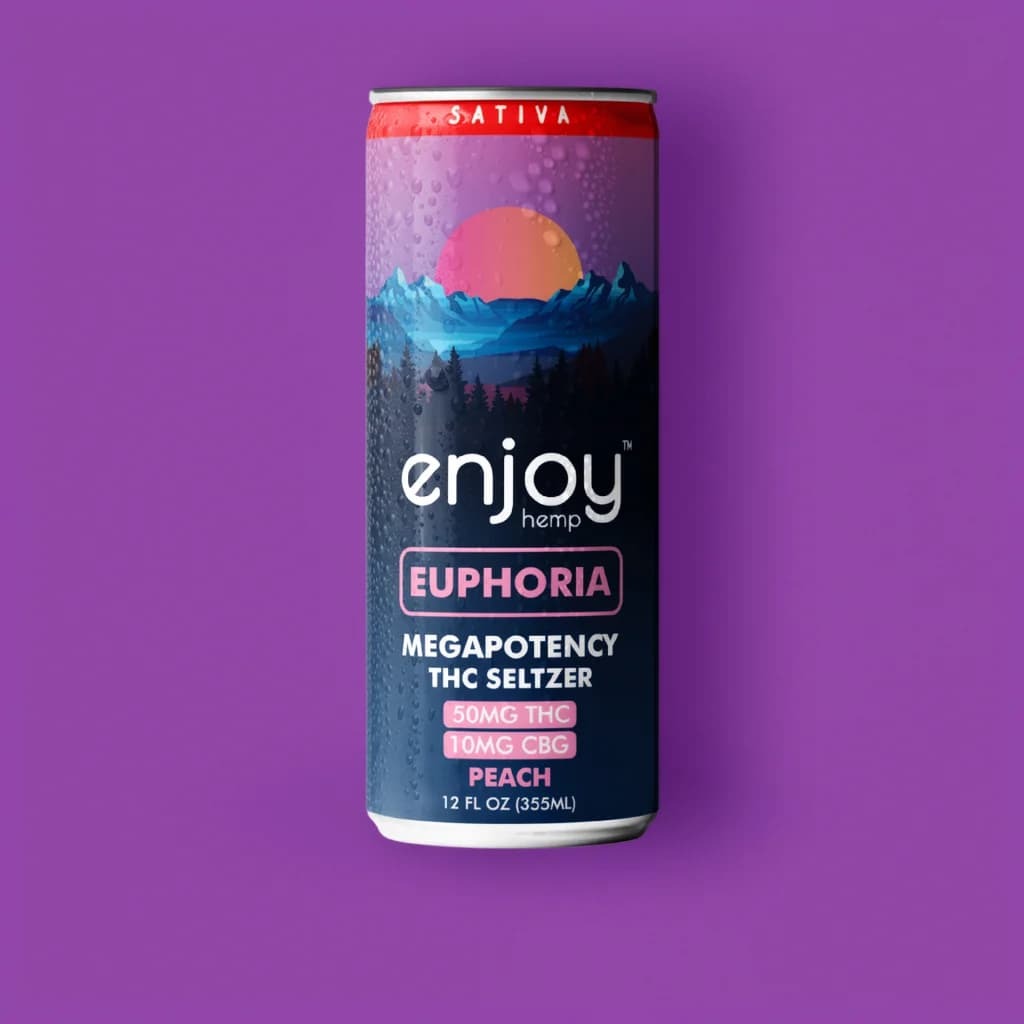
- 5mg Euphoria Seltzer — Light, uplifting, great for conversation
- Social Seltzer with Lion's Mane — Designed specifically for social settings
- 5mg Bliss Seltzer (THC+CBD) — Balanced, relaxed sociability
- Functional Variety Pack — Sample different formulas for different vibes
Can THC Drinks Replace Alcohol?
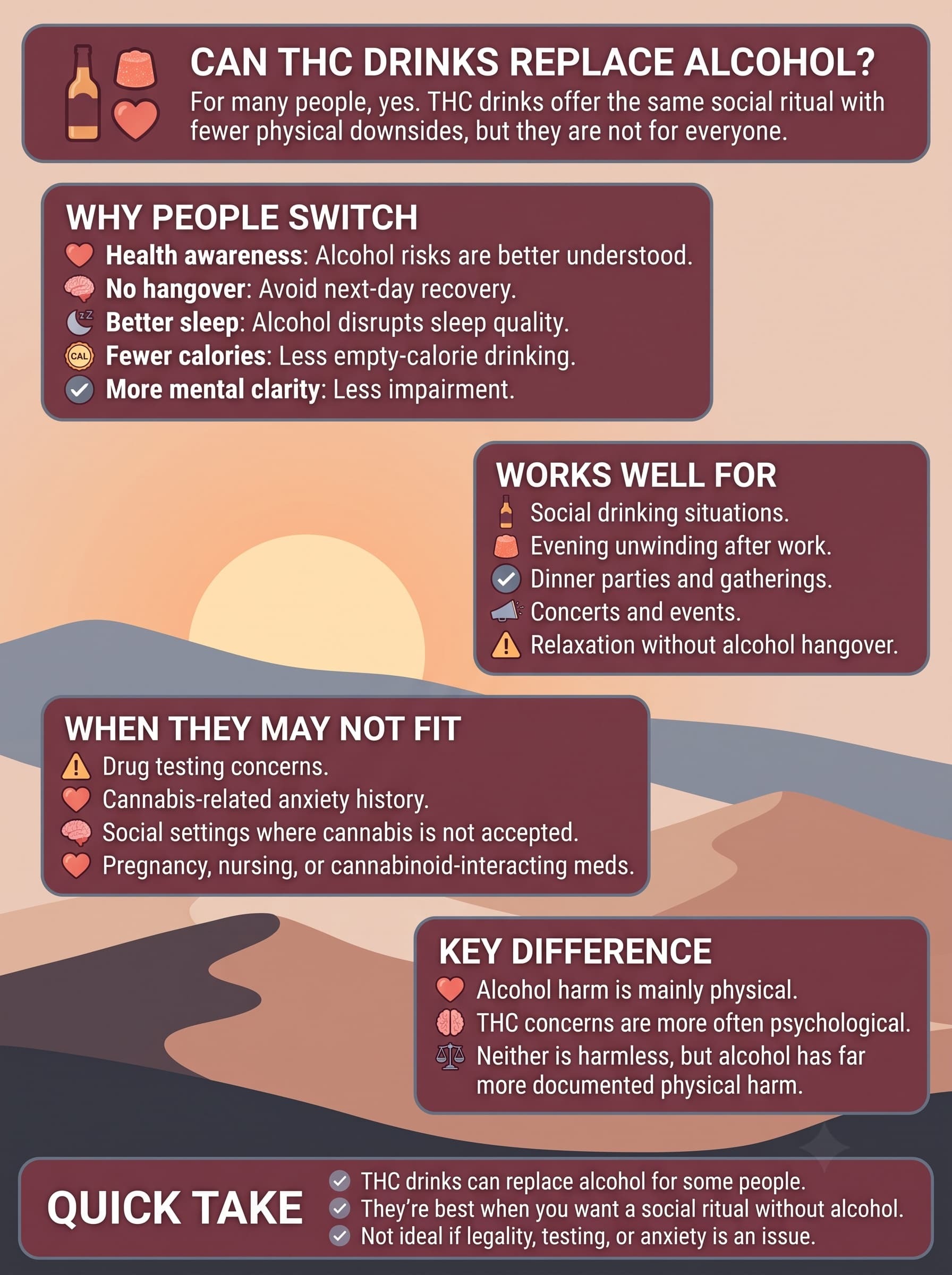
For many people, yes. Research from Brown University published in the American Journal of Psychiatry in 2025 provided the first causal evidence that cannabis use can reduce alcohol consumption. More than half of survey respondents reported substituting cannabis for alcohol at least weekly. THC drinks offer a one-to-one replacement: same social ritual, different substance.
Why People Are Switching
The sober-curious movement has grown alongside cannabis legalization. People cite multiple reasons for reducing alcohol:
- Health awareness: Growing understanding of alcohol's health risks
- Hangover avoidance: Unwillingness to waste days recovering
- Better sleep: Recognition that alcohol disrupts sleep quality
- Weight management: Eliminating empty calories
- Mental clarity: Preference for less impairment
- Emotional regulation: Avoiding alcohol-induced mood swings
THC drinks address most of these concerns while still providing a social lubricant and a way to unwind.
When THC Drinks Work Well as Replacements
- Social drinking situations
- Evening unwinding after work
- Dinner parties and gatherings
- Concerts and events
- Relaxation without impairment hangover
When They May Not Be the Right Choice
- If you're subject to drug testing
- If you have a history of cannabis-related anxiety
- In situations where cannabis use isn't socially accepted
- If you're pregnant or nursing
- If you're on medications that interact with cannabinoids
What Should Beginners Know About Switching?
If you're used to alcohol and trying THC drinks for the first time, start with 2.5-5mg and wait at least an hour before considering more. THC affects your body differently than alcohol. You may feel more introspective than talkative at first. Effects last longer than alcohol. And you can't "walk off" THC the way you might metabolize a drink over an hour.
Dosing Guidelines for Alcohol Users Trying THC
| Your Alcohol Tolerance | Suggested THC Starting Dose |
|---|---|
| 1-2 drinks to feel relaxed | 2.5-5mg THC |
| 3-4 drinks to feel buzzed | 5-10mg THC |
| 5+ drinks for a night out | Still start at 5-10mg |
Alcohol tolerance does not translate to THC tolerance. They work on different systems. Heavy drinkers often have zero THC tolerance and should start low like anyone else.
Practical Tips for Transitioning
Start on a weekend: Give yourself time to understand how THC affects you without work obligations.
Try at home first: Before bringing THC drinks to a party, experience them in a comfortable setting.
Don't mix: If you're switching from alcohol to THC, switch. Don't combine them, especially at first.
Have food available: THC may increase appetite. Having snacks ready prevents impulsive decisions.
Stay hydrated: While THC doesn't dehydrate you like alcohol, staying hydrated always helps.
Don't drive: THC impairs driving ability. Plan ahead, just as you would with alcohol.
Key Takeaways: THC Drinks vs Alcohol
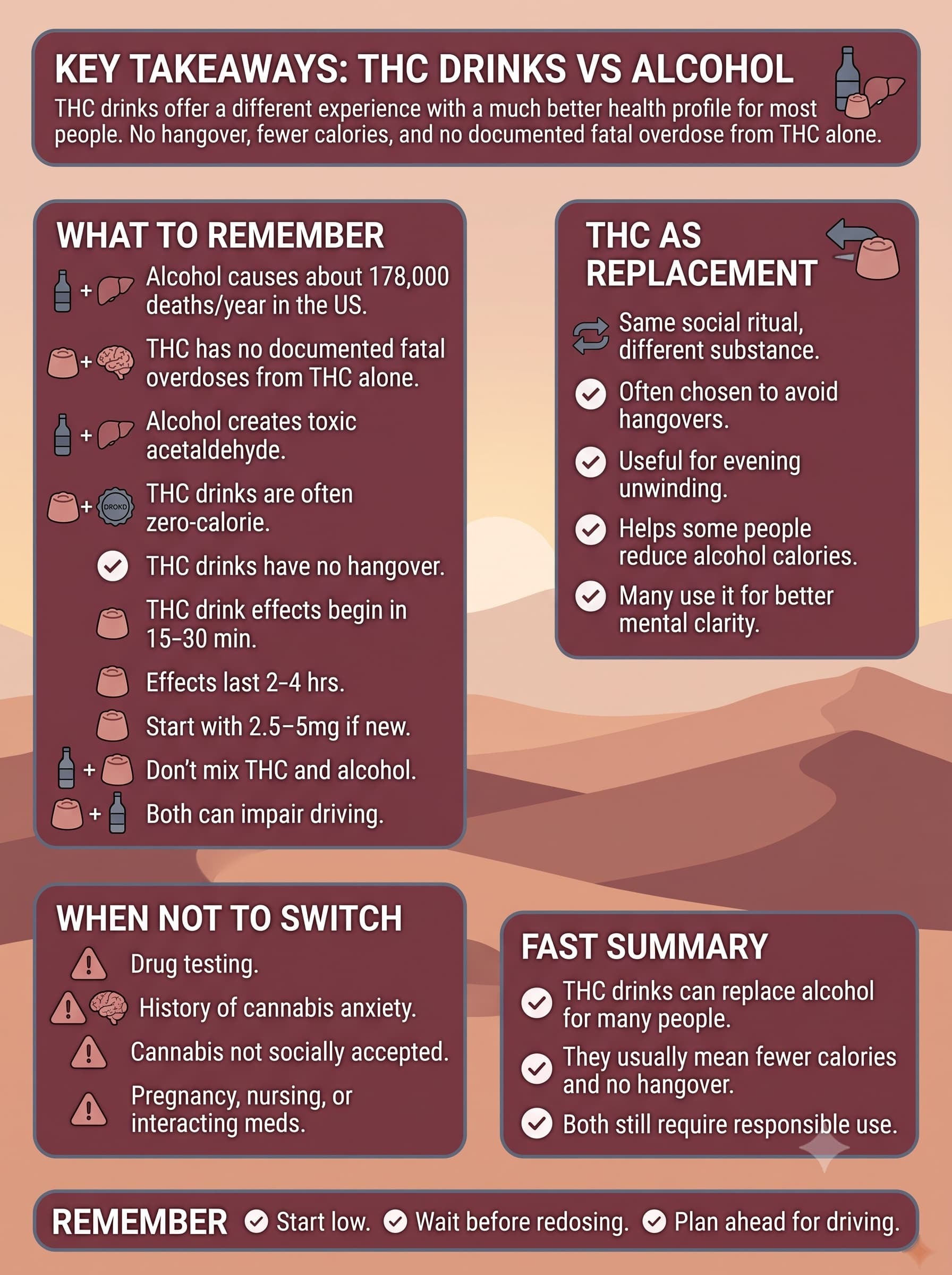
THC drinks offer a meaningfully different experience from alcohol with a dramatically better health profile for most people. No hangovers, no toxic metabolites, no liver damage, no cancer risk, and no fatal overdoses. They work well for social situations and evening relaxation. But they're not for everyone, and responsible use requires understanding your dose and response.
What to remember:
- Alcohol causes ~178,000 deaths annually in the US; cannabis has no documented fatal overdoses
- Alcohol produces toxic acetaldehyde; THC does not
- THC drinks are typically zero-calorie vs hundreds of calories in alcoholic drinks
- No hangover with THC drinks
- THC drinks offer faster onset than edibles (15-30 minutes)
- Effects last 2-4 hours typically
- Start with 2.5-5mg if new to THC
- Don't mix THC and alcohol
- Both impair driving; plan ahead
- THC carries mental health considerations for some users
Browse our full seltzer collection to find your ideal dose and flavor. All products are third-party tested, USDA-certified organic, and federally compliant. No hangover. No regrets. Just a better way to unwind.
Frequently Asked Questions
Are THC drinks safer than alcohol?
By most measures of physical harm, yes. Alcohol causes approximately 178,000 deaths annually in the US, damages the liver, and is classified as a carcinogen. THC has never been linked to a fatal overdose and shows no evidence of liver damage in moderate use. However, THC carries some mental health considerations, and neither substance is completely without risk.
Can I drink THC beverages if I'm trying to quit alcohol?
Many people successfully substitute cannabis for alcohol as part of reducing or eliminating drinking. Research from Brown University found causal evidence that cannabis can reduce alcohol consumption. However, if you're in recovery from alcohol use disorder, consult with your healthcare provider or addiction specialist before introducing any intoxicating substance.
Do THC drinks feel the same as being drunk?
No. THC produces a different kind of altered state. Alcohol tends to feel more sedating and disinhibiting. THC often feels more euphoric and introspective. Many people describe THC as keeping them more present and aware while still relaxed, whereas alcohol can feel more numbing.
How many THC drinks equal one alcoholic drink?
There's no direct equivalence because they work differently. A 5mg THC seltzer might produce effects roughly comparable to one beer for some people, while others might need 10mg or find 2.5mg sufficient. Start low and find your personal equivalence through careful experimentation.
Can I mix THC drinks with alcohol?
No. Mixing THC and alcohol intensifies both substances unpredictably and significantly increases impairment. The combination is associated with higher rates of accidents and negative experiences. Choose one or the other for any given occasion.
Will I fail a drug test after drinking THC beverages?
Yes. THC drinks contain THC, which will show up on drug tests. There's no difference between THC from drinks, gummies, or any other source when it comes to drug testing. Avoid THC products entirely if you're subject to testing.
How long do THC drink effects last compared to alcohol?
THC drink effects typically last 2-4 hours, similar to a few alcoholic drinks. However, THC doesn't metabolize as predictably as alcohol, so effects may linger longer for some people. The key difference is the absence of hangover the next day.
Are THC drinks legal everywhere?
Hemp-derived THC drinks (≤0.3% Delta-9 THC by dry weight) are federally legal under the 2018 Farm Bill, but state laws vary. Most states allow them; some restrict or ban them. Check your state's current regulations before ordering.
Before you buy anything billed as the best legal thc drink, check the date on the legal claim. As of September 2026, federal hemp rules are set to change and state laws vary.
Can THC drinks help with social anxiety better than alcohol?
Many people report that low-dose THC reduces social anxiety without the disinhibition and emotional volatility of alcohol. However, THC can increase anxiety in some people, especially at higher doses. Start with 2.5-5mg to see how you respond before using in social situations.
What's the best THC drink for someone switching from beer?
THC seltzers are the most direct replacement for beer. They're carbonated, refreshing, and easy to sip throughout an evening. Start with a 5mg option like our 5mg Euphoria Seltzer and see how one affects you before having more.
About the Author
Sarah Mitchell is a wellness industry veteran with 15 years of experience in functional supplements and hemp-derived products. She previously led product development at two nationally recognized wellness brands and holds certification as a holistic health practitioner. Sarah now advises consumers on quality standards, helping them make informed decisions in the evolving hemp market.
Disclaimer: This content is for informational purposes only and does not constitute medical advice. THC affects individuals differently and may not be appropriate for everyone. Consult a healthcare provider before using THC products, especially if you have underlying health conditions, are taking medications, or are pregnant or nursing. THC can impair your ability to drive or operate machinery. Do not use if under 21. If you're concerned about your relationship with alcohol, please consult a healthcare professional or contact SAMHSA's National Helpline at 1-800-662-4357. All Enjoy Hemp products are federally compliant, containing ≤0.3% Delta-9 THC by dry weight in accordance with the 2018 Farm Bill.