














How to Store THC Gummies: Temperature, Light, and Freshness Guide
Posted by Enjoy Hemp Editor Team on Jul 27th 2026
Last Updated: July 2026
By Sarah Mitchell, Wellness Industry Specialist
THC gummies require specific storage conditions to maintain their original composition and quality throughout their shelf life. Temperature, light exposure, humidity, and oxygen contact all affect the chemical stability of cannabinoids in edible products. Understanding these factors helps consumers preserve what they purchased in the condition intended by the manufacturer.
This guide covers the science of cannabinoid stability, practical storage recommendations, common mistakes that accelerate degradation, and answers to frequently asked questions about THC gummy shelf life. All information is based on published research and established food science principles.
What Factors Affect THC Gummy Shelf Life?
Four environmental factors influence how long THC gummies maintain their original composition: temperature, light exposure, oxygen contact, and humidity levels. Each factor triggers different chemical and physical changes in the product.
Temperature and Cannabinoid Chemistry
Temperature affects cannabinoids through multiple mechanisms. Heat accelerates chemical reactions, including the conversion of THC to other compounds. Research published in the Journal of Cannabis Research found that cannabis products stored at higher temperatures showed measurable changes in cannabinoid profiles compared to products stored at lower temperatures.
A 2024 laboratory study by Anresco Laboratories examined cannabinoid stability across different storage temperatures. Samples held at 4°C (39°F) remained relatively stable for 210 days. Samples at 20°C (68°F) maintained stability for 60 days in clear containers and 150 days in amber containers. The highest storage temperature tested (30°C/86°F) showed the most rapid changes.
Beyond cannabinoid chemistry, temperature affects the physical structure of gummies. Most THC gummies contain gelatin, which begins softening at temperatures above 70°F and can melt at temperatures above 77°F. Softened or melted gummies may stick together, making accurate portioning difficult.
Light Exposure and Photodegradation
Light, particularly ultraviolet (UV) light, initiates photodegradation reactions in cannabinoids. A 2024 study published in Scientific Reports found that UV light can cause measurable changes in THC and CBD content within days of exposure.
The Anresco study compared clear glass containers to amber glass containers across all temperature conditions. Amber containers consistently outperformed clear containers in maintaining cannabinoid stability, demonstrating the protective value of limiting light exposure.
Direct sunlight represents the most intense light exposure common in household settings. Even indoor lighting contributes to gradual changes over time, though at slower rates than direct sunlight.
Oxygen and Oxidative Reactions
Oxygen exposure enables oxidative reactions that can alter cannabinoid composition. When THC oxidizes, it converts to cannabinol (CBN), a different cannabinoid with a distinct chemical structure. This conversion occurs gradually under normal conditions but accelerates with increased oxygen exposure, which is why CBN content and batch testing matter more than a formulation sheet.
Research on long-term cannabis oil stability found that nitrogen atmosphere packaging (which displaces oxygen) significantly improved cannabinoid stability over 12-24 month storage periods. Products stored with minimal oxygen exposure showed CBN formation rates below 1%, indicating limited oxidative conversion.
Humidity and Moisture Content
Humidity affects gummies both physically and chemically. Excess moisture can encourage microbial growth, including mold and yeast, which compromises product safety. High humidity also causes gummies to become sticky and may alter their texture.
Conversely, extremely low humidity can cause gummies to dry out, becoming hard or brittle. The ideal humidity range for cannabinoid product storage falls between 55-65% relative humidity, according to pharmaceutical stability research.
Climate varies significantly across different regions. Consumers in humid coastal areas face different storage challenges than those in dry desert climates. Understanding local humidity patterns helps inform appropriate storage decisions.
What Is the Ideal Temperature for Storing THC Gummies?
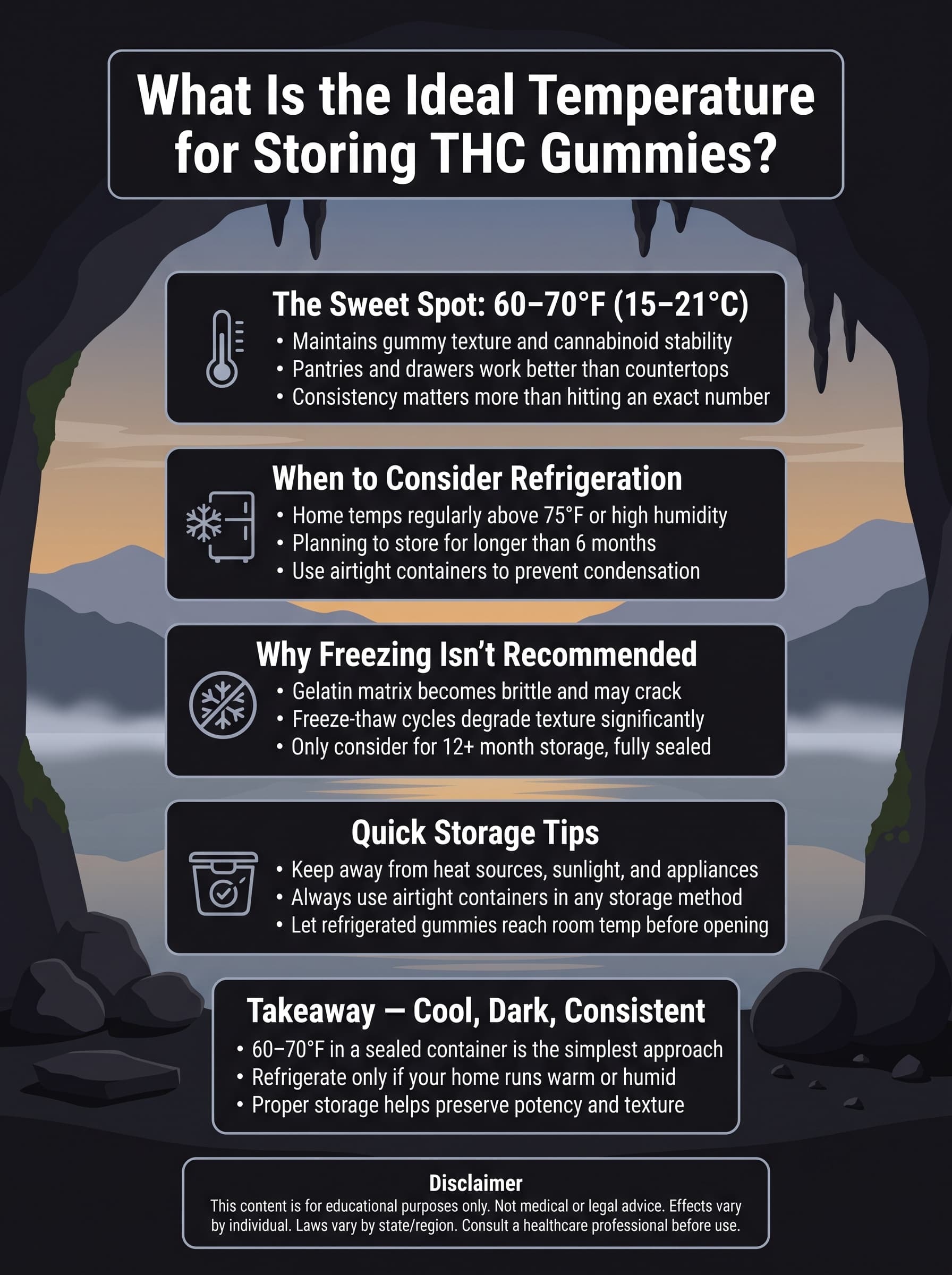
The ideal storage temperature for THC gummies falls between 60-70°F (15-21°C). This range maintains both the physical integrity of the gummy matrix and the chemical stability of cannabinoids.
Room Temperature Storage Guidelines
Standard room temperature in climate-controlled homes typically falls within the acceptable range. However, room temperature varies by location within a home and by season. Areas near heating vents, sunny windows, or appliances that generate heat may exceed optimal storage temperatures.
Pantries, drawers, and cabinets away from heat sources generally maintain more consistent temperatures than countertops or open shelving. The key factor is temperature consistency rather than achieving a precise number.
When to Consider Refrigeration
Refrigeration becomes worth considering in specific situations:
- Ambient home temperatures regularly exceed 75°F
- No consistently cool storage location exists in the home
- Extended storage beyond 6 months is anticipated
- High-humidity climate with limited climate control
Refrigerators typically maintain temperatures around 35-38°F (2-3°C), well below the threshold where cannabinoid degradation accelerates. The Anresco study found 4°C storage maintained sample stability for over 200 days.
However, refrigeration introduces potential condensation issues. When cold products are removed and exposed to warmer air, moisture can condense on surfaces. This moisture can affect gummy texture and introduce humidity concerns. Using airtight containers and allowing gummies to reach room temperature before opening the container minimizes condensation problems.
Why Freezing Is Generally Not Recommended
Freezing can preserve cannabinoid content but creates texture problems specific to gummies. The gelatin matrix becomes brittle when frozen, and gummies may crack or become unpleasantly hard. The freeze-thaw cycle, especially if repeated multiple times, can degrade texture significantly.
If freezing becomes necessary for very long-term storage (over 12 months), using completely airtight freezer-safe containers and allowing full thaw at room temperature before opening helps minimize texture damage.
How Does Light Affect THC Gummies?
Light exposure initiates photochemical reactions in cannabinoids. UV light carries enough energy to break chemical bonds, triggering degradation pathways that change cannabinoid composition over time.
Understanding UV Light and Cannabinoid Photodegradation
Research on pharmaceutical cannabinoid formulations has consistently demonstrated light sensitivity. Studies supporting packaging in amber glass note significant improvements in cannabinoid stability compared to clear glass storage. Amber glass filters much of the UV spectrum while still allowing products to be visible.
The photodegradation process occurs gradually under normal lighting conditions but accelerates dramatically under direct sunlight. Cannabis industry research suggests that direct sunlight can cause observable changes in exposed products within hours, while indirect indoor lighting causes slower but still measurable changes over weeks to months.
Practical Light Protection Strategies
Most commercial THC gummies come in opaque or tinted packaging designed to limit light exposure. Maintaining products in their original packaging provides baseline protection.
Additional light protection strategies include:
- Storing products in drawers, cabinets, or other enclosed spaces
- Keeping products away from windows and skylights
- Using opaque secondary containers if original packaging is transparent
- Avoiding storage in rooms with high-intensity lighting
The simplest approach is storing gummies somewhere dark. A kitchen cabinet, dresser drawer, or closet shelf typically receives minimal light exposure.
What Containers Work Best for THC Gummy Storage?
Container selection affects oxygen exposure, humidity control, and light protection. The right container addresses multiple storage factors simultaneously.
Original Packaging Considerations
Manufacturers design product packaging with storage in mind. Most commercial THC gummies ship in resealable pouches or containers with several protective features:
- Opaque or tinted materials to limit light exposure
- Resealable closures to limit oxygen exchange
- Moisture barriers to maintain consistent humidity
- Child-resistant features for safety
- Labeling with product information, dosing details, and expiration dates
Keeping products in original packaging maintains access to important product information and preserves manufacturer-intended storage conditions.
Secondary Container Options
If original packaging is damaged or lacks adequate protection, secondary containers can improve storage conditions:
Glass jars with airtight seals: Amber or opaque glass provides excellent light protection. Quality glass containers with rubber-gasket lids minimize oxygen exchange. Glass is also non-reactive and doesn't transfer flavors or odors.
Food-grade plastic containers: BPA-free plastic containers with secure lids offer practical storage. Opaque plastic provides light protection, though less complete than glass. Plastic may absorb some odors over time.
Vacuum-seal bags: Removing air from storage bags minimizes oxygen contact. Combined with opaque outer containers, vacuum sealing provides comprehensive protection. This approach works best for longer-term storage.
Silicone containers: Food-grade silicone is non-reactive and provides good seals. However, silicone is typically transparent, requiring storage in dark locations or inside opaque containers.
Container Features That Matter
Regardless of material, effective storage containers share certain features:
- Airtight seals that limit oxygen exchange when closed properly
- Appropriate sizing that minimizes empty airspace above the product
- Non-reactive materials that won't transfer flavors or chemicals to the product
- Light protection through opaque or tinted materials
- Secure closures that prevent accidental opening
Our gummy products ship in packaging designed to address these factors, though transferring to quality secondary containers is appropriate if original packaging becomes damaged.
How Long Do THC Gummies Typically Last?
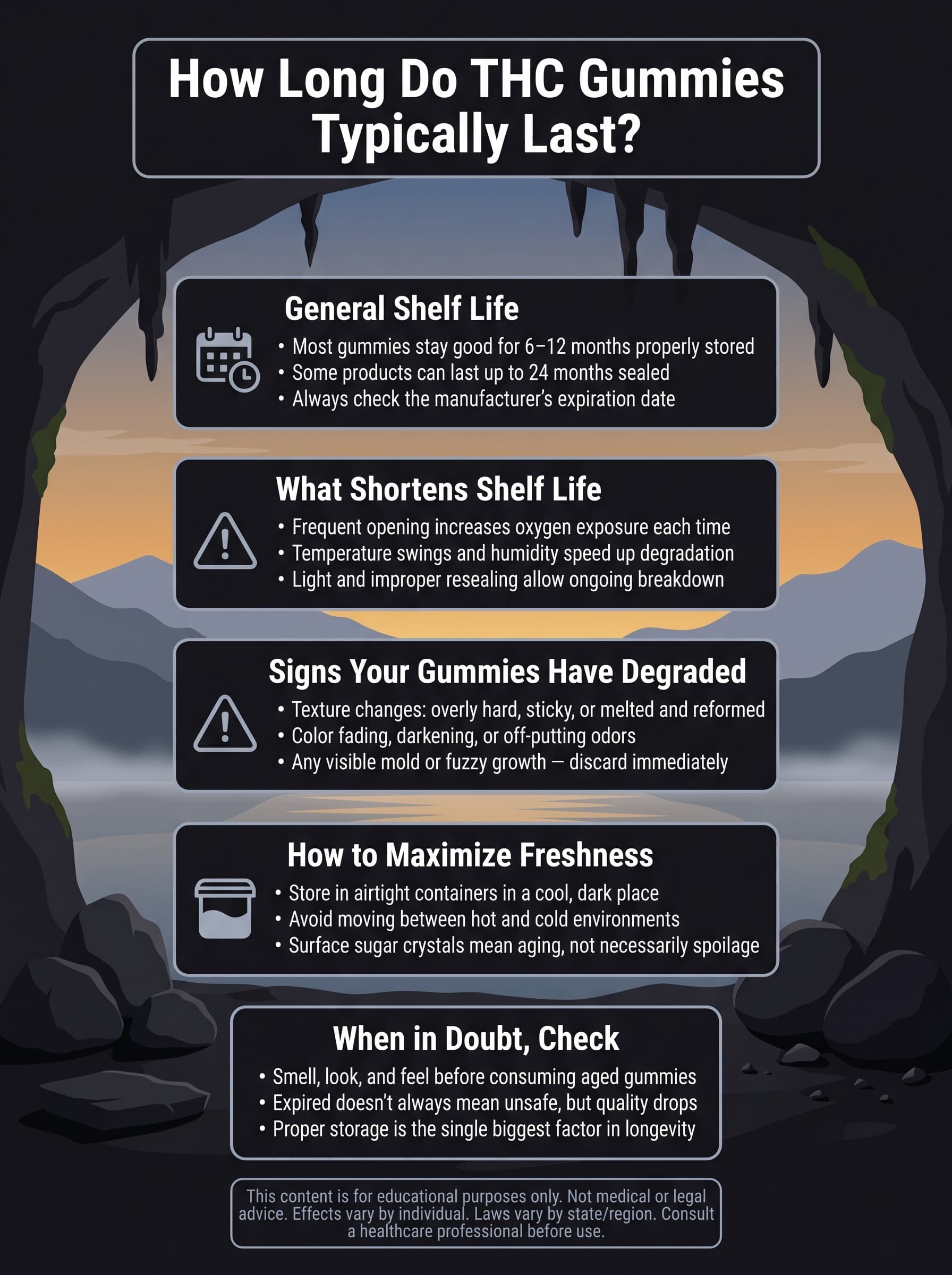
THC gummies typically maintain their quality for 6-12 months under proper storage conditions, with some products lasting up to 24 months. Actual shelf life depends on formulation, packaging, and storage environment.
Manufacturer Expiration Dates
Expiration dates on commercial products represent manufacturer testing and quality guarantees. These dates indicate the timeframe during which the manufacturer ensures the product meets labeled specifications when stored according to package directions.
Expiration dates are not safety deadlines in most cases. Products past expiration may still be safe but may not meet original quality standards. The primary concern with aged products is compositional changes rather than safety hazards.
Factors That Shorten Shelf Life
Several factors can reduce effective shelf life below manufacturer estimates:
- Frequent opening: Each time a container opens, fresh air enters, increasing oxygen exposure
- Temperature fluctuations: Moving between hot and cold environments accelerates degradation
- Humidity exposure: High humidity can cause physical changes and microbial concerns
- Light exposure: Storing in bright locations shortens effective shelf life
- Improper resealing: Failing to fully close containers allows ongoing air exchange
Signs That Gummies Have Degraded
Several observable changes indicate a gummy product has significantly degraded:
Texture changes: Gummies that have become excessively hard, sticky, or have melted and reformed indicate storage problems. While textural changes don't necessarily indicate safety issues, they suggest environmental exposure beyond optimal ranges.
Color changes: Significant darkening or fading from original color suggests chemical changes, potentially including cannabinoid degradation or additive breakdown.
Odor changes: Off-putting smells, sour odors, or loss of original scent indicate chemical changes and potentially microbial growth.
Visible contamination: Any visible mold, unusual spots, or fuzzy growth indicates microbial contamination. Products with visible contamination should be discarded.
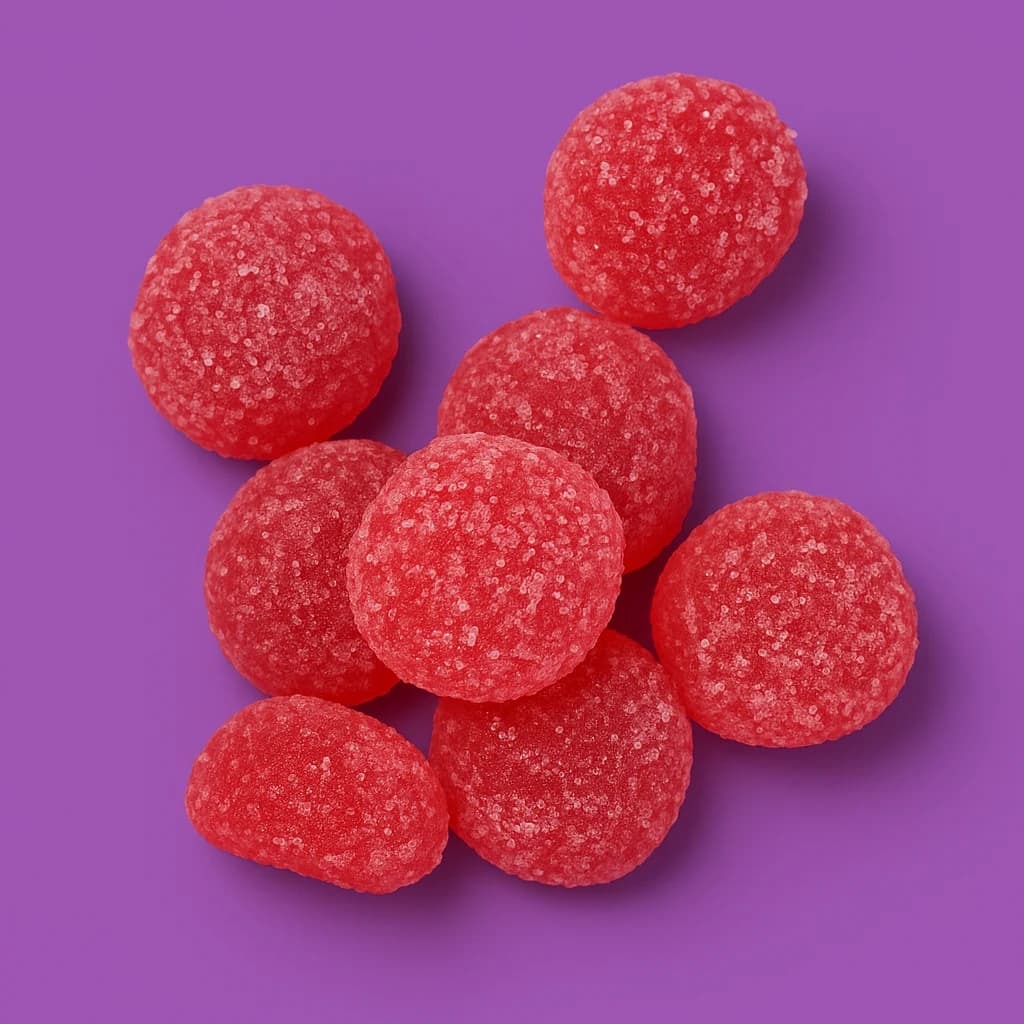
Crystallization: Sugar crystallization on the surface (appearing as a white, gritty coating) indicates moisture loss and aging but doesn't necessarily indicate safety concerns.
What Are Common THC Gummy Storage Mistakes?
Understanding common mistakes helps consumers avoid storage conditions that accelerate degradation.
Car Storage
Vehicles present some of the worst storage environments for cannabinoid products. Interior car temperatures can exceed 140°F on hot days, far above the threshold where rapid degradation occurs. Even parked in shade, vehicle interiors routinely exceed 100°F in warm weather.
Beyond heat, cars expose products to significant temperature swings between day and night, direct sunlight through windows, and unpredictable humidity levels. Leaving THC gummies in vehicles, even temporarily, can cause significant quality loss.
Bathroom Storage
Bathrooms seem like logical storage locations given their cabinets and drawers, but they present humidity challenges. Showers and baths create high-humidity environments that fluctuate significantly throughout the day. Medicine cabinets, despite their name, rarely provide ideal storage conditions for any product sensitive to humidity.
Kitchen Counter Storage
Kitchen counters expose products to multiple degradation factors: light from windows and overhead fixtures, heat from nearby appliances and cooking activities, and humidity from dishwashers and cooking steam. While convenient, countertop storage significantly shortens effective shelf life.
Near-Window Storage
Any storage location near windows exposes products to direct sunlight and temperature variations from solar heating. Even north-facing windows allow significant light exposure over time. Interior locations away from windows provide better protection.
Unsealed or Improperly Sealed Storage
Failing to fully reseal containers after each use allows ongoing oxygen exchange and humidity changes. Over time, improperly sealed products degrade faster than sealed products even when other storage conditions are optimal. Taking an extra moment to ensure proper closure after each use makes a measurable difference in product longevity.
How Should Different THC Product Formats Be Stored?
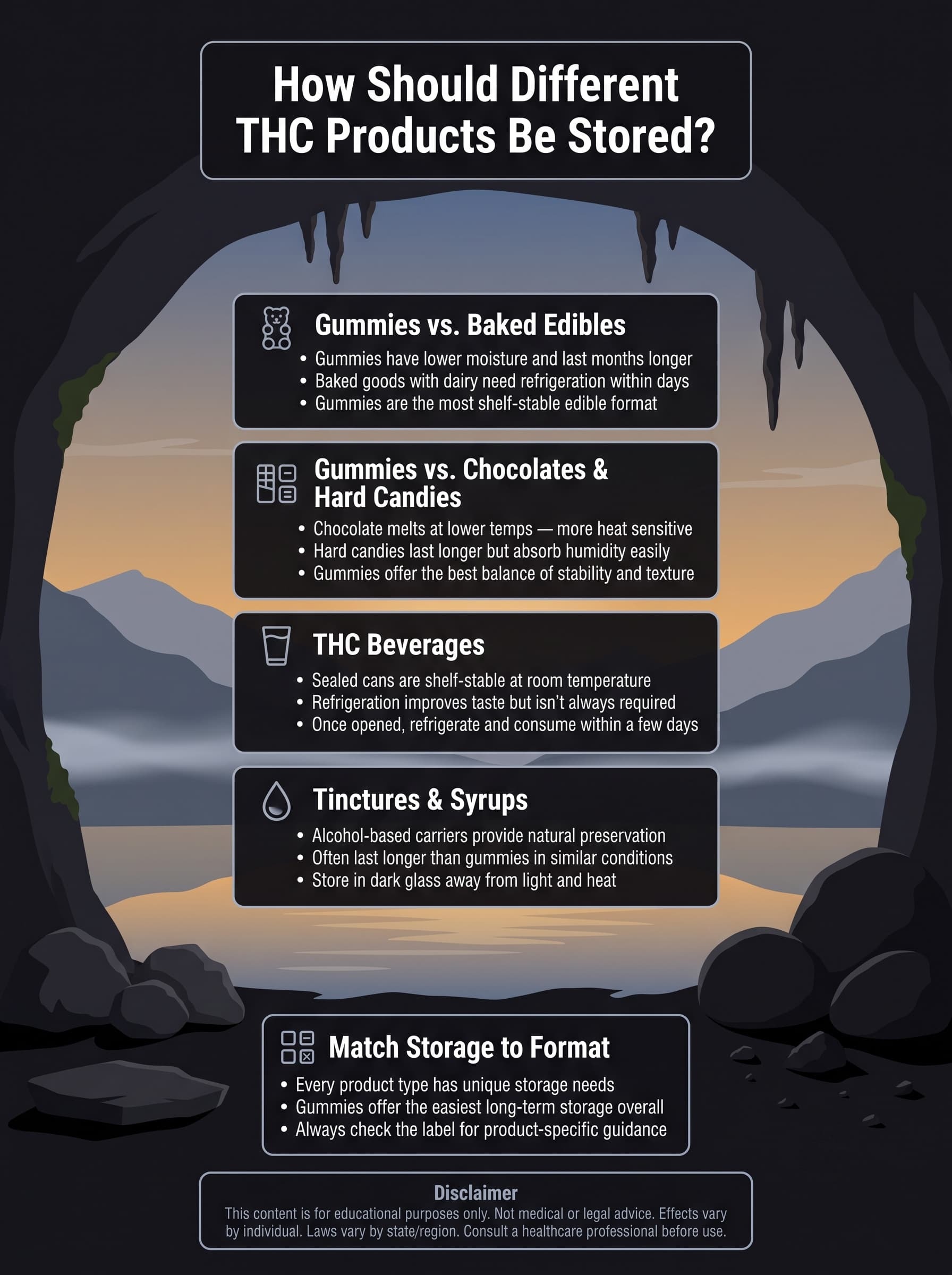
While this guide focuses on gummies, understanding storage across product formats helps consumers make informed decisions about their entire hemp product collection.
THC Gummies vs. Other Edibles
Gummies differ from other edible formats in several ways relevant to storage:
Compared to baked goods: Gummies have lower moisture content than brownies, cookies, or other baked edibles, giving them inherently longer shelf life. Baked goods with butter, eggs, or dairy require refrigeration and have shorter shelf life (typically days to weeks rather than months).
Compared to chocolates: Chocolate melts at lower temperatures than gelatin, making chocolate edibles more sensitive to heat. Chocolates may require refrigeration in warm climates where gummies would remain stable at room temperature.
Compared to hard candies: Hard candies have very low moisture content and can last longer than gummies under similar conditions. However, hard candies are susceptible to moisture absorption in humid environments.
THC Beverages and Storage
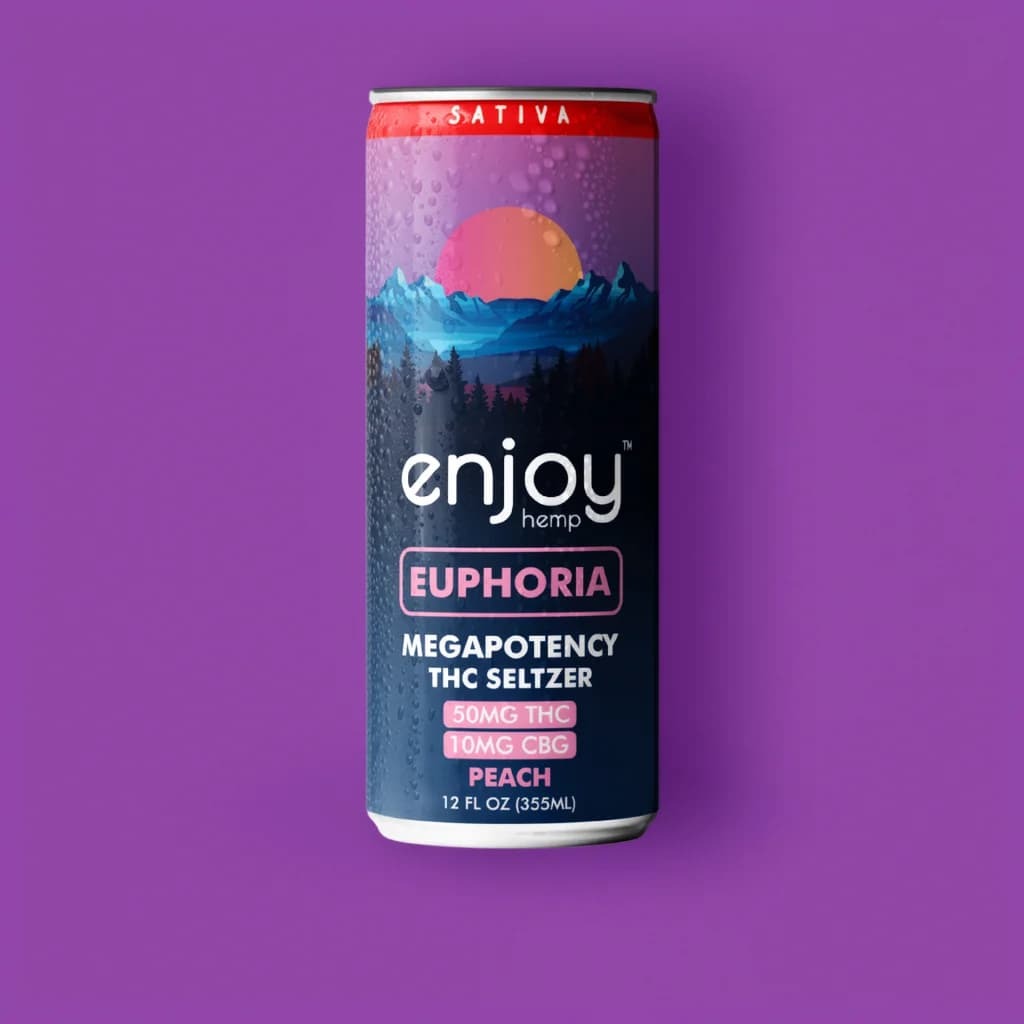
Our THC beverages have different storage requirements than gummies. Sealed beverages are generally shelf-stable at room temperature, but refrigeration improves taste and texture for many consumers. Once opened, THC beverages should be refrigerated and consumed within a few days, similar to other opened beverages.
THC Syrups and Tinctures
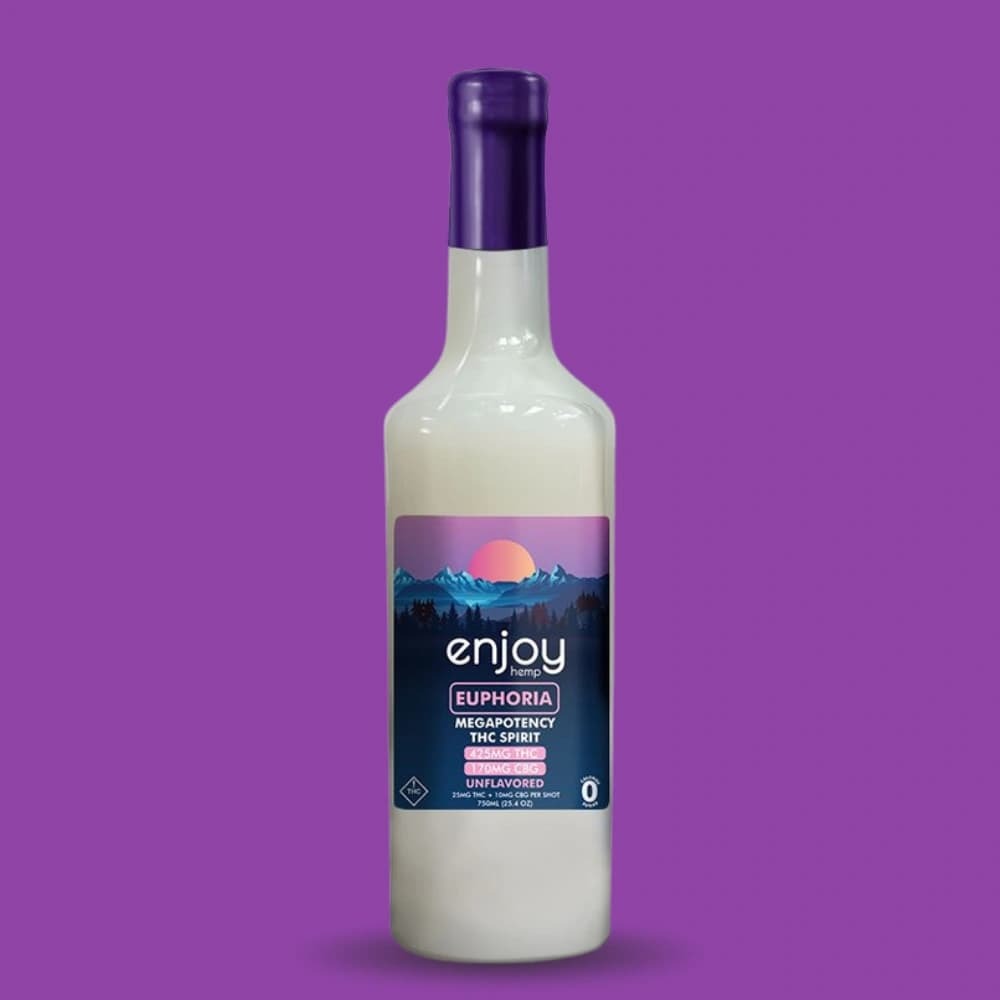
Products like our THC syrups are typically alcohol-based or use other preservative carriers that provide inherent stability. These products often last longer than gummies under similar conditions but remain sensitive to light and heat. Dark glass bottles provide standard packaging for light protection.
Does Refrigeration or Freezing Change Cannabinoid Content?
Temperature reduction itself does not cause cannabinoid degradation. Cold storage actually slows the chemical reactions that lead to degradation, making refrigeration potentially beneficial for long-term storage.
What Research Shows About Cold Storage
The Anresco laboratory study found samples stored at 4°C maintained more stable cannabinoid profiles over 210 days compared to samples at 20°C or 30°C. Cold storage does not convert or destroy cannabinoids; it slows the gradual changes that occur at higher temperatures.
Pharmaceutical research on cannabinoid formulations consistently recommends cool storage for maximizing stability. The selection of lowest possible storage temperature is supported by multiple stability studies conducted for pharmaceutical applications.
The Condensation Consideration
The main concern with cold storage is not cannabinoid damage but moisture management. When cold products are exposed to warmer, humid air, water condenses on surfaces. This condensation can:
- Alter gummy texture, making them sticky or wet
- Introduce moisture that affects future storage stability
- Create conditions favorable for microbial growth if products remain wet
Proper cold storage protocol involves keeping products in airtight containers and allowing them to equilibrate to room temperature before opening. This patience prevents condensation from forming directly on the product.
How to Store THC Gummies for Travel
Travel introduces storage challenges beyond normal home conditions. Temperature control, physical protection, and legal considerations all factor into travel storage decisions.
Short-Term Travel Storage
For day trips or overnight travel, focus on temperature management:
- Insulated bags or coolers protect against temperature extremes
- Keep products with personal items rather than in vehicle compartments
- Avoid leaving products in parked vehicles, even briefly
- Maintain original packaging for product information access
Extended Travel Considerations
For longer trips, additional planning helps preserve product quality:
- Consider refrigerator access at destinations
- Pack only the quantity needed to minimize what's exposed to travel conditions
- Use insulated containers with ice packs for hot-climate travel
- Check that accommodations provide suitable storage options
Legal Considerations for Travel
Hemp-derived THC products containing ≤0.3% Delta-9 THC are federally legal under the 2018 Farm Bill, but state laws vary. Before traveling with any THC product:
- Verify the legal status of hemp-derived THC products at your destination
- Understand airline policies if flying
- Keep products in original packaging with clear labeling
- Carry documentation such as lab reports if available
Legal status varies by state and continues to evolve. Consumers are responsible for understanding applicable laws in any jurisdiction where they possess THC products.
Storage Tips by Climate Zone
Local climate significantly affects storage requirements. What works in a temperate climate may be insufficient in extreme heat or humidity.
Hot and Dry Climates (Desert Southwest)
Extreme heat is the primary concern. Indoor temperatures without air conditioning can exceed safe storage ranges during summer months.
Recommendations:
- Air conditioning or evaporative cooling helps maintain acceptable temperatures
- Interior rooms and lower floors stay cooler than exterior walls and upper floors
- Refrigeration may be necessary during peak summer
- Low humidity means moisture isn't typically a concern
Hot and Humid Climates (Southeast, Gulf Coast)
Both heat and humidity create storage challenges. High humidity accelerates certain degradation pathways and creates physical texture changes in gummies.
Recommendations:
- Climate control (air conditioning) addresses both temperature and humidity
- Dehumidifiers in storage areas help maintain appropriate humidity levels
- Silica gel packets inside storage containers absorb excess moisture
- Refrigeration may be necessary without climate control
- Ensure complete container seals to prevent humidity infiltration
Temperate Climates (Northeast, Pacific Northwest)
Moderate temperatures through much of the year simplify storage, but seasonal variations require attention.
Recommendations:
- Room temperature storage is typically adequate most of the year
- Watch for heat buildup during summer, especially in upper floors
- Monitor humidity during rainy seasons
- Interior cabinets and drawers typically provide stable conditions
Cold Climates (Northern States)
Cold outdoor temperatures aren't typically problematic since indoor heating maintains comfortable temperatures. However, heating systems can create very dry conditions.
Recommendations:
- Normal room temperature storage is usually appropriate
- Watch for excessively dry conditions from heating systems
- Keep products away from heat sources like radiators and vents
- Unheated spaces (garages, storage units) may be too cold in winter
Understanding Cannabinoid Stability Over Time
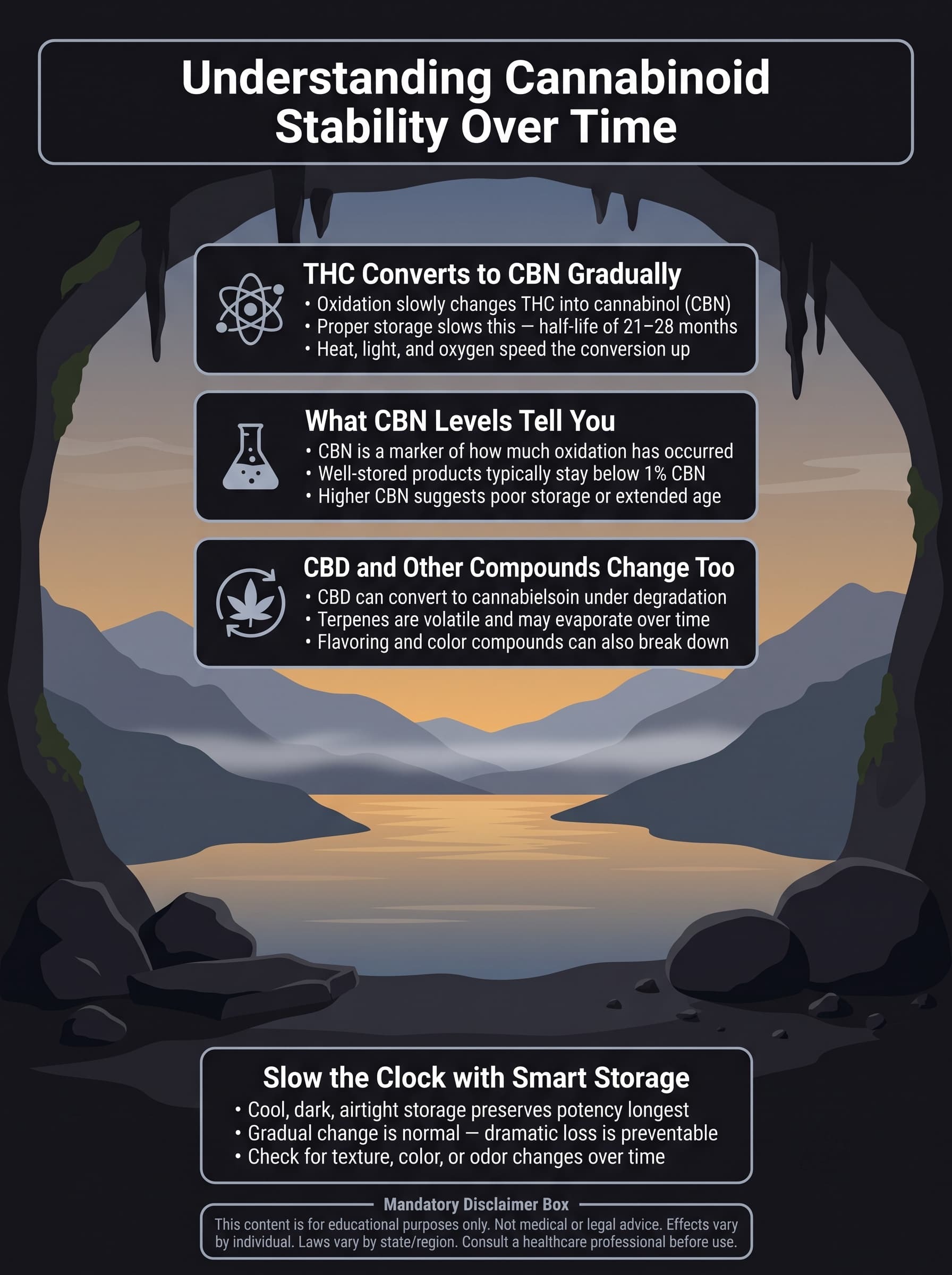
Cannabinoids are relatively stable compounds, but they do change over time. Understanding these changes helps set realistic expectations for stored products.
The THC to CBN Conversion
The most documented cannabinoid change over time is the gradual conversion of THC to cannabinol (CBN). This conversion occurs through oxidation, a chemical reaction that happens when THC molecules interact with oxygen.
Research on long-term cannabis stability has characterized this conversion rate. Under recommended storage conditions (≤25°C, 55-65% humidity, protected from light, with minimal oxygen exposure), half-lives of 21-28 months have been calculated. This means measurable but gradual changes over extended periods.
The rate of this conversion increases significantly with heat, light, and oxygen exposure. Proper storage slows the conversion; poor storage accelerates it.
What CBN Formation Indicates
CBN formation serves as a marker of oxidative degradation in cannabinoid products. Pharmaceutical stability testing uses CBN content as an indicator of product age and storage conditions. Products stored according to best practices show CBN formation below 1% even over extended periods.
Other Degradation Pathways
CBD also changes over time, though through different pathways than THC. Research indicates CBD can convert to cannabielsoin (CBE) and other compounds under degradation conditions.
Beyond cannabinoids, other product components can degrade:
- Terpenes (aromatic compounds) are volatile and can evaporate or degrade over time
- Flavoring compounds may break down, affecting taste
- Colors may fade or change
- The gummy matrix itself can degrade, affecting texture
Creating an Ideal Storage Location
The ideal storage location combines multiple protective factors: stable cool temperature, darkness, low humidity, and minimal disturbance.
Evaluating Potential Storage Spots
When selecting a storage location, consider:
- Temperature stability: Does this location maintain consistent temperature, or does it fluctuate with time of day, season, or nearby heat sources?
- Light exposure: How much light reaches this location? Are there windows nearby? Is lighting frequently on?
- Humidity conditions: Is this area prone to moisture from bathrooms, kitchens, or poor ventilation?
- Accessibility: Is this location secure from children or pets but convenient enough for adult use?
- Temperature proximity: Is this location near heat sources like appliances, heating vents, or electronics?
Common Good Storage Locations
- Bedroom dresser drawers (typically climate-controlled, dark, low humidity)
- Hall closet shelves (interior location, dark, stable temperature)
- Pantry cabinets away from stove (dark, potentially cooler than other kitchen areas)
- Home office desk drawers (climate-controlled, dark when closed)
- Dedicated storage boxes in climate-controlled rooms
Storage Locations to Avoid
- Bathroom medicine cabinets (humidity fluctuations)
- Kitchen counters (light, heat, humidity exposure)
- Window sills or areas near windows (light and temperature exposure)
- Near heating or cooling vents (temperature fluctuations)
- Garages or storage units (extreme temperature variations)
- Vehicles (extreme heat, temperature swings)
Frequently Asked Questions About THC Gummy Storage
Can THC gummies go bad?
THC gummies can degrade over time, but they don't spoil in the same way perishable foods do. The primary concerns are textural changes (becoming hard, sticky, or melted), compositional changes in cannabinoids, and in rare cases with significant moisture exposure, microbial growth. Products showing visible mold or unusual odors should be discarded. Products with only textural changes may still be usable but may differ from original quality.
Do THC gummies need to be refrigerated after opening?
Refrigeration after opening is not required but can be beneficial, especially in warm climates or for products that will be stored for extended periods after opening. If refrigerating, use airtight containers and allow gummies to reach room temperature before opening to prevent condensation. Most gummies are designed for room temperature storage when kept in proper conditions.
How can I tell if my THC gummies have degraded?
Signs of degradation include significant texture changes (excessive hardness, stickiness, or melting), color changes (darkening or fading), unusual odors (sour, off-putting, or different from original), visible crystallization, or any signs of mold or contamination. Minor texture changes don't necessarily indicate a problematic product, but significant changes suggest storage conditions weren't optimal.
Does freezing THC gummies preserve them longer?
Freezing can extend storage time by significantly slowing chemical reactions, but it creates texture problems with gummies. The gelatin matrix becomes brittle when frozen, and gummies may crack or become unpleasantly hard. For most situations, refrigeration provides sufficient preservation without the texture trade-offs of freezing. If freezing is necessary, use completely airtight containers and allow full thawing before opening.
What temperature is too hot for THC gummies?
Temperatures above 77°F can cause gelatin-based gummies to soften. Research indicates cannabinoid changes accelerate significantly above 100°F. The ideal storage range is 60-70°F. If ambient temperatures regularly exceed 75°F, refrigeration becomes worth considering.
Can I store different types of gummies together?
Yes, different gummy products can be stored together as long as storage conditions are appropriate for all products. However, keeping products in original packaging helps maintain product identification, dosing information, and expiration dates. If combining products in a single container, ensure clear labeling of different products and their respective doses.
How long are THC gummies good after the expiration date?
Expiration dates represent manufacturer quality guarantees, not safety deadlines. Products may remain usable after expiration but may not meet original quality specifications. How long depends on storage conditions throughout the product's life. Products stored well may remain acceptable longer than products stored poorly. When in doubt, inspect for visible signs of degradation.
Should I remove gummies from original packaging for storage?
Original packaging is usually designed for product storage and contains important information including dose, ingredients, and expiration date. Keep products in original packaging unless it's damaged or inadequate for your storage conditions. If transferring to another container, clearly label with product name, dose per piece, and original expiration date.
Does humidity affect THC gummy quality?
Yes. High humidity can cause gummies to become sticky and may encourage microbial growth with prolonged exposure. Extremely low humidity can cause gummies to dry out and become hard. The ideal range is 55-65% relative humidity. In high-humidity climates, airtight containers and silica gel packets help maintain appropriate moisture levels.
What's the best container material for storing THC gummies?
Amber or opaque glass with airtight seals provides excellent storage conditions: light protection, oxygen barrier, and no chemical interaction with products. Food-grade plastics are also acceptable, especially if opaque. The most important features are airtight sealing and light protection, regardless of material.
Storage Summary and Quick Reference
| Factor | Optimal Range | What to Avoid |
|---|---|---|
| Temperature | 60-70°F (15-21°C) | Above 77°F, near heat sources |
| Light | Dark or minimal exposure | Direct sunlight, bright rooms |
| Humidity | 55-65% relative humidity | High humidity bathrooms, dry heating |
| Container | Airtight, opaque preferred | Clear containers, poor seals |
| Shelf Life | 6-12 months typical | Variable with poor storage |
Proper storage preserves the quality and composition of THC gummies throughout their shelf life. By controlling temperature, light, humidity, and oxygen exposure, consumers can maintain products in the condition intended by manufacturers.
Explore our complete gummy selection to find products that match your preferences, or browse microdose options for lower-intensity products designed for everyday use.
About the Author
Sarah Mitchell is a wellness industry professional with 15 years of experience in functional supplements and hemp-derived products. She previously led product development at two nationally recognized wellness brands and holds certification as a holistic health practitioner. Sarah advises consumers on quality standards and product selection in the evolving hemp market.
Important Notice: This content provides general information about storage and preservation of THC gummy products. Information is based on published research, food science principles, and industry best practices. Actual shelf life varies by product formulation, manufacturing processes, packaging, and individual storage conditions. Always follow manufacturer storage instructions and observe expiration dates on product packaging.
All Enjoy Hemp products are derived from hemp containing ≤0.3% Delta-9 THC in compliance with the 2018 Farm Bill. These statements have not been evaluated by the Food and Drug Administration. This product is not intended to diagnose, treat, cure, or prevent any disease. Hemp-derived THC products may appear on drug tests. Consult applicable local and state laws before purchasing or consuming any hemp-derived THC product.