


















How to Choose a THCA Vendor That Stays Compliant With Changing Laws
Posted by Enjoy Hemp Editor Team on Oct 11th 2026
Last Updated: September 2026
By Sarah Mitchell, Wellness Industry Specialist
Choosing a THCA vendor that stays compliant with changing laws requires evaluating their regulatory awareness, communication practices, and adaptability. The best vendors update shipping restrictions promptly, communicate legal changes proactively, and prepare inventory strategies for upcoming deadlines like November 12, 2026.
The THCA market is entering its most turbulent regulatory period since the 2018 Farm Bill created the hemp industry. Texas banned THCA flower on July 31, 2026. Tennessee's restrictions took effect January 1, 2026. Federal law changes completely on November 12, 2026, making most current THCA products illegal nationwide. Vendors who ignore these changes put their customers at legal risk.
After 15 years in the hemp and wellness industry, I've watched dozens of vendors navigate regulatory shifts. Some adapt quickly and protect their customers. Others pretend nothing is changing until enforcement arrives. The difference is usually visible in how they communicate, how quickly they update policies, and whether they acknowledge hard truths about the industry's future. Here's how to tell them apart.
Why Does Vendor Compliance Matter for THCA Buyers?
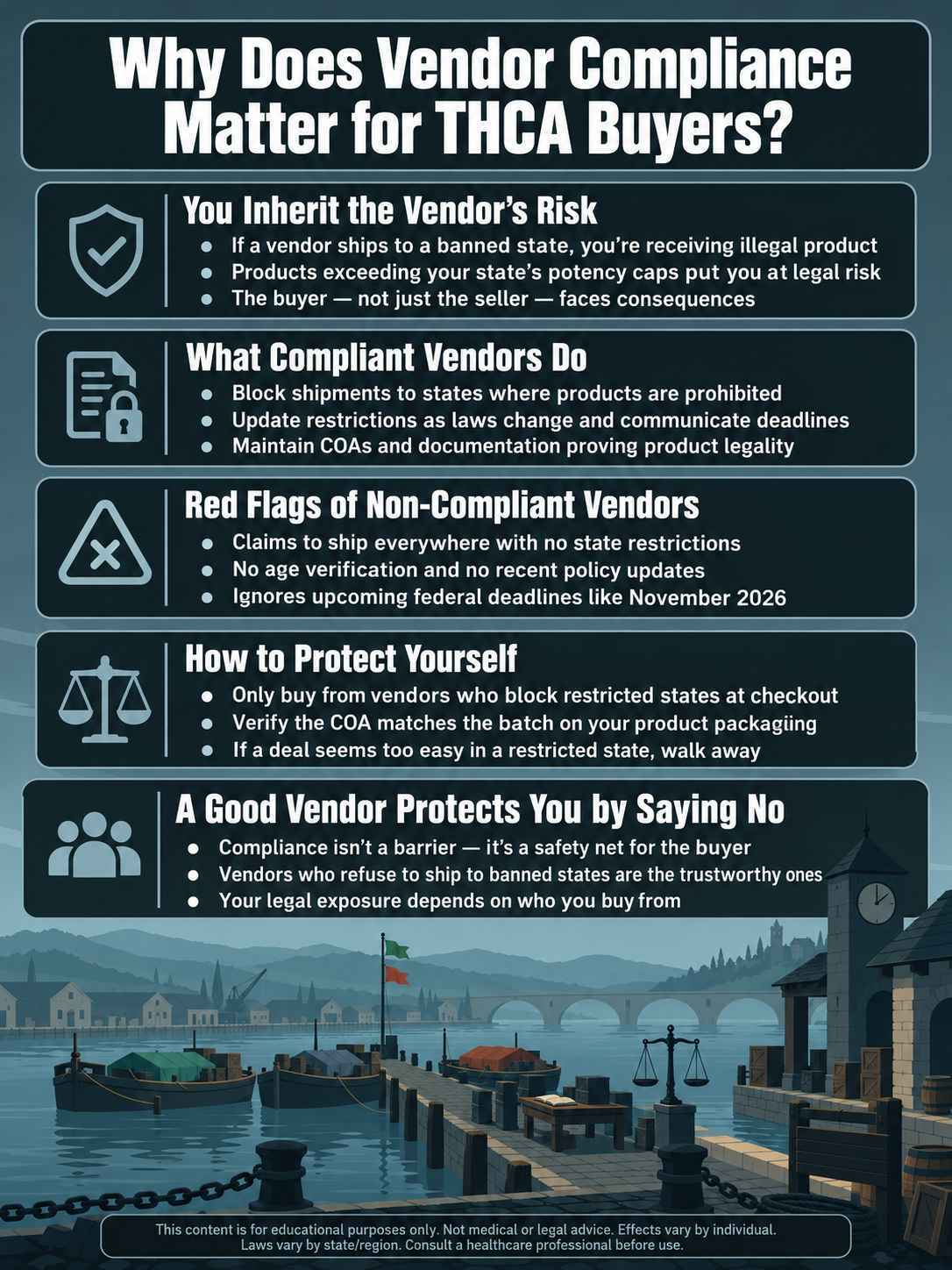
When you buy from a non-compliant vendor, you inherit their legal risks. A vendor shipping THCA flower to Texas after July 31, 2026, is breaking state law, and so is the person receiving that package. A vendor selling products that exceed your state's potency caps is putting you in possession of an illegal product.
Compliant vendors protect you by:
- Blocking shipments to states where products are prohibited
- Updating restrictions as laws change
- Communicating regulatory developments that affect your purchases
- Maintaining documentation that proves product legality
- Preparing for upcoming deadlines rather than ignoring them
Non-compliant vendors create problems by:
- Shipping everywhere without regard to state law
- Ignoring regulatory changes until forced to respond
- Making legal claims that aren't accurate
- Lacking documentation to verify product compliance
- Pretending November 2026 won't affect their business
How Do You Evaluate a Vendor's Regulatory Awareness?
A vendor's regulatory awareness shows in their website content, shipping policies, and customer communications. Compliant vendors treat legal information as essential content. Non-compliant vendors treat it as an afterthought or ignore it entirely.
Signs of Strong Regulatory Awareness
- Dated legal information: Pages showing "Last Updated: September 2026" rather than undated content
- State-specific guidance: Clear explanations of which states they ship to and why
- Acknowledgment of limits: Honest statements about what they can and cannot sell legally
- November 2026 acknowledgment: Discussion of upcoming federal changes and their implications
- Educational content: Blog posts or guides explaining regulatory developments
Red Flags for Weak Regulatory Awareness
- Claims of universal legality: "Legal in all 50 states" without qualification
- Outdated information: References to 2023 or 2024 regulations without updates
- No legal section: No information about compliance, shipping restrictions, or legal status
- Ignoring November 2026: No mention of the federal deadline anywhere on the site
- Defensive responses: Dismissing customer questions about legality as "fear-mongering"
What Should a Vendor's Shipping Policy Include?
A compliant vendor's shipping policy demonstrates they track state regulations and update restrictions accordingly. This policy should be specific, current, and verifiable through their checkout process.
Elements of a Compliant Shipping Policy
| Element | What to Look For |
|---|---|
| Restricted states list | Specific states named, not vague language |
| Product-specific restrictions | Different rules for flower vs. edibles where applicable |
| Last updated date | Recent date showing active maintenance |
| Checkout enforcement | Automatic blocking of restricted states |
| Age verification | 21+ confirmation at checkout |
Testing Checkout Enforcement
The real test of a shipping policy is whether it's enforced at checkout. Enter a restricted state's address (like Idaho or Arkansas) and see what happens:
- Compliant vendor: Order blocked with explanation of why shipping isn't available
- Non-compliant vendor: Order proceeds without warning
If a vendor's website claims shipping restrictions but their checkout accepts orders to banned states, the policy is for show. They're not actually protecting customers from legal risk.
How Quickly Do Compliant Vendors Update Restrictions?
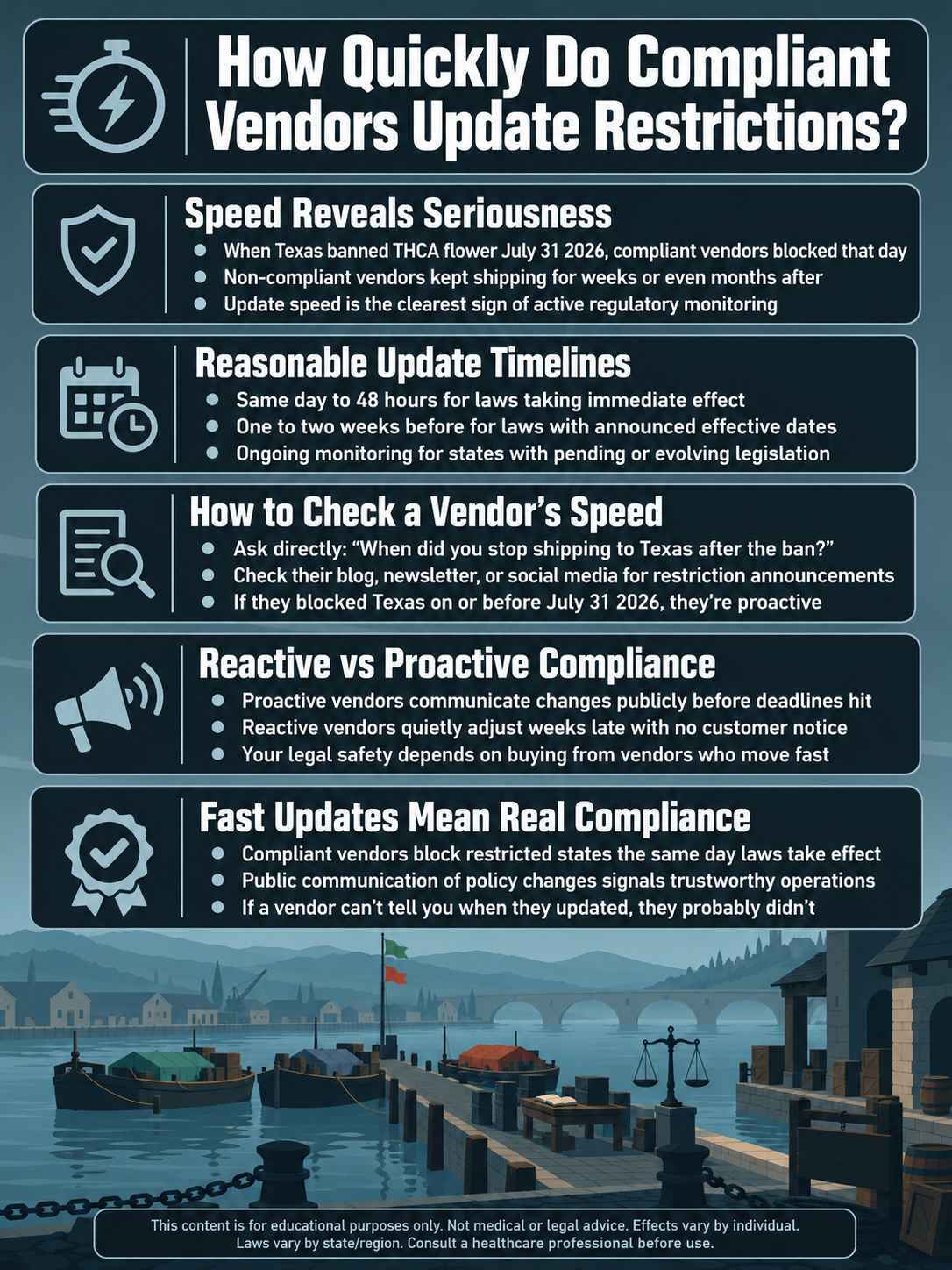
The speed of policy updates reveals how seriously a vendor takes compliance. When Texas banned THCA flower effective July 31, 2026, compliant vendors blocked Texas shipments that same day. Non-compliant vendors continued shipping for weeks or months.
Reasonable Update Timelines
- Same day to 48 hours: For laws taking immediate effect
- One to two weeks before: For laws with announced effective dates
- Ongoing monitoring: For states with pending legislation
How to Check Update Speed
Ask the vendor directly: "When did you stop shipping to Texas?" If they blocked Texas on July 31, 2026 (or before), they're monitoring regulations actively. If they're still shipping to Texas or stopped weeks late, their compliance is reactive rather than proactive.
You can also check their blog, email newsletter archive, or social media for announcements about state restriction changes. Compliant vendors communicate these updates publicly.
What Communication Practices Signal Compliance?
Compliant vendors communicate proactively about regulatory changes that affect their customers. They don't wait for customers to ask. They send updates when laws change, when shipping restrictions update, and when significant deadlines approach.
Proactive Communication Examples
- Email alerts: "Texas Shipping Update: THCA Flower No Longer Available"
- Blog posts: "What the November 2026 Federal Changes Mean for Our Products"
- FAQ updates: Current answers reflecting 2026 regulatory environment
- Social announcements: Timely posts when state laws change
- Order confirmations: Legal notices and compliance reminders included
Communication Red Flags
- Silence on major changes: No mention of Texas, Tennessee, or November 2026
- Defensive dismissals: "Don't worry, nothing's really changing"
- Misleading reassurances: "We'll figure it out" without concrete plans
- No contact responsiveness: Customer service that ignores compliance questions
How Should Vendors Address the November 2026 Deadline?
The November 12, 2026 federal deadline is the single most important compliance event in THCA industry history. How a vendor addresses it tells you everything about their commitment to operating legally.
What Compliant Vendors Are Doing
- Acknowledging the deadline publicly: Website content, emails, and FAQs that explain what's coming
- Explaining product implications: Clear statements about which products will remain compliant and which won't
- Adjusting inventory: Not over-ordering products that will become illegal
- Developing alternative products: Exploring compliant formulations for the post-November market
- Communicating timeline: Letting customers know when to expect changes
What Non-Compliant Vendors Are Doing
- Ignoring the deadline entirely: No mention anywhere on site or in communications
- Claiming it won't happen: "Congress will fix it" or "It won't be enforced"
- Aggressive sales pushes: "Stock up now before it's banned!" without compliance context
- No plan communication: Refusing to answer questions about post-November operations
Questions to Ask Vendors About November 2026
- "What happens to your THCA flower products after November 12, 2026?"
- "Will you continue selling products that exceed the new federal limits?"
- "Are you developing any products that will remain compliant after the deadline?"
- "What's your communication plan for customers as the deadline approaches?"
Compliant vendors answer these questions directly. Non-compliant vendors deflect, dismiss, or ignore them.
How Do You Verify a Vendor's Legal Track Record?
Past behavior predicts future compliance. Vendors who adapted well to previous regulatory changes are more likely to handle upcoming changes responsibly.
Historical Compliance Indicators
- Response to 2021-2023 Delta-8 bans: Did they stop shipping to states that banned Delta-8?
- Response to state hemp program changes: Did they adjust to new state requirements?
- Warning letter history: Has the FDA or FTC issued warnings about their marketing claims?
- Lawsuit history: Have they been sued for non-compliant products or practices?
How to Research Vendor History
- FDA warning letter database: Search for the company name in FDA's public warning letter archive
- Better Business Bureau: Check complaint history and resolution patterns
- Industry news: Search for the company name plus "lawsuit" or "warning letter"
- Reddit and forums: Look for customer reports about compliance issues
What Documentation Should Compliant Vendors Provide?
Compliant vendors maintain and provide documentation proving their products meet federal and state requirements. This documentation protects both the vendor and the customer.
Required Documentation
| Document | Purpose | Accessibility |
|---|---|---|
| Certificate of Analysis (COA) | Proves cannabinoid content and safety | Available per batch without request |
| Hemp license/registration | Proves legal operation | Available on request |
| Sourcing documentation | Proves hemp origin | Available on request |
| Business registration | Proves legitimate business | Verifiable through state records |
Documentation Red Flags
- COAs "available upon request" only: Should be publicly accessible
- Single COA for multiple batches: Each batch needs its own testing
- Missing safety panels: Only potency, no pesticides/metals/microbials
- No business address: Cannot verify company legitimacy
- Outdated COAs: Testing older than 12 months
For detailed guidance on reading and verifying COAs, see our complete guide: How to Find Reputable Websites Selling Lab-Tested THC Products.
How Do Pricing Practices Indicate Compliance?
Compliance costs money. Third-party testing, legal counsel, proper licensing, and inventory management all add to operating expenses. Vendors who cut corners on compliance often cut corners on pricing too, which means suspiciously low prices can signal compliance problems.
What Compliance Costs
- Third-party testing: $200-500 per batch for full panels
- Legal counsel: Ongoing costs for regulatory monitoring
- State licensing: Fees and administrative costs
- Inventory management: Costs of not selling non-compliant products
- Quality sourcing: Premium for verified compliant hemp
Price Red Flags
- Dramatically below market: Prices 50%+ lower than competitors
- Bulk deals with no restrictions: "Buy 10 pounds, ship anywhere"
- Fire sales on soon-to-be-illegal products: Pushing inventory without disclosure
Fair pricing doesn't guarantee compliance, but unrealistically low pricing often indicates corners being cut somewhere, whether on testing, sourcing, or legal practices.
What Questions Should You Ask Before Ordering?
Direct questions reveal vendor compliance posture quickly. Ask these before placing any order:
Legal Compliance Questions
- "Which states do you currently not ship THCA products to?"
- "When did you last update your shipping restrictions?"
- "How are you preparing for the November 12, 2026 federal changes?"
- "Will you continue operating after the total-THC standard takes effect?"
Documentation Questions
- "Can I see the batch-specific COA for this product before ordering?"
- "What lab conducts your testing, and are they ISO 17025 accredited?"
- "Do you test for pesticides, heavy metals, and microbials, or just potency?"
Business Practice Questions
- "Where is your company physically located?"
- "How long have you been operating in the hemp industry?"
- "Have you received any FDA or FTC warnings?"
Compliant vendors answer these questions readily and thoroughly. Evasion, defensiveness, or refusal to answer indicates problems.
How Does Enjoy Hemp Approach Regulatory Compliance?
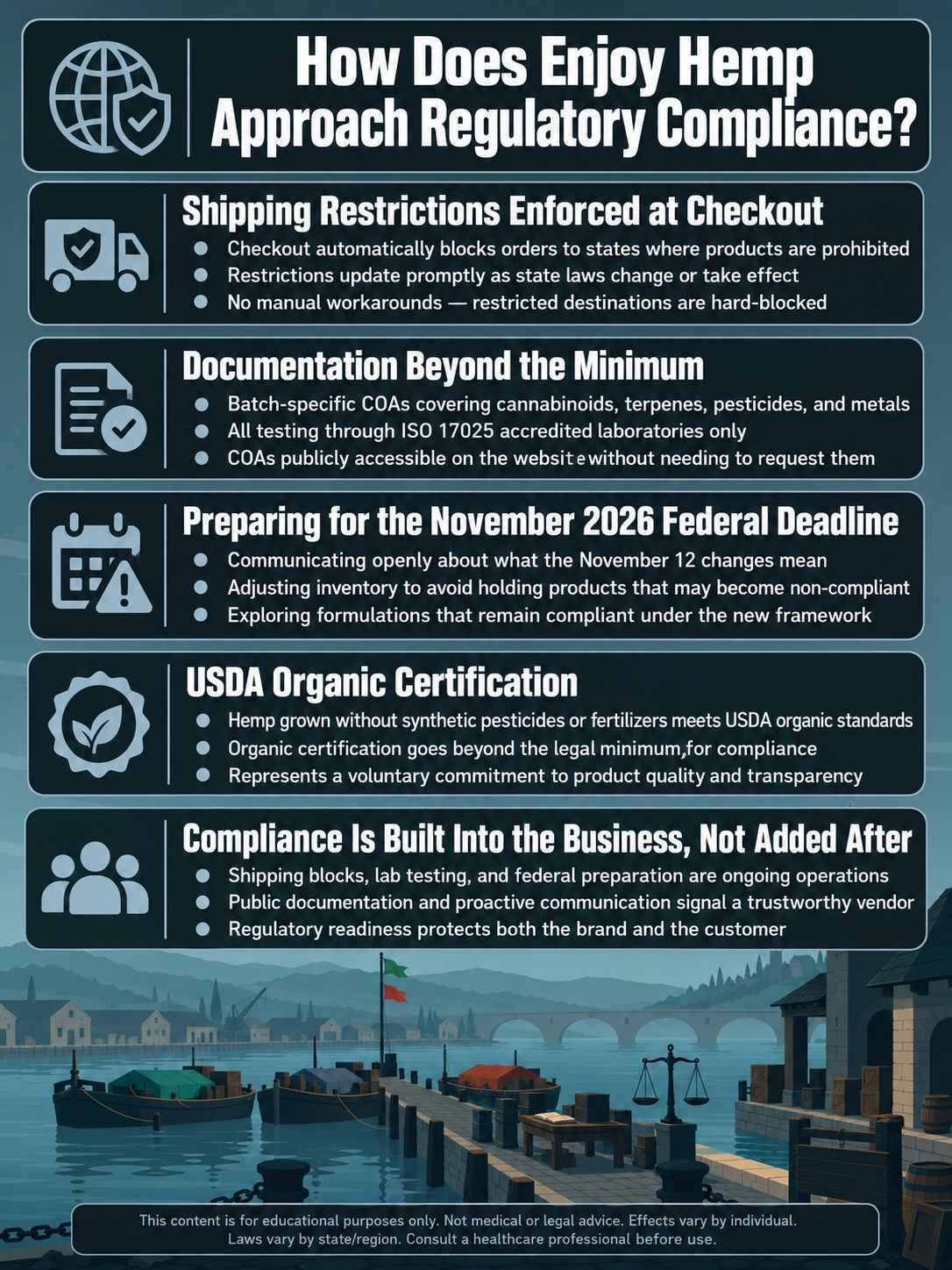
We treat compliance as a core business function, not an afterthought. Here's how we handle the regulatory challenges facing the THCA market:
Shipping Restrictions
We maintain updated shipping restrictions that block orders to states where our products are prohibited. Our checkout system automatically prevents orders to restricted destinations. We update these restrictions promptly when state laws change.
Documentation Standards
- Batch-specific COAs: Every product links to its specific batch testing
- Full safety panels: Cannabinoids, terpenes, pesticides, heavy metals, microbials
- ISO 17025 accredited labs: All testing through properly credentialed facilities
- Public accessibility: COAs available on our website without requesting
November 2026 Preparation
We acknowledge that the federal landscape changes on November 12, 2026. We're:
- Communicating openly about what the changes mean
- Adjusting inventory strategies to avoid holding non-compliant products
- Exploring product formulations that may remain compliant
- Keeping customers informed as the deadline approaches
USDA Organic Certification
Beyond regulatory minimums, our products carry USDA organic certification, meaning the hemp is grown without synthetic pesticides or fertilizers. This represents a compliance standard beyond what's legally required.
What THCA Products Does Enjoy Hemp Currently Offer?
Our THCA product line ships to states where these products remain legal, with full documentation for every batch:
THCA Flower
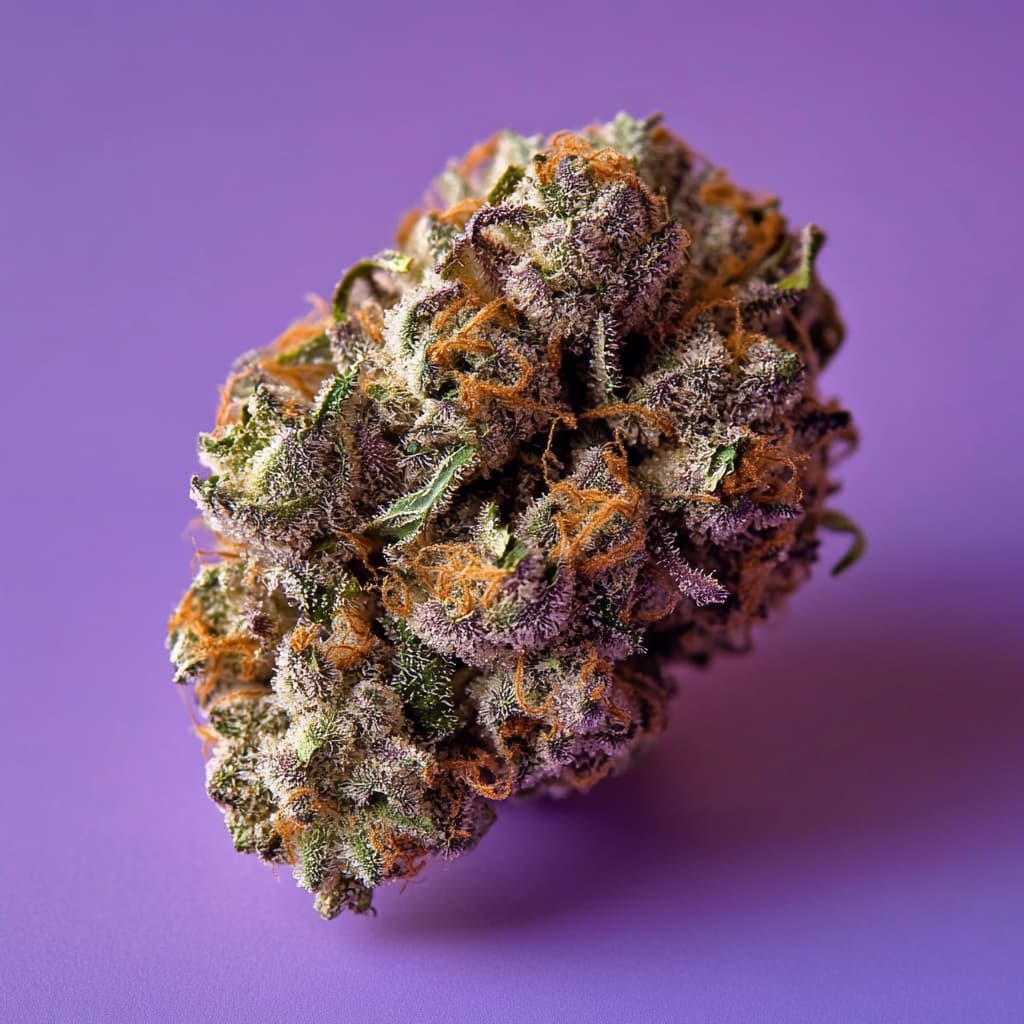
Our flower collection includes indica, sativa, and hybrid strains. Options range from standard flower to Mega Potency Platinum varieties.
Popular strains:
- OG Kush (indica)
- Blue Dream (hybrid)
- Lemon Cake (sativa)
- Granddaddy Purple (indica)
THCA Pre-Rolls
Our pre-roll collection includes standard pre-rolls and Mega Potency Double Diamond pre-rolls infused with THCA diamonds.
THCA Vapes
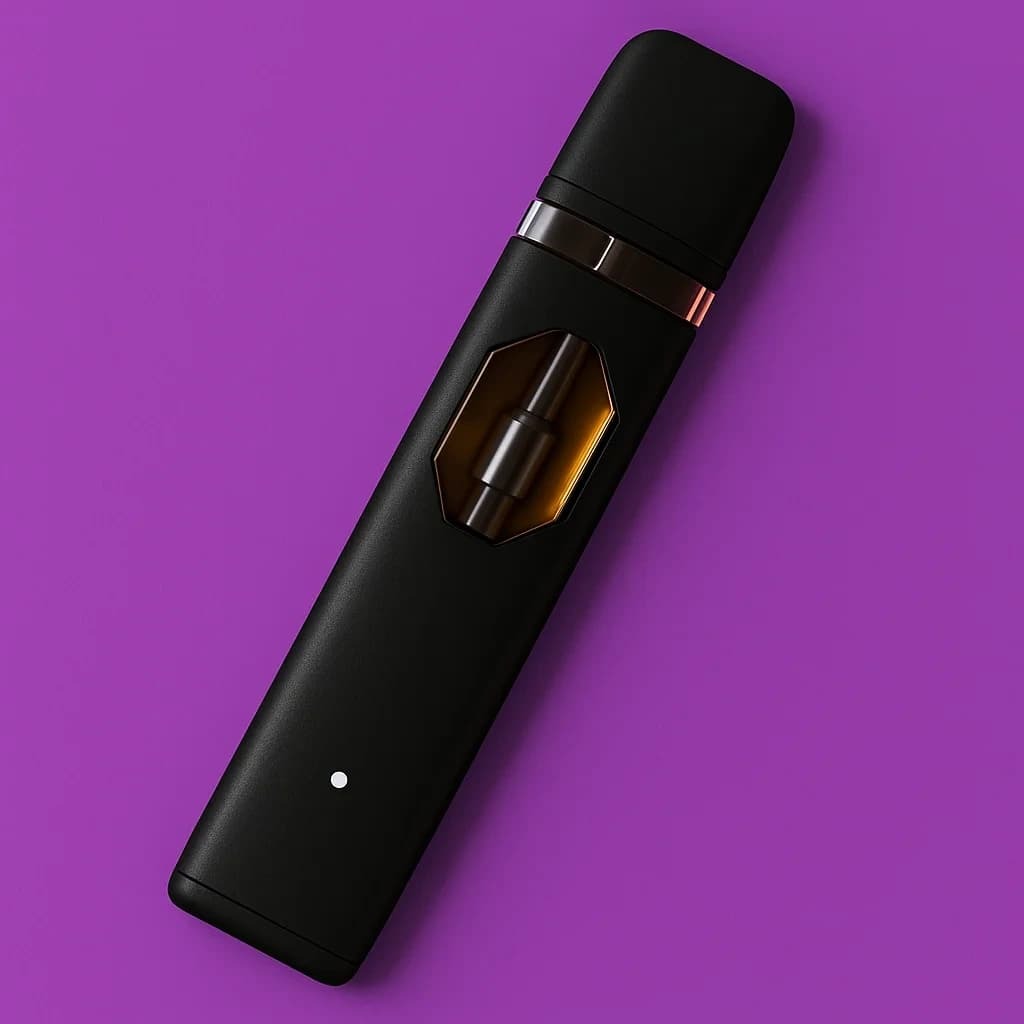
Our disposable vape collection offers convenient, pre-charged devices.
Alternative Products
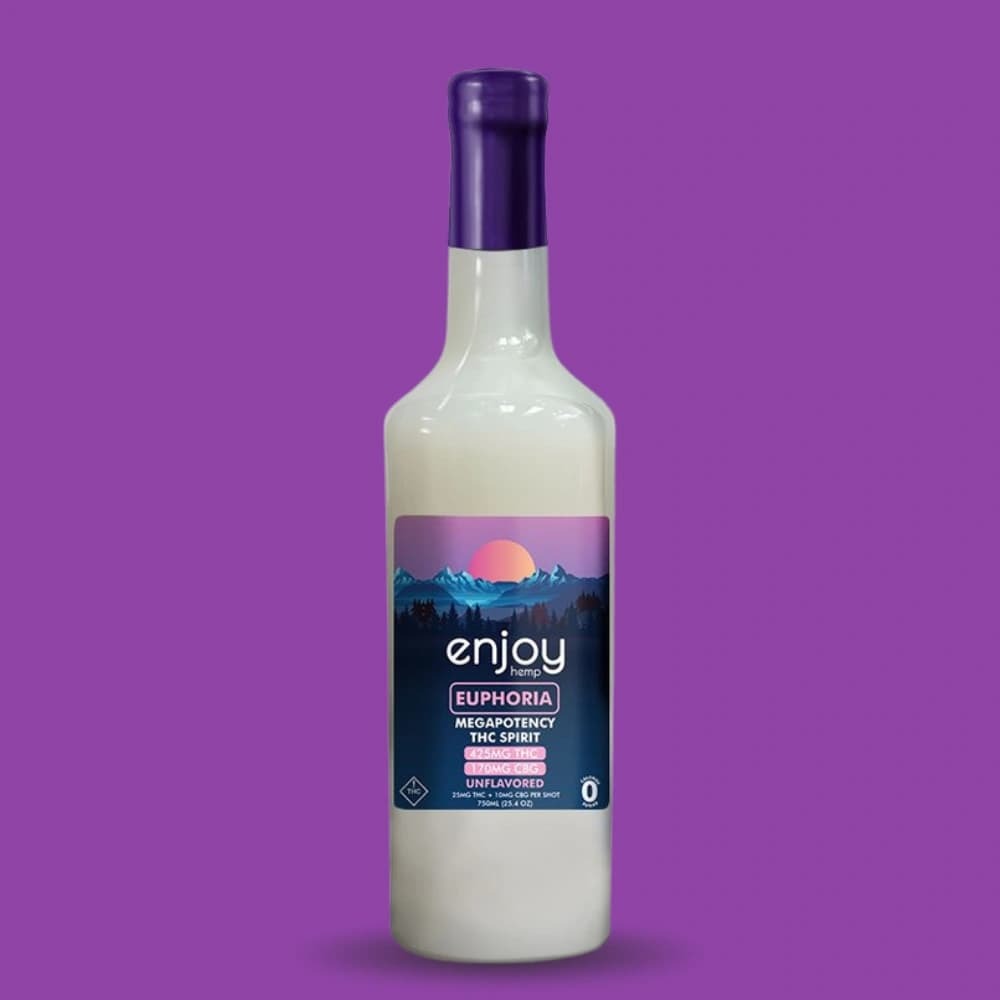
For customers in states restricting THCA flower, our gummy collection and THC beverages may have different legal treatment depending on your jurisdiction.
How Do You Compare Vendors Side by Side?
Use this framework to evaluate any THCA vendor:
| Category | Compliant Vendor | Non-Compliant Vendor |
|---|---|---|
| Shipping restrictions | Updated list, checkout enforcement | "Ships everywhere" or outdated list |
| November 2026 | Acknowledged, plan communicated | Ignored or dismissed |
| COA accessibility | Public, batch-specific | "Upon request" or generic |
| Legal content | Dated, detailed, honest | Vague, outdated, or absent |
| Customer questions | Answered directly | Deflected or ignored |
| Business transparency | Physical address, verifiable | Anonymous, untraceable |
Frequently Asked Questions About Vendor Compliance
Why do some vendors still ship to states where THCA is banned?
Some vendors prioritize short-term sales over legal compliance. They may be unaware of state laws, deliberately ignoring them, or operating from jurisdictions where enforcement is difficult. Regardless of reason, shipping to banned states puts customers at legal risk and indicates the vendor doesn't prioritize compliance.
How do I know if a vendor updated their policies for 2026 changes?
Look for dated policy pages ("Last Updated: September 2026"), recent blog posts about regulatory changes, and email communications addressing Texas, Tennessee, or the November deadline. If you can't find any 2026-dated compliance content, the vendor may not be tracking regulatory changes.
What should vendors say about November 2026?
Compliant vendors acknowledge that federal law changes on November 12, 2026, explain that most current THCA products will no longer be federally compliant, and describe their plans for adapting. Vendors who promise "nothing will change" or ignore the deadline entirely are not being honest about the regulatory reality.
Are cheaper vendors necessarily less compliant?
Not necessarily, but dramatically low prices often indicate corners being cut somewhere. Compliance costs money through testing, legal counsel, licensing, and inventory management. Vendors pricing far below market may be skipping compliance steps that add to costs.
How quickly should a vendor update shipping restrictions when laws change?
Same day to 48 hours for immediate-effect laws. For laws with announced effective dates (like Texas July 31), restrictions should be in place before the effective date. Vendors who take weeks to update restrictions after major state changes aren't monitoring regulations actively.
What if a vendor claims "legal in all 50 states"?
This claim is false for THCA products in 2026. At least 12 states have banned or heavily restricted THCA. Any vendor claiming universal legality is either uninformed or deliberately misleading customers. Find a different vendor.
Should I trust vendors who say Congress will save the THCA market?
Be cautious. While the Lawful Hemp Protection Act could theoretically delay or modify the November 2026 deadline, it has not passed as of September 2026. Vendors encouraging stockpiling based on hope that Congress will act are speculating, not providing compliance guidance. Plan based on current law, not potential future changes.
How do I verify a vendor's business is legitimate?
Look for a physical business address (not just a PO Box), search state business registration databases for the company name, check the Better Business Bureau for complaints, and verify their domain registration isn't brand new. Legitimate businesses operate transparently with verifiable information.
What documentation should I keep from my purchases?
Save COAs, order confirmations, and any communication about product legality. If enforcement questions ever arise, documentation showing you purchased from a compliant vendor with proper testing helps establish good faith. This is especially important as regulations change.
Can a vendor's social media presence indicate compliance?
Somewhat. Compliant vendors typically post regulatory updates, respond to compliance questions professionally, and avoid making legal claims they can't support. Vendors who only post sales content without any regulatory awareness may not be tracking compliance seriously.
Summary: Vendor Compliance Evaluation Checklist
Before ordering from any THCA vendor, verify these compliance indicators:
| Check | What to Verify | Red Flag |
|---|---|---|
| Shipping restrictions | States listed, checkout enforced | Ships everywhere, no blocks |
| Policy dates | Updated in 2026 | Undated or 2024 references |
| November 2026 | Acknowledged with plan | Ignored or dismissed |
| COA access | Public, batch-specific | Hidden or generic |
| Legal claims | Qualified, honest | "Legal everywhere" |
| Business info | Physical address, verifiable | Anonymous, untraceable |
| Question responses | Direct, thorough | Evasive, defensive |
Vendors who pass all these checks are likely operating responsibly and protecting their customers from legal risk. Vendors who fail multiple checks should be avoided regardless of product quality or pricing.
At Enjoy Hemp, we maintain the compliance standards outlined in this guide. Browse our full product collection with documentation and shipping restrictions appropriate for your state, or explore our THCA flower, pre-rolls, and gummies where available in your jurisdiction.
About the Author
Sarah Mitchell is a wellness industry professional with 15 years of experience in functional supplements and hemp-derived products. She previously led product development at two nationally recognized wellness brands and holds certification as a holistic health practitioner. Sarah advises consumers on quality standards and vendor selection in the evolving hemp market.
Important Notice: This content provides general information about evaluating THCA vendor compliance and is not legal advice. Laws change frequently, and vendor practices may change after publication. Always verify current regulations and vendor policies before purchasing. THCA converts to THC when heated and will produce psychoactive effects. Never drive under THC influence.
All Enjoy Hemp products are derived from hemp containing ≤0.3% Delta-9 THC in compliance with the 2018 Farm Bill. These statements have not been evaluated by the Food and Drug Administration. This product is not intended to diagnose, treat, cure, or prevent any disease. Hemp-derived THC products may appear on drug tests. Consult applicable local and state laws before purchasing or consuming any hemp-derived THC product.