




Best Relaxation Beverages for Sleep Support 2026 Guide
Posted by Enjoy Hemp Editor Team on Oct 13th 2026
Last Updated: October 2026
By Sarah Mitchell, Wellness Industry Specialist
Relaxation beverages for sleep support are evening drinks people use as part of a wind-down routine. The most popular are hemp THC+CBN drinks like the Enjoy Hemp Sleep THC Drink, tart cherry juice, chamomile tea, magnesium drinks, L-theanine drinks, golden milk and valerian tea. Only the hemp drinks contain THC. None has been evaluated by the FDA for sleep.
I've spent 15 years in functional supplements and hemp products, and evening drinks are the category I get asked about most. The global relaxation beverages market reached $1.37 billion in 2024 and is projected to grow 15.2% a year through 2033. That's a lot of cans, teas and powders, and a lot of labels to read.
This guide covers the seven evening drinks people ask about most, what's actually in each one, what the research does and doesn't say, and the federal hemp law change coming on December 11, 2026. If you already know you want a hemp drink, our Sleep collection has every evening product in one place.
| Beverage | Main Ingredients | Contains THC? | Caffeine-Free? |
|---|---|---|---|
| Enjoy Hemp Sleep THC Drink | 10mg THC + 10mg CBN | Yes | Yes |
| Tart cherry juice | Montmorency cherries | No | Yes |
| Chamomile tea | Chamomile flowers | No | Yes |
| Magnesium drink | Magnesium citrate | No | Yes |
| L-theanine drink | L-theanine, botanicals | No | Usually |
| Golden milk | Milk, turmeric | No | Yes |
| Valerian tea | Valerian root | No | Yes |
What Are the Best Relaxation Beverages for Sleep Support?
The seven relaxation beverages people choose most for the evening are hemp THC+CBN drinks from Enjoy Hemp, tart cherry juice, chamomile tea, magnesium drinks, L-theanine drinks, golden milk and valerian tea. The right pick depends on whether you want THC, whether you get drug tested, and how much you care about sugar and calories.
Here's what's in each one and what to know before you buy.
1. Enjoy Hemp THC+CBN Evening Drinks
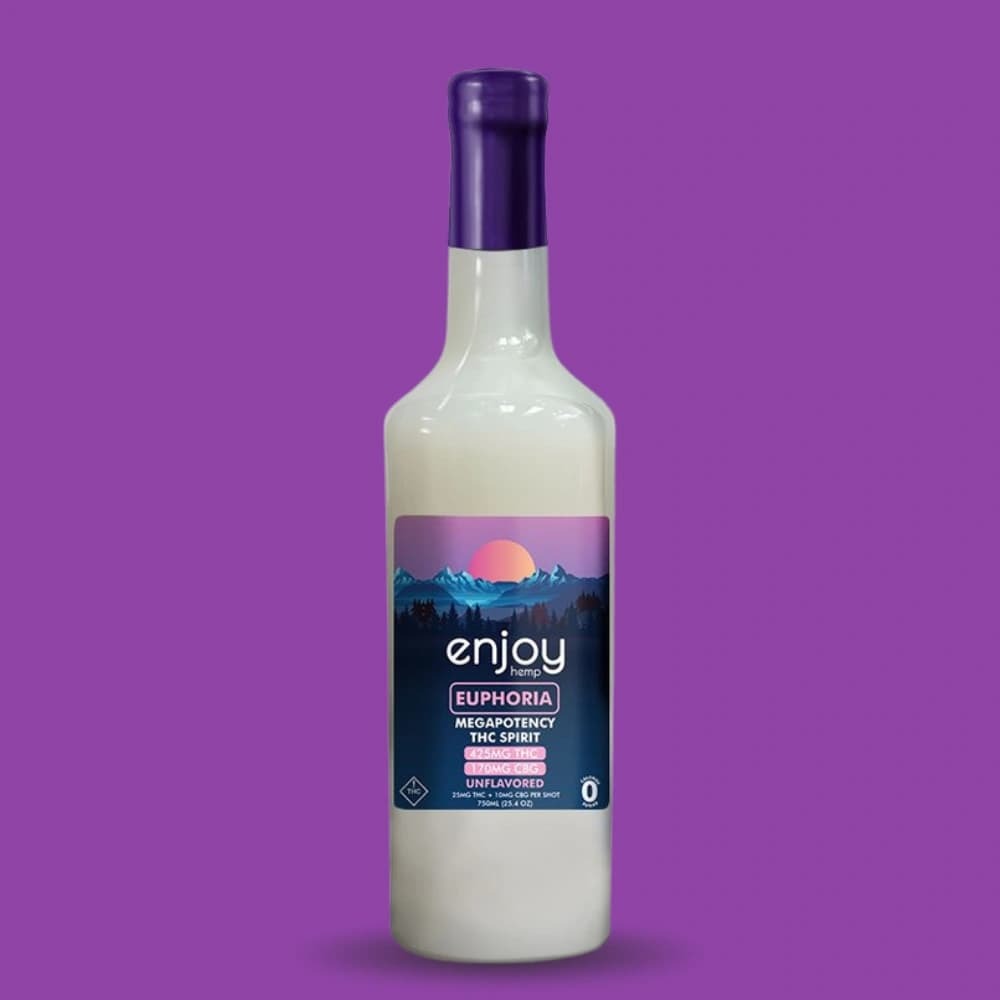
Enjoy Hemp makes ready-to-drink seltzers and a drink-mix syrup that combine hemp-derived delta-9 THC with CBN, a cannabinoid that forms as THC ages. Every product is third-party lab tested, and a Certificate of Analysis (COA) is available.
- Sleep THC Drink, 10mg THC + 10mg CBN: 12 fl oz mango passionfruit can, 20 calories, 5g sugar.
- Chill THC Drink, 5mg THC + 5mg CBN: Lemon can with half the THC of the Sleep can. 20 calories, 5g sugar.
- Sleep THC Syrup, 800mg THC + CBN: Grape, indica-style. Each 1/4 teaspoon serving contains 5mg THC + 5mg CBN and 1.5 calories. Stir it into any caffeine-free drink.
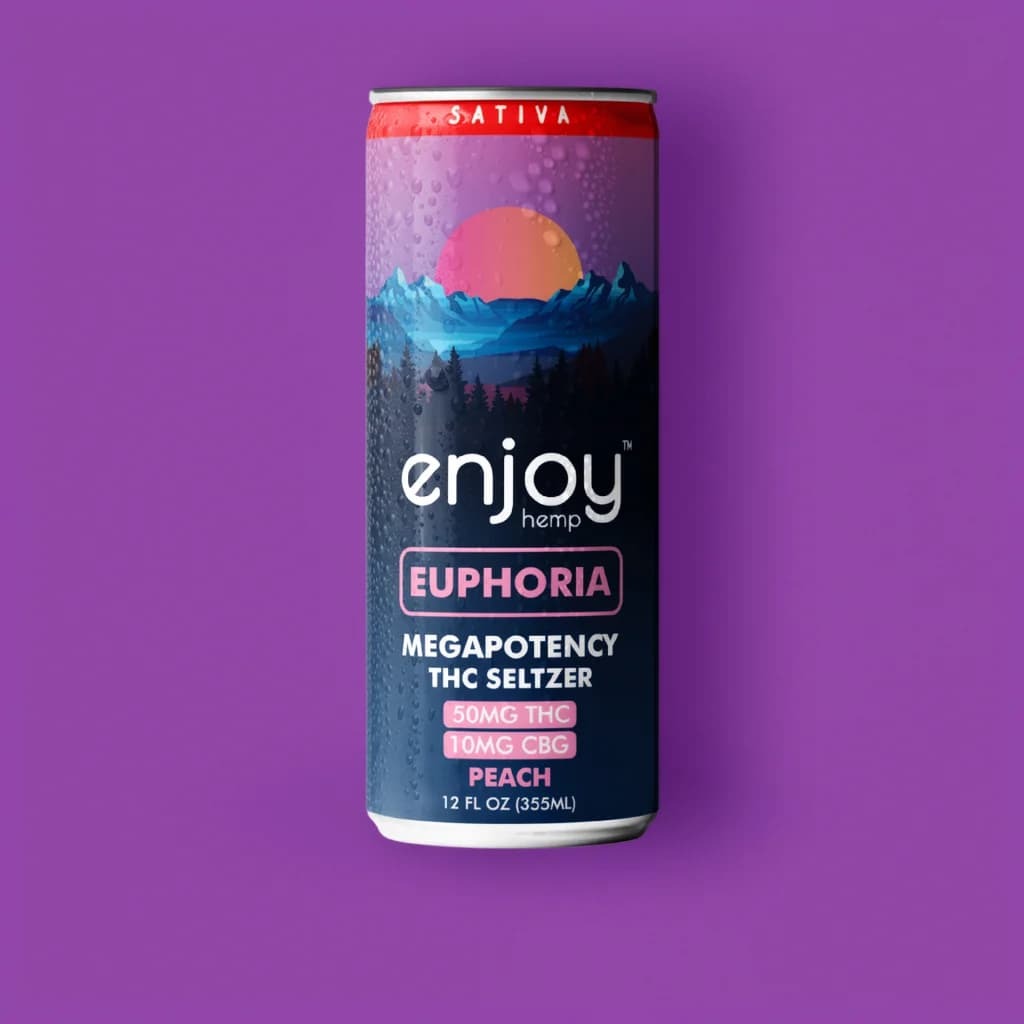
- Sleep THC Drink, 50mg THC + 10mg CBN: High-THC can for experienced adults only.
Honestly, the thing I like most about cans is how simple the math is. One can is one labeled serving, so you always know exactly how much THC you had. If you're new to THC, read the label, have one serving, and wait at least 30 minutes before having more.
2. Tart Cherry Juice
Tart cherry juice is made from sour Montmorency cherries, one of the few foods that naturally contains melatonin. A small 2012 trial in the European Journal of Nutrition gave 20 adults tart cherry concentrate for a week and measured higher melatonin levels than placebo.
Most people mix 1 ounce of concentrate into water, or drink about 8 ounces of unsweetened juice. Check the label, since some brands add a lot of sugar.
3. Chamomile Tea
Chamomile is the classic bedtime tea, made from dried daisy-like flowers. It contains apigenin, a plant compound researchers have studied. The National Center for Complementary and Integrative Health (NCCIH) notes there's very little research on chamomile and sleep problems.
Steep 2 tablespoons of dried flowers in 1 cup of hot water for about 5 minutes. Skip it if you're allergic to ragweed or daisies, and check with your doctor if you take birth control pills or blood thinners.
4. Magnesium Drinks
Magnesium drinks are powders or cans built around magnesium citrate or glycinate. According to the NIH Office of Dietary Supplements, magnesium is involved in more than 300 enzyme systems, and many adults get less than recommended from food.
Most evening magnesium drinks contain 100 to 350mg per serving. The NIH upper limit for supplemental magnesium is 350mg a day for adults, because more can cause diarrhea and cramping.
5. L-Theanine Drinks
L-theanine is an amino acid found in tea leaves. Ready-to-drink evening cans and liquid shots often pair it with GABA, chamomile or lavender, usually at 100 to 200mg of L-theanine per serving.
One thing I always check: a lot of these cans list ingredients but no amounts. If the label won't tell you how much is in it, I'd put it back on the shelf.
6. Golden Milk or Warm Milk
Golden milk is warm milk with turmeric, cinnamon and a little honey. Dietitians often suggest it instead of hot chocolate at night, since a small coffee-shop hot chocolate can carry about 25mg of caffeine. Plain warm milk is mostly a comforting ritual, and that's fine.
7. Valerian Root Tea
Valerian is a flowering plant whose root has been brewed as a bedtime tea for centuries. Study results on valerian and sleep are mixed. Steep 2 to 3 grams of dried root for 10 to 15 minutes. The smell is strong, so most blends add mint or chamomile.
Which Drinks Should You Avoid Before Bed?
Skip alcohol, caffeinated drinks (including hot chocolate and many sodas) and large amounts of any liquid in the 1 to 2 hours before bed. Caffeine has a half-life of 3 to 5 hours, and a full bladder is one of the most common reasons people wake up around 2 a.m.
This surprised me when I tracked my own routine. Even a big mug of caffeine-free tea right before lights out had me up in the middle of the night. So I finish any bedtime drink 60 to 90 minutes before bed and keep it to one cup.
- Alcohol, including the classic "nightcap"
- Coffee, black tea or green tea after midday
- Hot chocolate and cola, which contain caffeine
- Energy drinks and pre-workout drinks
- More than about 8 to 12 ounces of any liquid close to bedtime
- Mixing THC with alcohol, at any time
What Does Research Say About THC, CBN and Sleep?
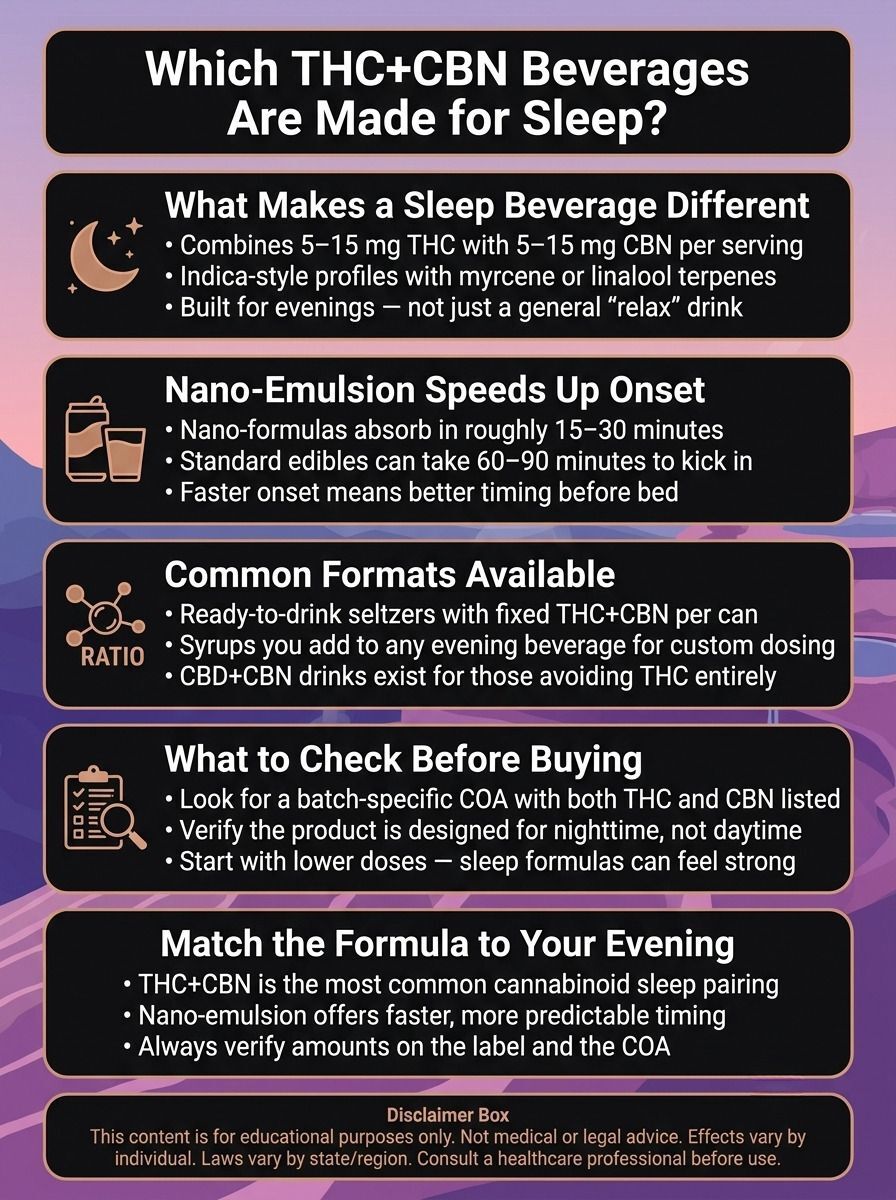
Research on THC, CBN and sleep is early, small and mixed. The FDA has not approved or evaluated any hemp-derived THC or CBN product for sleep. One 2026 pilot study even found that a THC and CBD dose shortened total sleep time and REM sleep compared with placebo.
That 2026 pilot, from the Woolcock Institute in Australia, gave 20 adults 10mg THC plus 200mg CBD. Total sleep time dropped by about 25 minutes and REM by 33.9 minutes, even though participants didn't notice a difference. I share that because people deserve the full picture, not just the hopeful headlines.
Use is common anyway. A University of Michigan study in JAMA Pediatrics (October 2025) found 18% of U.S. adults aged 19 to 30 had used cannabis around bedtime, and the researchers cautioned against nightly reliance. If THC is part of your evening, keep it occasional, keep servings modest, and talk to your doctor if sleep is a real problem for you.
Are Hemp THC Drinks Still Legal in 2026?
Yes, for now. As of October 2026, hemp THC drinks with no more than 0.3% delta-9 THC by dry weight are federally legal under the 2018 Farm Bill where state law allows them. On December 11, 2026, a new federal definition caps finished hemp products at 0.4mg total THC per container, which most THC drinks exceed.
That new definition comes from Section 781 of the appropriations law signed on November 12, 2025. It was set to start November 12, 2026. In early September 2026, a short-term funding law (the Continuing Appropriations and Extensions Act, 2027, P.L. 119-103) pushed most of it to December 11, 2026. Products with cannabinoids the plant can't naturally produce are still covered from November 12, 2026. The Congressional Research Service explains how the hemp definition is changing.
- Until December 11, 2026, the 0.3% delta-9 THC standard still applies
- Congress could delay or change the rule again before then, but nothing is certain
- State laws apply on top of federal law, and some states are already stricter
- Tart cherry, herbal, magnesium and L-theanine drinks aren't affected
We'll keep this section updated. For background, read what makes THC products federally legal.
How Much THC and CBN Is in Each Enjoy Hemp Evening Product?
Enjoy Hemp evening drinks range from 5mg THC + 5mg CBN per serving (Chill THC Drink and Sleep THC Syrup) to 10mg THC + 10mg CBN (Sleep THC Drink) and 50mg THC + 10mg CBN (high-THC Sleep can). Every amount is printed on the label and confirmed by a batch COA.
| Product | THC | CBN | Format |
|---|---|---|---|
| Chill THC Drink | 5mg | 5mg | 12 oz can |
| Sleep THC Syrup | 5mg | 5mg | 1/4 tsp |
| Sleep THC Drink | 10mg | 10mg | 12 oz can |
| Sleep THC Drink 50mg | 50mg | 10mg | 12 oz can |
A few ground rules I'd give any adult trying hemp THC for the first time:
- Read the label and have one labeled serving
- Wait at least 30 minutes for a drink before having more, and longer for syrups and gummies
- Don't combine drinks, gummies and syrups until you know how THC affects you
- Never drink alcohol with THC, and never drive after THC
- Talk to your doctor first if you take any medication
When I was leading product development, the most common complaint we heard came from people who skipped straight to a big serving. Read the label. It's boring advice, and it's the right advice.
What's Actually in an Enjoy Hemp Sleep THC Drink?
The Enjoy Hemp Sleep THC Drink contains six ingredients: carbonated reverse osmosis water, natural mango passionfruit flavor, sugar, citric acid, hemp extract and CBN isolate. Each 12 fl oz can has 10mg THC, 10mg CBN, 20 calories and 5g of sugar, and it's alcohol-free, vegan and gluten-free.
I like walking through a short ingredient list like this because it's the fastest way to compare cans. Here's what each part is:
- Carbonated reverse osmosis water: Filtered water, carbonated. This is the base.
- Natural mango passionfruit flavor: Covers the grassy taste hemp extract can have.
- Sugar: 5g per can, a fraction of a regular soda's 39g.
- Citric acid: Adds tartness and keeps flavor stable.
- Hemp extract: The source of the delta-9 THC.
- CBN isolate: Purified CBN, added so each can carries a set 10mg.
Notice what isn't there: no melatonin, no caffeine, no alcohol and no "proprietary blend." Every active ingredient has a number next to it.
| Product | Serving | Calories | Sugar |
|---|---|---|---|
| Sleep THC Drink | 12 oz can | 20 | 5g |
| Chill THC Drink 5mg | 12 oz can | 20 | 5g |
| Sleep THC Syrup | 1/4 tsp | 1.5 | Under 1g |
Should You Choose a THC Drink or a THC Gummy?
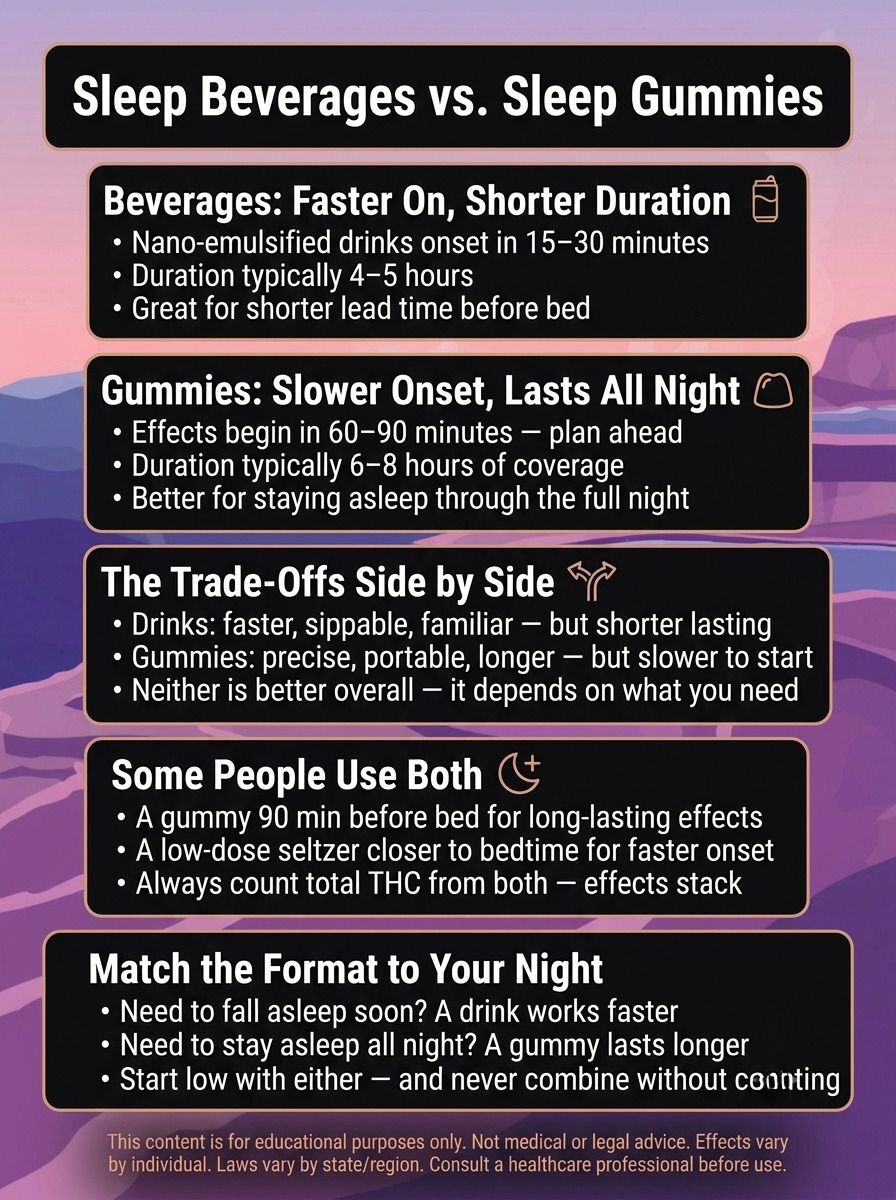
Choose a drink if you like sipping a cold can as part of your evening and want a low-calorie option. Choose a gummy if you want something portable with no liquid before bed. Both list exact THC and CBN amounts per serving.
- Drinks: The Sleep THC Drink has 20 calories per can
- Gummies: Sleep THC Gummies 1000mg (THC + CBN) and Sleep THC Gummies 625mg
- Want to try both? The Snooze Stash Set bundles several evening formats
For a side-by-side look at gummies, syrups and seltzers by cannabinoid content, see our hemp cannabinoids for nighttime guide.
Who Should Avoid THC Drinks?
Don't use THC drinks if you're under 21, pregnant or breastfeeding, have a history of psychosis, take medication without checking with your doctor, or face drug testing. THC can impair driving and may cause a positive drug test.
- You're under 21
- You're pregnant or breastfeeding
- You have a history of psychosis
- You take sedatives, blood thinners or psychiatric medication (ask your doctor first)
- You have a drug test coming up (see will legal THC show up on a drug test)
- You plan to drive or operate machinery
Herbal drinks have cautions too. Chamomile can trigger allergies, and too much supplemental magnesium can upset your stomach.
What Should You Look for in an Evening Drink?
Look for exact ingredient amounts on the label, a batch-specific Certificate of Analysis, low sugar, and a brand that's clear about its 2026 compliance status. Vague "proprietary blends" and any drink claiming to treat a health condition are the biggest red flags.
- Listed amounts: Enjoy Hemp prints mg of THC and CBN per can. Many evening cans list no amounts at all.
- Third-party COA: From an ISO 17025-accredited lab, matching the batch you bought.
- Low sugar: A bedtime drink doesn't need 30 grams of sugar. The Sleep THC Drink has 5g.
- No cure claims: No drink is FDA-approved to treat a sleep problem. Walk away from any that says otherwise.
- Clear compliance: The brand should say how the December 11, 2026 change affects its products.
After evaluating hundreds of hemp products, I can tell you the label tells you more than the marketing ever will. Read it first. Our guide to finding lab-tested THC products shows what a real COA looks like.
How Do You Read a COA for a Hemp Drink?
To read a Certificate of Analysis (COA), match the batch number to your can, confirm the lab is ISO/IEC 17025 accredited, compare the measured THC and CBN to the label, check total THC, and confirm the contaminant tests passed. A COA takes about two minutes to check once you know where to look.
Over 15 years I've read more COAs than I can count, and most people skip them because they look like a chemistry exam. They aren't that bad. Here's the order I read them in:
- Batch or lot number: It should match the number printed on your can or bottle. A COA for a different batch tells you nothing about yours.
- Lab name and accreditation: Look for ISO/IEC 17025 accreditation, the international standard for testing labs. The lab should be independent from the brand.
- Cannabinoid results: Find delta-9 THC and CBN in milligrams per serving or per container, and compare them to the label.
- Total THC: Labs calculate it as delta-9 THC + (0.877 x THCA). This number matters more after December 11, 2026, when the federal limit is based on total THC.
- Contaminant panels: Pesticides, heavy metals, residual solvents, microbials and mycotoxins. You want "Pass" or "ND" (not detected) on each one.
- Test date: Recent testing is better. A COA from years ago for a drink you bought last week is a red flag.
If a brand won't show you a COA, or only shows one with the batch number cropped out, that tells you something too.
How Do Evening Drinks Fit Into a Bedtime Routine?
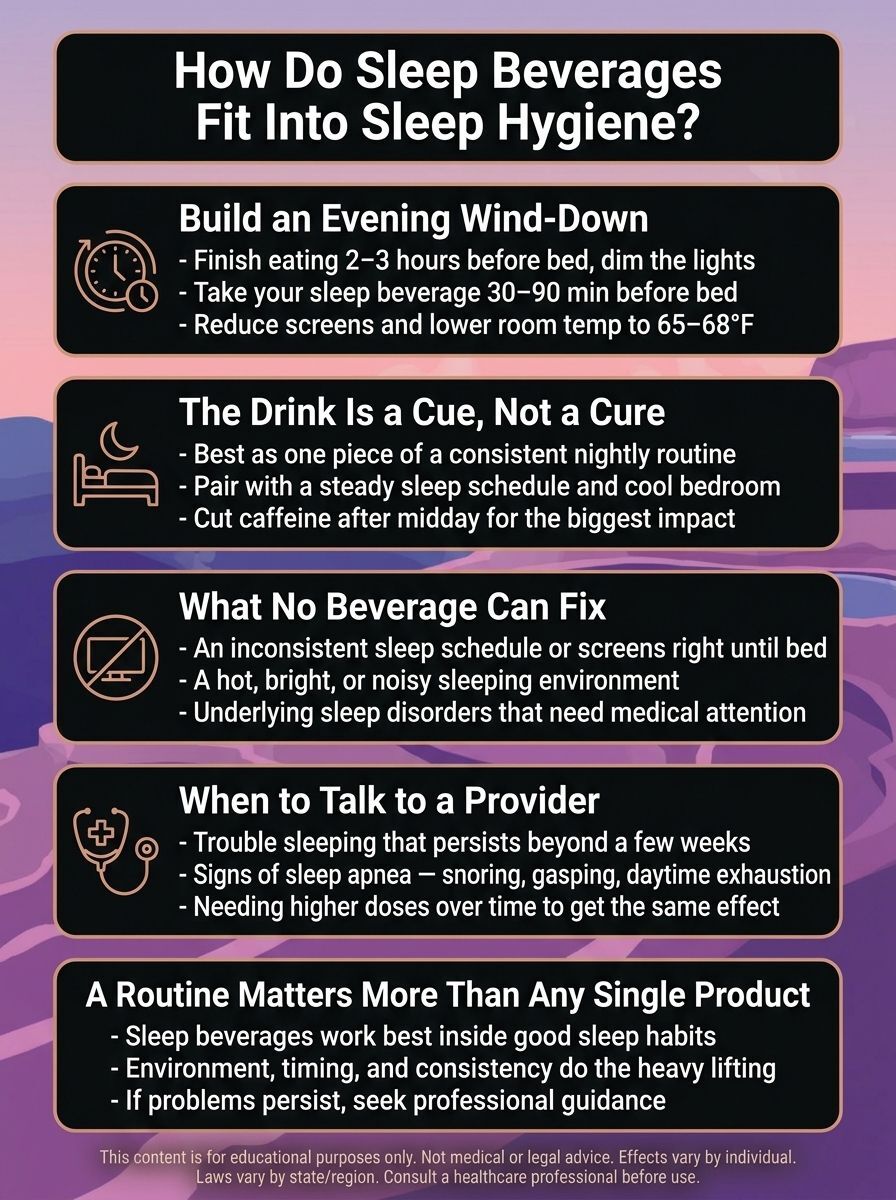
An evening drink is one small piece of a bedtime routine. The bigger pieces are a fixed bedtime, no caffeine in the 10 hours before bed, finishing food and drinks 2 to 3 hours before, screens off an hour before, and a cool room around 65 to 68°F.
- 2 to 3 hours before bed: Last meal and last big drink, lights down
- 1 hour before bed: Screens off, reading or light stretching
- Every night: Same bedtime and wake time, weekends included
Talk to a healthcare provider if trouble sleeping lasts more than a few weeks, you snore loudly or gasp at night, or you feel worn out during the day despite enough time in bed.
Easy Evening Drink Recipes (With and Without THC)
You can make simple evening drinks at home with sparkling water, tart cherry concentrate, chamomile or warm milk. If you're 21+ and want THC, add one 1/4 teaspoon serving of Enjoy Hemp Sleep THC Syrup (5mg THC + 5mg CBN) to a single glass. Keep each drink small so you're not up at night.
Grape Evening Spritz (With THC)
- 1/4 teaspoon Enjoy Hemp Sleep THC Syrup (5mg THC + 5mg CBN)
- 6 oz plain sparkling water
- Squeeze of lime and plenty of ice
Stir the syrup into the sparkling water before adding ice so it mixes evenly. One glass is one serving. Label it if anyone else is in the kitchen.
Tart Cherry Nightcap (THC-Free)
- 1 oz unsweetened tart cherry concentrate
- 5 oz sparkling or still water
- A sprig of rosemary or a strip of orange peel
It looks like a cocktail and tastes like one. Honestly, it's the drink I make most often for friends who don't want THC.
Golden Milk (THC-Free)
- 1 cup milk of your choice
- 1/2 teaspoon ground turmeric and 1/4 teaspoon cinnamon
- A pinch of black pepper and 1 teaspoon honey
Warm gently on the stove and whisk. Don't let it boil, or the milk can scorch.
Chamomile Lavender Iced Tea (THC-Free)
- 2 tablespoons dried chamomile flowers
- 1/2 teaspoon culinary lavender
- 1 cup hot water, then ice
Steep for 5 minutes, strain, chill and pour over ice. Make it in the afternoon so it's cold by evening.
Evening Drink Ingredients Glossary
These are the terms you'll see most often on evening drink labels and COAs, explained in plain English.
- Delta-9 THC: The main intoxicating cannabinoid in hemp and cannabis. Federal hemp rules are written around it.
- CBN (cannabinol): A cannabinoid that forms as THC ages. Often sold as an isolate and added in set amounts.
- Total THC: Delta-9 THC plus the THC that THCA can turn into, calculated as delta-9 + (0.877 x THCA).
- Isolate: A single purified cannabinoid, like CBN isolate, with other plant compounds removed.
- Indica-style: A flavor and terpene profile label borrowed from cannabis strains. It describes the product line, not a guaranteed experience.
- COA: Certificate of Analysis, the third-party lab report for a specific batch.
- ISO/IEC 17025: The international accreditation standard for testing labs.
- Apigenin: A plant compound found in chamomile.
- Magnesium citrate vs glycinate: Two common forms of magnesium. Citrate dissolves easily in water. Glycinate is often chosen by people with sensitive stomachs.
- Melatonin: A hormone the body makes naturally. Tart cherries contain small amounts.
- L-theanine: An amino acid found in tea leaves, added to many evening cans.
Key Takeaways
- Enjoy Hemp THC+CBN drinks list 5mg to 50mg THC per serving and come with a batch COA
- Tart cherry juice, chamomile, magnesium, L-theanine, golden milk and valerian are THC-free options
- No relaxation beverage, hemp or herbal, is FDA-approved for sleep
- Keep supplemental magnesium at or below 350mg a day
- Finish any drink 60 to 90 minutes before bed and keep it small
- The federal hemp definition changes December 11, 2026, affecting most THC drinks
Want to see the cans? Start with the Enjoy Hemp Sleep THC Drink, or browse all THC drinks.
Frequently Asked Questions
What are the most popular relaxation beverages for sleep support?
Hemp THC+CBN drinks like the Enjoy Hemp Sleep THC Drink, tart cherry juice, chamomile tea, magnesium drinks and L-theanine drinks. None is FDA-approved for sleep.
How much THC is in the Enjoy Hemp Sleep THC Drink?
Each 12 oz can contains 10mg THC and 10mg CBN, with 20 calories and 5g sugar. A batch Certificate of Analysis is available.
When should I have an evening drink?
Finish it 60 to 90 minutes before bed so a full bladder doesn't wake you. For THC drinks, wait at least 30 minutes before having more.
Will hemp THC drinks still be available after 2026?
Most won't meet the federal hemp definition after December 11, 2026, when the limit becomes 0.4mg total THC per container. Congress could still change that. Herbal and magnesium drinks aren't affected.
Will THC drinks show up on a drug test?
Yes, they can cause a positive result. If you're tested, choose tart cherry juice, herbal tea, magnesium or another THC-free drink.
Can I drink alcohol with a THC drink?
No. Don't mix THC with alcohol, and don't drive after having either.
Is tart cherry juice high in sugar?
It can be. Sweetened versions often carry 20 grams or more per cup, so choose unsweetened juice or concentrate and check the label.
What is CBN?
CBN (cannabinol) is a cannabinoid that forms as THC ages. Enjoy Hemp evening products list CBN in milligrams per serving, from 5mg to 10mg.
Can I mix Enjoy Hemp Sleep THC Syrup into other drinks?
Yes. Stir one 1/4 teaspoon serving (5mg THC + 5mg CBN) into any caffeine-free drink, like sparkling water. Mix it into a single glass, never a shared pitcher.
What does total THC mean on a COA?
Total THC is delta-9 THC plus 0.877 times THCA. The federal hemp limit that starts December 11, 2026 is based on total THC.
Does the Enjoy Hemp Sleep THC Drink contain melatonin?
No. Its ingredients are carbonated water, natural flavor, sugar, citric acid, hemp extract and CBN isolate. It has no melatonin, caffeine or alcohol.
About the Author
Sarah Mitchell is a wellness industry veteran with 15 years of experience in functional supplements and hemp derived products. She previously led product development at two nationally recognized wellness brands and holds certification as a holistic health practitioner. Sarah now advises consumers on quality standards, helping them make informed decisions in the evolving hemp market.
These statements have not been evaluated by the Food and Drug Administration. This product is not intended to diagnose, treat, cure, or prevent any disease or condition, and is not a dietary supplement. Consult a licensed healthcare provider before use, especially if you are pregnant, nursing, taking medication, or managing a health condition. For use by adults 21 years of age and older. This product contains hemp-derived cannabinoids and may cause a positive result on a drug test. Keep out of reach of children and pets. Hemp product legality varies by state and is subject to change under federal law; verify all applicable federal, state, county, and municipal laws before purchasing. Do not drive or operate machinery after use.
Legal status as of October 2026: Enjoy Hemp products comply with the 2018 Farm Bill (0.3% or less delta-9 THC by dry weight). A federal law taking effect December 11, 2026 will limit finished hemp products to 0.4mg total THC per container unless Congress acts again first; products containing cannabinoids not naturally produced by the cannabis plant are affected from November 12, 2026. This article is for information only and is not medical or legal advice.