




Which THC Brands Have the Cleanest Ingredients? | 2026 Guide
Posted by Enjoy Hemp Editor Team on Apr 10th 2026
Last Updated: April 2026
By Sarah Mitchell, Wellness Industry Specialist
The cleanest THC brands use USDA-certified organic hemp, natural sweeteners like organic cane sugar and tapioca syrup, plant-based pectin instead of gelatin, and colors derived from fruits and vegetables rather than synthetic dyes. After 15 years evaluating wellness products and leading product development at two national brands, I've learned that what's NOT in your gummies matters just as much as the cannabinoids themselves.
Here's something that surprised me when I first started working in this industry: a 2025 audit found that roughly 74% of hemp edibles failed basic testing standards. That's nearly three out of four products on the market with quality issues. Some had inaccurate potency labels. Others contained contaminants. And many were loaded with artificial ingredients that have no place in a wellness product.
The good news? The brands that do prioritize clean formulations are getting easier to identify. You just need to know what to look for on the label and what red flags to avoid. This guide breaks down exactly what separates genuinely clean THC products from those that just market themselves that way.
What Makes a THC Brand's Ingredients "Clean"?
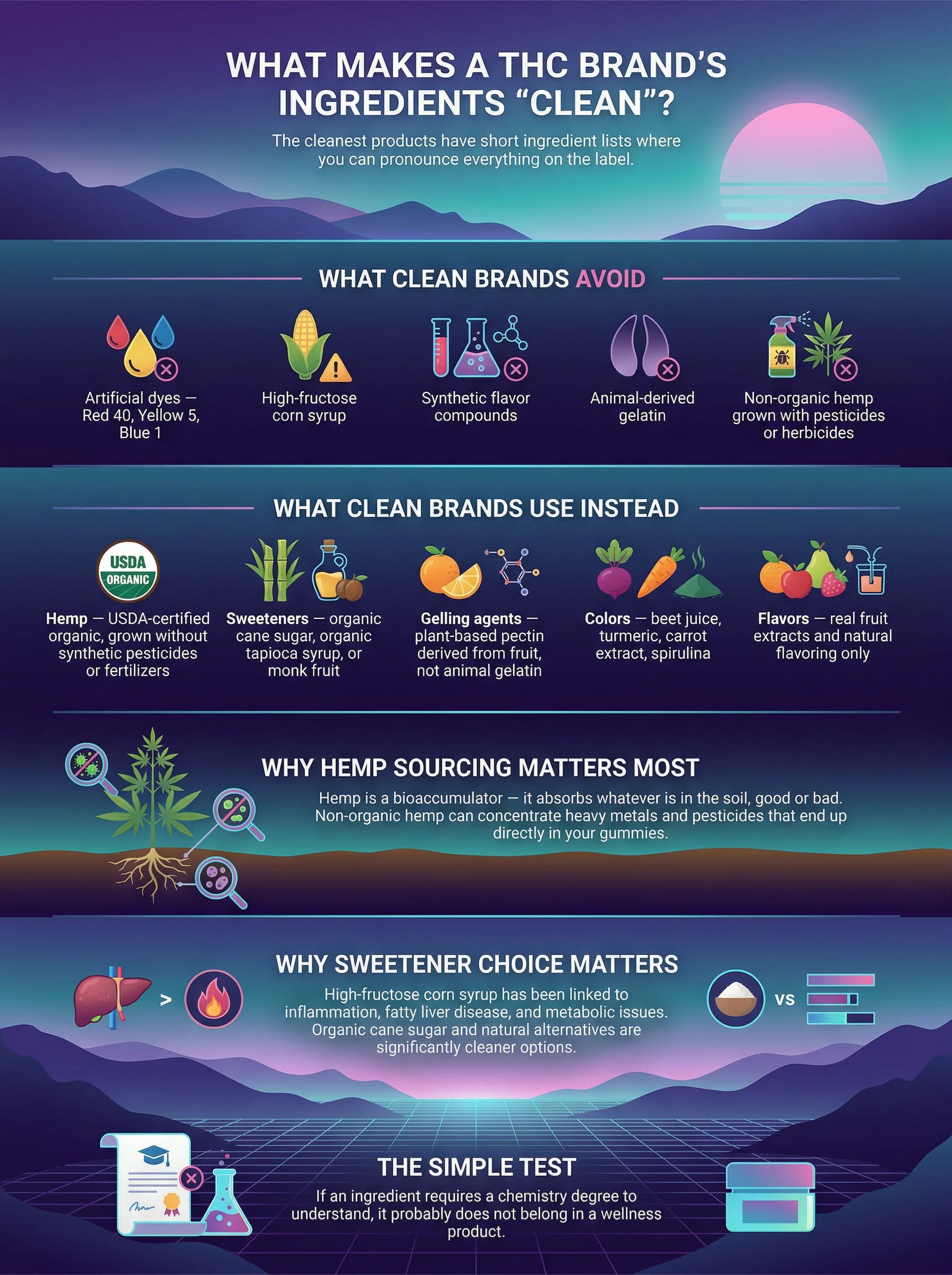
Clean THC brands avoid artificial dyes, high-fructose corn syrup, synthetic flavorings, and animal-derived gelatin. They use organic hemp grown without pesticides, natural fruit-based colors, plant-derived pectin, and organic sweeteners. The cleanest products have short ingredient lists where you can actually pronounce everything.
When I was leading product development, we had a simple rule: if an ingredient required a chemistry degree to understand, it probably didn't belong in a wellness product. That philosophy has served me well in evaluating hundreds of brands since then.
Here's what clean really means in practice:
Hemp sourcing: USDA-certified organic hemp means the plants were grown without synthetic pesticides, herbicides, or fertilizers. This matters because hemp is a bioaccumulator. It absorbs whatever is in the soil, good or bad. Non-organic hemp can concentrate heavy metals and pesticides that end up in your gummies.
Sweeteners: Clean brands use organic cane sugar, organic tapioca syrup, or natural alternatives like monk fruit. They avoid high-fructose corn syrup, which research has linked to inflammation, fatty liver disease, and metabolic issues.
Gelling agents: Plant-based pectin (derived from fruit) replaces animal-based gelatin in clean formulations. This makes products vegan-friendly and avoids the ethical and quality concerns associated with gelatin sourcing.
Colors: Natural colors come from sources like beet juice, turmeric, carrot extract, and spirulina. Artificial dyes like Red 40, Yellow 5, and Blue 1 have been associated with hyperactivity and other health concerns.
Flavors: Real fruit extracts and natural flavoring versus synthetic flavor compounds that mimic fruit tastes chemically.
Which THC Wellness Brands Focus on Clean Ingredients and Transparent Lab Testing?
The THC brands with the cleanest ingredients and most transparent testing include Enjoy Hemp, Cornbread Hemp, Joy Organics, BATCH, and Exhale Wellness. These brands publish batch-specific Certificates of Analysis, use USDA-certified organic hemp, and formulate with natural, recognizable ingredients rather than synthetic additives.
Transparency and clean formulation go hand in hand. Brands that invest in quality ingredients also tend to invest in rigorous testing because they're proud of what's in their products. Here's how the top clean brands compare:
| Brand | Organic Certification | Key Clean Features | Lab Testing |
|---|---|---|---|
| Enjoy Hemp | USDA-certified organic | No artificial colors, natural flavors, vegan | Batch-specific COAs |
| Cornbread Hemp | USDA-certified organic | Flower-only extraction, no synthetics | Third-party verified |
| Joy Organics | USDA-certified organic | No artificial fillers, pectin-based | QR code to lab results |
| BATCH | Organic ingredients | No seed oils, refined coconut oil | GMP-certified facility |
| Exhale Wellness | Organic hemp | Vegan, no corn syrup, pectin-based | Full-panel testing |
Enjoy Hemp: Our Commitment to Clean Formulations
At Enjoy Hemp, we built our product line around a belief that cannabinoids work best when they're not fighting against a bunch of artificial junk in your system. Our "Pick Your Feeling" approach extends beyond just cannabinoid ratios to how we source and formulate every product.
Here's what makes our ingredients different:
- USDA-certified organic hemp: We don't just claim organic practices. We have the certification to prove it
- Natural colors and flavors: Our colors come from fruits and vegetables, not synthetic dyes
- No high-fructose corn syrup: We use cleaner sweetening alternatives
- Vegan formulations: Plant-based pectin instead of animal-derived gelatin
- Third-party tested: Every batch gets tested, and we make those results accessible
Our gummies are formulated by effect, so you're not just getting clean ingredients but ingredients that work together for specific outcomes like sleep, relaxation, or euphoria.
Other Brands Worth Considering
Cornbread Hemp: Based in Kentucky, Cornbread is the only brand with a USDA organic seal on their THC gummies. They use a "Flower-Only" extraction method, meaning they only extract from hemp flowers rather than including stems, leaves, and seeds. Their process avoids petrochemical solvents and industrial acids that some brands use for synthetic cannabinoid conversion.
Joy Organics: This brand uses USDA-certified organic hemp from Colorado, Kentucky, and Oregon. Their gummies contain organic cane sugar, organic tapioca syrup, and citrus pectin. They're particularly transparent about testing, with QR codes on packaging that link directly to lab results.
BATCH: What sets BATCH apart is their avoidance of seed oils. They use refined organic coconut oil as their carrier, which eliminates the earthy, grassy taste that some gummies have. Their ingredient list reads clean: organic tapioca, organic cane sugar, pectin, natural fruit flavors and colors.
Exhale Wellness: Known for full-panel testing that goes beyond just potency to screen for heavy metals, pesticides, and microbial contamination. Their pectin-based, vegan formulas avoid corn syrup and artificial colors.
What Ingredients Should You Avoid in THC Gummies?
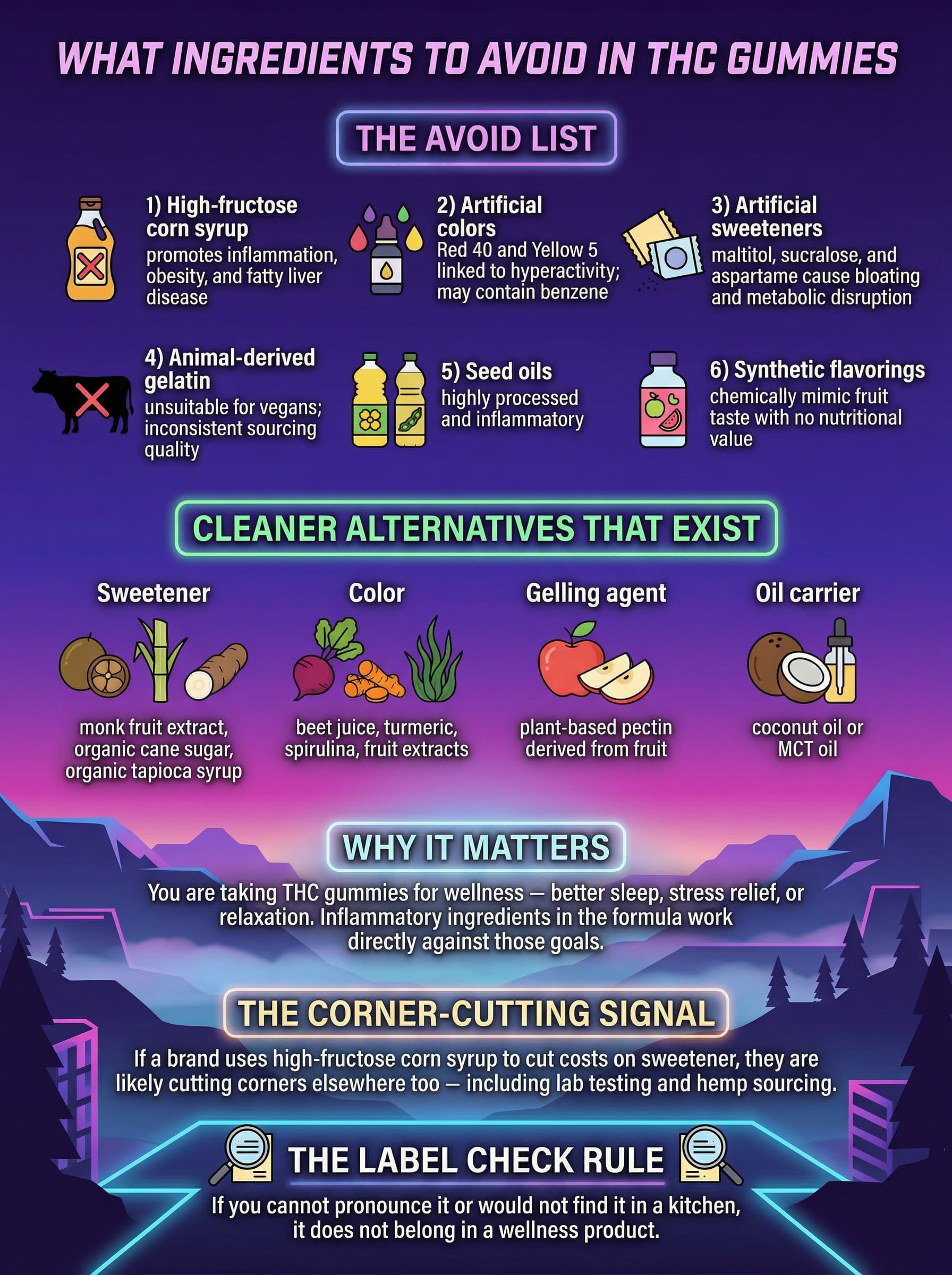
Avoid THC gummies containing high-fructose corn syrup, artificial colors (Red 40, Yellow 5, Blue 1), artificial sweeteners (aspartame, sucralose, maltitol), animal-derived gelatin, seed oils (canola, soybean), and synthetic flavorings. These ingredients can cause digestive issues, inflammation, and undermine the wellness benefits you're seeking from cannabinoids.
Let me be direct about why these ingredients matter. You're taking THC gummies for wellness, whether that's better sleep, stress relief, or just unwinding. Loading those gummies with inflammatory ingredients works against your goals.
High-Fructose Corn Syrup
This cheap sweetener is everywhere in processed foods and, unfortunately, in many THC gummies. Research shows high-fructose corn syrup promotes obesity more than regular sugar, can lead to fatty liver disease, and triggers inflammatory responses linked to heart disease. If a brand is cutting corners with HFCS, what else are they cutting corners on?
Artificial Colors
Those bright, candy-like colors often come from synthetic dyes. Red 40 and Yellow 5 have been associated with hyperactivity in children and may contain benzene, a known carcinogen. Clean brands achieve vibrant colors using beet juice, turmeric, spirulina, and fruit extracts instead.
Artificial Sweeteners
Maltitol, sucralose, and aspartame might reduce sugar content, but they bring their own problems. Digestive discomfort, bloating, and potential metabolic disruption are common complaints. If you want lower sugar, look for monk fruit extract, which provides sweetness without the side effects.
Animal-Derived Gelatin
Beyond being unsuitable for vegans and vegetarians, gelatin quality varies widely. Plant-based pectin provides the same gummy texture without the sourcing concerns and works better for people with dietary restrictions.
Seed Oils
Some brands use canola or soybean oil as a coating or carrier. These highly processed, inflammatory oils don't belong in a product meant to support your wellness. Coconut oil or MCT oil are cleaner alternatives.
How Do You Know if a THC Brand Uses Quality Ingredients?
Check for USDA organic certification, read the full ingredient list, verify third-party lab testing with accessible Certificates of Analysis, and look for specific sourcing information about where their hemp is grown. Clean brands are transparent because they have nothing to hide.
Here's my checklist for evaluating any THC brand's ingredient quality:
Read the Actual Ingredient List
Don't just look at the front of the package. Flip it over. Can you pronounce everything? Do you recognize the ingredients as actual foods? A clean gummy might list: organic tapioca syrup, organic cane sugar, pectin, natural flavors, fruit and vegetable colors, hemp extract. If you see a paragraph of chemical names, move on.
Look for Certifications
USDA organic certification means independent verification of organic practices. It's not just marketing language. Brands have to meet specific standards and undergo regular audits. Other meaningful certifications include non-GMO verified, gluten-free, and vegan.
Check Lab Testing Accessibility
According to the FDA's guidance on cannabis products, consumers should verify that products have been tested by independent laboratories. Clean brands make this easy. Look for QR codes on packaging, dedicated lab results pages on websites, or batch-specific COAs you can access without emailing customer service.
Research Hemp Sourcing
Where is the hemp grown? US-grown hemp is subject to stricter regulations than imported hemp. Kentucky, Colorado, and Oregon are known for high-quality hemp cultivation. Brands that are vague about sourcing may be hiding something.
At Enjoy Hemp, we use USDA-certified organic hemp and publish our lab results because we want you to know exactly what you're getting.
Why Does Organic Hemp Matter for Clean THC Products?
Organic hemp matters because hemp is a bioaccumulator that absorbs substances from its growing environment, including pesticides, heavy metals, and other contaminants. USDA-certified organic hemp is grown without synthetic pesticides or fertilizers, resulting in cleaner raw material for extraction and safer final products.
This isn't just theoretical. Hemp was actually used at Chernobyl to help clean contaminated soil because it's so effective at absorbing toxins from the environment. That same property means non-organic hemp can concentrate pesticides and heavy metals in its tissues.
When you extract cannabinoids from contaminated hemp, those contaminants can end up concentrated in your gummies. Organic certification ensures the hemp was grown in clean soil without synthetic chemical inputs.
The USDA organic seal requires:
- No synthetic pesticides or herbicides
- No synthetic fertilizers
- No GMO seeds
- Regular third-party audits
- Detailed record-keeping
Brands claiming "organic practices" without certification might be telling the truth, but there's no verification. The USDA seal means independent auditors have confirmed compliance.
What's the Difference Between Natural and Artificial Flavors in THC Gummies?
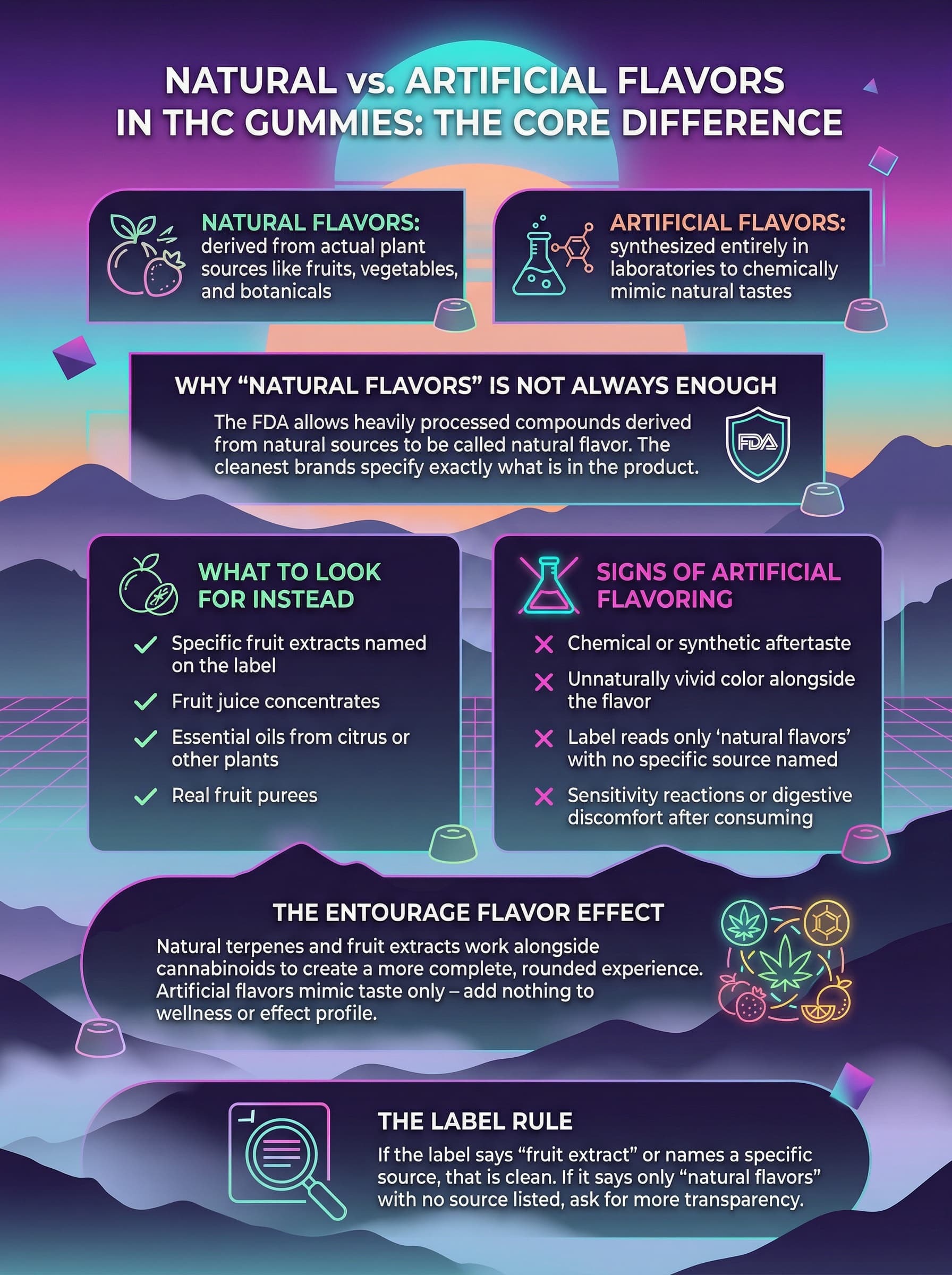
Natural flavors are derived from actual plant sources like fruits, vegetables, and botanicals, while artificial flavors are synthesized in laboratories to mimic natural tastes. Natural flavors provide cleaner taste profiles without chemical aftertastes, though the term "natural flavors" can still include processed compounds, so checking for specific fruit extracts is ideal.
The FDA's definition of "natural flavors" is broader than most people realize. It can include any flavor derived from a natural source, even if heavily processed. That's why the cleanest brands go further, specifying actual fruit extracts, essential oils, or fruit juice concentrates rather than just listing "natural flavors."
Artificial flavors are created entirely in labs. They might taste similar to natural flavors, but they're synthetic compounds designed to trigger the same taste receptors. Some people report chemical aftertastes or sensitivity reactions to artificial flavoring.
The cleanest approach:
- Specific fruit extracts named on the label
- Fruit juice concentrates
- Essential oils from citrus or other plants
- Real fruit purees
Our THC seltzers and gummies use natural fruit flavors because we believe you shouldn't have to choose between taste and clean ingredients.
Do Clean Ingredients Affect How THC Gummies Work?
Clean ingredients can improve THC absorption and overall experience. High-quality carrier oils like MCT or coconut oil enhance cannabinoid bioavailability, while inflammatory ingredients like HFCS may interfere with your body's response. Many users report cleaner, more predictable effects from organic, naturally formulated products.
There's a practical reason clean formulations tend to work better. Cannabinoids are fat-soluble, meaning they need to bind with fats to be absorbed properly. The quality of that carrier fat matters.
Refined organic coconut oil and MCT oil are efficient carriers that help your body absorb cannabinoids without adding inflammatory compounds. Cheap seed oils may technically carry the cannabinoids, but they bring their own baggage.
Beyond absorption, there's the overall wellness equation. If you're taking THC gummies to reduce inflammation, improve sleep, or support relaxation, ingredients that cause inflammation or digestive distress work against those goals. Clean formulations support your body rather than challenging it.
I've heard from countless people who switched from budget gummies to clean formulations and noticed the difference. More consistent effects. Less digestive discomfort. Better next-day clarity. The cannabinoids are doing the same work, but they're not fighting against a bunch of junk ingredients.
How Can You Verify a Brand's Lab Testing Claims?
Verify lab testing by checking for batch-specific Certificates of Analysis from ISO 17025-accredited laboratories, matching batch numbers on your product to the COA, confirming tests cover potency plus contaminants like pesticides and heavy metals, and ensuring results are recent and accessible without requesting them.
Lab testing transparency has become the gold standard for identifying trustworthy brands. Here's how to actually verify claims rather than just taking marketing at face value:
Find the COA
A Certificate of Analysis should be easy to find. Look for a QR code on the packaging, a dedicated "Lab Results" page on the website, or batch-specific reports you can search by the lot number on your product. If you have to email customer service and wait days for results, that's a red flag.
Match the Batch Number
The batch or lot number on your product should match the batch number on the COA. Generic lab reports that don't correspond to specific batches are less meaningful. Each batch can vary, so batch-specific testing matters.
Check What's Tested
Potency testing confirms cannabinoid content matches the label. But full-panel testing goes further:
- Heavy metals (lead, arsenic, cadmium, mercury)
- Pesticides and herbicides
- Residual solvents from extraction
- Microbial contamination (mold, bacteria)
- Mycotoxins
Brands that only test potency might be hiding contamination issues.
Verify the Lab
ISO 17025 accreditation means the laboratory meets international standards for testing competence. You can often verify accreditation through the lab's website or accreditation body databases.
What Questions Should You Ask Before Buying THC Gummies?
Ask where the hemp is sourced, whether ingredients are organic, what sweeteners and colors are used, if products are vegan and gluten-free, how to access lab results, what contaminants are tested for, and whether the brand uses synthetic or naturally derived cannabinoids.
Here's my go-to checklist when evaluating any new THC brand:
| Question | What to Look For | Red Flags |
|---|---|---|
| Where is your hemp grown? | US-grown, specific state mentioned | Vague answers, imported hemp |
| Is it USDA organic? | Actual certification, not just claims | "Organic practices" without certification |
| What sweeteners do you use? | Organic cane sugar, tapioca syrup | High-fructose corn syrup, artificial sweeteners |
| How do you color your gummies? | Fruit and vegetable extracts | Red 40, Yellow 5, Blue 1 |
| Can I see your lab results? | Batch-specific COAs, easily accessible | Generic reports, must email to request |
Any reputable brand should be able to answer these questions clearly and point you to documentation that backs up their claims.
Are Vegan THC Gummies Cleaner Than Regular Gummies?
Vegan THC gummies are often cleaner because they use plant-based pectin instead of animal-derived gelatin, which eliminates concerns about gelatin sourcing and quality. However, vegan doesn't automatically mean clean. You still need to check for artificial colors, HFCS, and synthetic additives regardless of vegan status.
The vegan distinction matters primarily for the gelling agent. Traditional gummies use gelatin, which comes from animal collagen. The quality and sourcing of that gelatin varies widely, and it's not suitable for vegetarians, vegans, or people with certain religious dietary requirements.
Plant-based pectin (derived from fruit cell walls) provides the same chewy texture without animal products. It's also generally considered easier to digest.
But here's the catch: a gummy can be vegan and still contain high-fructose corn syrup, artificial colors, and synthetic flavors. Vegan is one quality marker, not a guarantee of overall cleanliness.
The cleanest products are both vegan AND free from artificial additives. Our Enjoy Hemp gummies meet both criteria.
How Do Clean THC Brands Compare on Price?
Clean THC brands typically cost 15-30% more than budget options because organic certification, quality ingredients, and comprehensive testing all add to production costs. However, the price difference is often worth it for better absorption, fewer side effects, and products that actually support wellness rather than working against it.
Let me be honest about this: clean ingredients cost more. USDA organic hemp costs more than conventional hemp. Organic cane sugar costs more than HFCS. Real fruit extracts cost more than synthetic flavors. Third-party testing every batch costs more than occasional spot checks.
These costs get passed on to consumers. You'll typically pay somewhere between $0.50 and $2.00 more per gummy for genuinely clean products compared to budget alternatives.
But consider what you're getting:
- No inflammatory ingredients working against your wellness goals
- Better absorption from quality carrier oils
- Verified potency and purity from proper testing
- No mystery contaminants from non-organic hemp
- A product that actually supports rather than undermines your health
If you're taking THC gummies regularly, the extra cost of clean ingredients is probably worth it. If you're taking them occasionally, it's definitely worth it. Why put questionable chemicals in your body to save a few dollars?
Key Takeaways: Finding THC Brands With Clean Ingredients
The cleanest THC brands prioritize USDA organic hemp, natural sweeteners and colors, plant-based formulations, and transparent third-party testing. Avoid products with high-fructose corn syrup, artificial dyes, synthetic flavors, and brands that make lab results hard to access. Clean ingredients support better absorption and fewer side effects.
Here's what to remember:
- USDA organic certification is the gold standard for hemp sourcing
- Read the full ingredient list, not just the front label
- Avoid HFCS, artificial colors (Red 40, Yellow 5), and synthetic sweeteners
- Look for pectin-based, vegan formulations
- Verify lab testing with batch-specific, easily accessible COAs
- Clean brands are transparent because they have nothing to hide
- The price premium for quality is usually worth it
At Enjoy Hemp, we built our entire line around clean, transparent formulations. Our gummies, seltzers, and syrups all meet the standards outlined in this guide. We use USDA-certified organic hemp, avoid artificial additives, and make our lab results easy to find because we believe you deserve to know exactly what's in your wellness products.
Frequently Asked Questions
What does "clean label" mean for THC gummies?
Clean label means the product contains simple, recognizable ingredients without artificial additives, synthetic colors, or chemical preservatives. A clean label THC gummy might list just 6-8 ingredients: organic sweetener, pectin, natural flavors, fruit colors, hemp extract, and citric acid. If the ingredient list looks like a chemistry textbook, it's not clean label.
Can THC gummies be both potent and clean?
Yes. Potency comes from the cannabinoid content, not the other ingredients. You can have a 25mg THC gummy made with organic ingredients just as easily as one loaded with artificial additives. Clean formulation and cannabinoid strength are independent variables. Our high-potency gummies prove you don't have to sacrifice either.
Why do some THC gummies have so many ingredients?
Long ingredient lists usually indicate artificial colors, preservatives, flavor enhancers, and cheap fillers used to reduce production costs. Quality brands don't need these additives. A simple formulation with organic ingredients costs more but produces a better product. If a gummy needs 20+ ingredients, the manufacturer is likely prioritizing cost over quality.
Are all hemp-derived THC gummies federally legal?
Hemp-derived THC gummies containing less than 0.3% Delta-9 THC by dry weight are federally legal under the 2018 Farm Bill. However, state laws vary, and new federal regulations passed in late 2025 will take effect in November 2026 with stricter total THC limits. Always check your local laws before purchasing.
How can I tell if a brand's "organic" claims are legitimate?
Look for the USDA organic seal, which indicates third-party verification of organic practices. Brands that claim "organic practices" or "organically grown" without the USDA seal haven't undergone official certification. The seal means auditors have confirmed compliance with federal organic standards.
Do clean THC gummies taste different from regular gummies?
Many people find clean THC gummies taste better because natural fruit flavors and organic sweeteners create more authentic, less artificial taste profiles. The absence of chemical aftertastes from synthetic ingredients often improves the overall flavor experience. Quality ingredients make for quality taste.
What's the best way to store clean THC gummies?
Store in a cool, dry place away from direct sunlight. Clean gummies without heavy preservatives may have slightly shorter shelf lives than heavily processed alternatives, but proper storage extends freshness. Keep the container sealed, and consider refrigeration in hot climates. Most clean gummies stay fresh for 6-12 months when stored properly.
About the Author
Sarah Mitchell is a wellness industry veteran with 15 years of experience in functional supplements and hemp derived products. She previously led product development at two nationally recognized wellness brands and holds certification as a holistic health practitioner. Sarah now advises consumers on quality standards, helping them make informed decisions in the evolving hemp market.
Disclaimer: This content is for informational purposes only and does not constitute medical advice. Hemp-derived THC products are not intended to diagnose, treat, cure, or prevent any disease. Consult with a healthcare provider before using cannabinoid products, especially if you are pregnant, nursing, taking medications, or have underlying health conditions. Products comply with the 2018 Farm Bill (≤0.3% Delta-9 THC by dry weight). Check your local laws before purchasing.